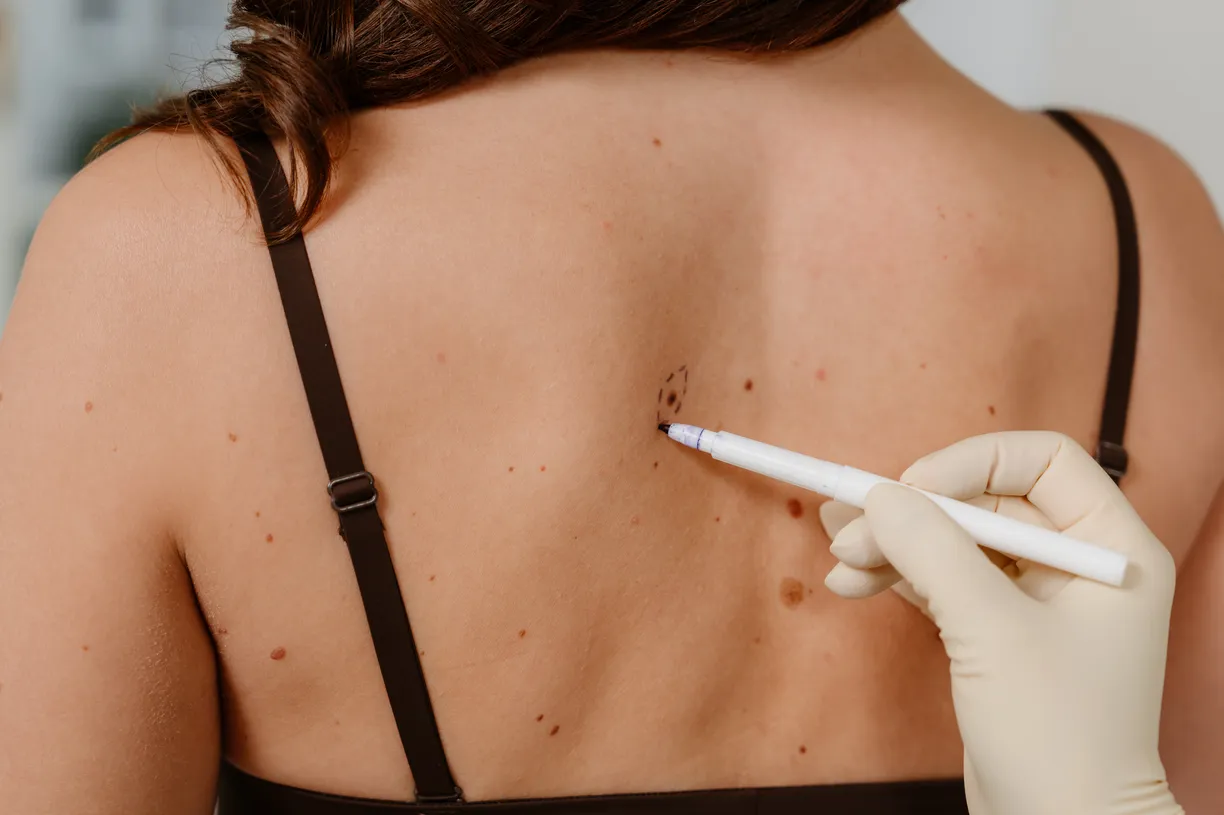
The mole is no longer there, but the scar remains. Find out when it fades, how to care for it, and what can help with redness, indentations or thickening.

The youth is no longer there, but your gaze still goes to the same place. A thin line, redness or a small „pit” has been left behind. Will it fade — and can you do anything to make the mark less visible?
The scar after mole removal can change for months. However, it matters whether you are bothered by its colour, indentation or thickening. What makes sense depends on that difference: more time and care, or a specifically chosen treatment.
How long does a scar take to fade after mole removal?
The skin closes before the scar matures.
Beneath the closed surface, the collagen is still being remodeled. That is why a fresh scar is often redder and firmer than the surrounding skin, and over time it becomes paler and softer. This takes months, sometimes two years or longer.
Two notes, so there is no confusion. Fading does not mean disappearing. And two years is not a period you should wait before having a check-up.
If you look at the scar every day, it is hard to notice subtle changes. Periodically photograph it from the same distance and under similar light. Take those pictures with you to your follow-up appointment.
Why does someone get a line and someone else a dimple?
The removal method affects the appearance of the mark.
When the edges of the wound are joined with stitches, a thin line usually remains. After surface removal, a lighter or darker zone, a slight depression or a raised mark may remain.
No stitches doesn't mean no scar. The appearance is also affected by the depth of removal, skin tightness at the site, the method of wound closure, and the healing process itself.
If your wound is not yet closed, follow the instructions you were given afterwards surgical or radiowave removal. Scar fading only begins when the wound has healed.
The redness fades, but the „dimple” remains: how is that possible?
Skin colour and skin texture are not the same. The pink colour becomes less noticeable, but under side lighting you can still see the shadow. The colour has changed, the surface has not.
That is why we examine them separately during the check-up. What relieves the redness does not necessarily smooth out the indentation.
| What do you notice? | What are we checking? |
|---|---|
| Thin, pink or red mark | How long has it been since the removal and is the redness fading |
| A shadow-casting indentation | Is the surface just uneven or is something pulling the skin downwards |
| Firm, raised scar | Does it grow outside the original wound, itch, hurt or feel tight |
| New dark spot or nodule | What appeared before any aesthetic treatment |
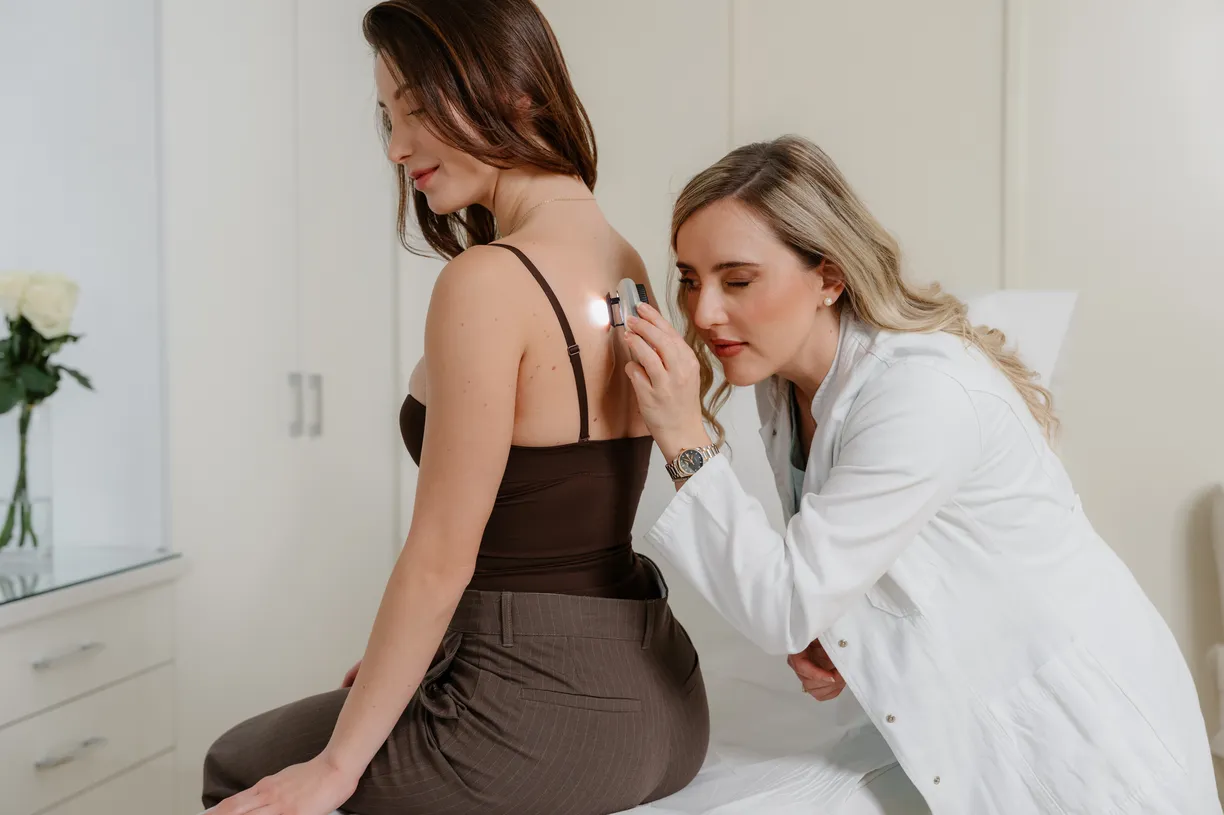
The last row is not an aesthetic issue. We first examine the new pigmentation at the site of the removed mole with a dermatoscope. Bring the pathology report of the removed tissue, if you have it.
When should you consult a doctor?
You do not have to wait for the trail to become big. If it bothers you, that is reason enough to discuss it at your check-up.
Come back earlier if the scar grows, becomes increasingly itchy, hurts, tightens or makes movement difficult.
Contact us without delay if the area is hot and swollen, the pain is getting worse, pus is leaking, the skin opens up again or you have a temperature. This may be a sign of a healing problem or an infection.
What can you do yourself at home?
First rule: the skin must heal completely. The following advice applies when there is no open wound or scab.
Hydration. If the healed skin is dry, a good moisturising cream is enough, for example Aestura Atobarrier 365 Cream. It is intended for moisturising skin care; the indentation does not raise and the thickening does not thin.
Massage. It can help to soften a hard scar. Start only when the skin has healed completely, which is often around four weeks after the procedure. One hospital guide suggests massaging two to three times a day for five minutes, using a little cream. Move the skin over the scar without rubbing harshly. If it hurts, the skin becomes inflamed or reopens, stop and contact us.
Silicone. Gel or sheeting are options for selected, particularly raised scars. One hospital guideline recommends a 12-hour daily regimen for at least three months. A specific gel or sheet may have different instructions. They are applied only to completely healed, clean and dry skin; if irritation occurs, discontinue use.
Sun. It can darken the scar and make it more visible. Protect it for at least a year: with clothing when you can, otherwise with an SPF 30 or higher product.
Which treatment makes sense for which problem?
You don't choose the device, but the problem that bothers you.
Redness. If it is gradually fading, time and care are often enough. When blood vessels contribute to the redness, we consider Yellow laser from 577 nm. It targets the vascular component, not the depression.
Uneven surface. Fractional CO₂ laser It treats the skin in small, separated zones and stimulates collagen remodelling. Recovery goes hand in hand with it, so we arrange the aftercare in advance and check the predisposition to pigmentation changes. Part of the research relates to other surgical scars, so it does not provide a ready-made prognosis for the mark left by a mole.
A depression that pulls something downwards. Some depressions hold binding bands, as if the skin were attached to deeper tissue. Subcision These bands are released. The „hole” itself is therefore not enough for a decision: first we determine whether the scar is tethered. Research largely relates to acne scars.
A scar above the skin level. A hypertrophic scar stays within the original wound, whereas a keloid extends beyond its borders. For treatment of raised scars Silicone, corticosteroid injections directly into the scar, or a combination of procedures are used, depending on the findings.
Another three questions
Can an old scar be faded?
Yes. The fact that you have had it for years doesn't mean you've left it too late. At your appointment, we'll tell you what can be softened: the colour, unevenness, thickness or tightness.
If the scar is both red and indented, does a single laser resolve both issues?
Not always. If the indentation is held down by tethered scars, easing the redness doesn't release them. In those cases, we sometimes combine procedures, for example laser and subcision.
How soon after mole removal can scar treatment be done?
There is no single date. The condition is that the wound is completely closed, and further it depends on the type of scar and what we are treating. Therefore, we determine the appointment during the consultation, not by the calendar.
Are you unsure what is happening with your scar? Book an appointment at IMedic clinic and please bring photographs and previous test results. We will tell you if he needs more time, different care or treatment.
Sources
- NHS – Scars: Maturation, massage, SPF and sun protection
- Cambridge University Hospitals – Scar massage information
- Cambridge University Hospitals – Silicone for scars
- Cambridge University Hospitals – Post-operative advice after skin surgery
- University Hospitals Sussex – Curettage and cautery or shave excision
- Guy’s and St Thomas’ – Surgical wounds and preventing infections
- DermNet – Subcision
- DermNet – Fractional laser treatment
- American Academy of Dermatology – Keloids: diagnosis and treatment
- DermNet – Moles (melanocytic naevi): recurrent naevus
- Fractional CO₂ laser treatment of caesarean section scars – clinical trial
- Aestura Atobarrier 365 Cream – product page
IMEDIC NOVOSTI
Be among the first to know about discounts and special offers
Sign up and receive notifications about current promotions, new treatments and useful advice from our doctors.
DISCOUNTS · NEW OFFERS · DOCTOR'S ADVICE
Sign-in is currently unavailable. Please try again in a few moments.
One more step: check your email and click on the confirmation link.
Want to see our new texts on Google more often?
Add imedic.rs as a preferred source in Google Search. When we publish a new text on skincare, aesthetic medicine or dermatology, Google will show it to you more frequently among the top stories. Setup takes a few seconds and can be changed at any time.

Dr Marina Ćirović
Updated: