Psoriasis – first symptoms, causes and treatment
Psoriasis is a common, chronic inflammatory skin disease. It occurs when environmental factors such as trauma, infections, psychological stress, certain medications, etc., act upon genetically predisposed individuals. Psoriasis manifests in various ways – for some people it can be a very mild disease, whilst for others large areas of the skin are affected, and sometimes even the joints are affected.
The diagnosis of psoriasis is made by a dermatologist based on the appearance of lesions on the skin, nails and scalp. If you notice red, scaly patches, the first step is a dermatological examination at Imedic poliklinika in Belgrade.
First symptoms – how psoriasis begins
What does psoriasis look like?
Causes, types and course of psoriasis
Who gets psoriasis?
Studies have shown that as many as 2% of the population suffer from psoriasis. Psoriasis can first appear at any age, from childhood to the eighth decade of life. The condition most frequently manifests between the ages of 20 and 30, and between 50 and 60. In 3/4 of patients, the onset occurs before the age of 40, while in as many as 35-50% of patients the disease begins before the age of 20. Furthermore, if a parent and/or a sibling has psoriasis, this represents a significant risk factor.
Which factors contribute to the development of psoriasis?
- Apart from genetic factors there are also many environmental factors that can influence the onset of psoriasis. There are several dozen genes associated with the development of psoriasis. Of course, not all people who have one of these genes will develop psoriasis; rather, psoriasis occurs when certain factors that “trigger” the onset of the disease act upon these genes.
- Some of the factors are infections. A well-known trigger in children and adolescents is a streptococcal throat infection. HIV infection is a well-known factor associated with the onset of psoriasis and a more severe form of the disease.
- Psychological stress is a well-known factor. In many patients, psoriasis appears for the first time in life after major psychological stress. Stress can not only trigger the onset of psoriasis, but can also cause serious flare-ups of the disease in patients who already have psoriasis.
- Endocrine factors such as a low level of calcium in the blood can trigger the onset of particular forms of psoriasis.
- Irritation and physical trauma (pressure, injuries, exposure to certain substances) can also influence the onset, as well as worsen pre-existing psoriasis. A joint injury in patients who have psoriasis can lead to the development of joint inflammation, known as psoriatic arthritis.
- Several medicines are linked to the development of psoriasis, particularly certain mood stabilisers, some medications that alter immune system function, beta-blockers and some anti-malarial drugs.
- Obesity, increased alcohol consumption and smoking influence the onset of psoriasis. It has been proven that smoking plays a role in the development of psoriasis, while weight gain often precedes the development of psoriasis.
What types of psoriasis are there?
Lesions in the form of small yellow pustules, which may be limited to the hands and feet, are called pustular psoriasis, and sometimes, when the disease is confined to the palms and soles, it is called palmoplantar pustulosis. There are places where psoriasis most commonly appears, such as the knees and elbows, and it frequently appears on the scalp, behind the ears, in the groin area, under the breast, on the penis and on the lower back. In younger patients, lesions called guttate (drop-like) psoriasis may occur in the form of spotty skin changes that most commonly occur after an acute infection.
The scalp is one of the most common locations for psoriasis. Patients often think they have stubborn dandruff, when in fact they are dealing with psoriatic lesions on the scalp. From the scalp, these lesions often spread to the face, behind the ears and towards the upper back of the neck. This can sometimes be the only sign of psoriasis on the entire body. Between 10 and 80% of patients with psoriasis will have nail involvement. Nails may appear yellow or whitish, opaque, thickened and deformed. Nail changes can appear before skin lesions (as the sole clinical sign of psoriasis), at the same time or after skin lesions.
Psoriatic arthritis occurs in 5–30% of patients with cutaneous psoriasis. Patients in whom psoriasis affects the nails carry a high risk of developing psoriatic arthritis. In about 10 to 15 % of patients, symptoms of psoriatic arthritis appear before skin involvement. X-rays of the hands play a key role in diagnosis. Early diagnosis of psoriatic arthritis is important, because disease progression often leads to loss of function and irreversible joint destruction.
Is psoriasis curable?
The course of psoriasis is very unpredictable. Lesions may appear, then disappear and never appear again, but they can also be constantly present or appear periodically. For the majority, the course is chronic with periodic remission of the disease. Therefore, continuous monitoring and treatment by a dermatovenereologist is essential.
Who gets psoriatic arthritis?
Psoriatic arthritis occurs in as many as a third of patients with psoriasis, and if a patient with psoriasis has pain in their joints, tendons and spine, it is necessary to see a rheumatologist. It occurs in patients who have scalp psoriasis, nail psoriasis, penile psoriasis and in those who have very widespread psoriasis.
Have a question?
Frequently asked questions about psoriasis
Is psoriasis contagious?
No. Psoriasis is an immune system disease and is not transmitted by touch, sharing a towel, at the swimming pool, or through contact with another person. The lesions may look striking, but they pose no danger to those around them.
Is it true that psoriasis patients are significantly more likely to develop cardiovascular diseases?
The most common cardiovascular diseases include heart attack, stroke and peripheral vascular disease. All of these conditions are much more common in patients with severe psoriasis. Psoriasis is associated with a threefold increased risk of heart attack and a reduction in life expectancy of 3-4 years. This is largely due to the so-called metabolic syndrome. Metabolic syndrome refers to a cluster of health disorders that include obesity, high blood pressure, raised blood lipids and high blood sugar. Metabolic syndrome is very common in patients with severe psoriasis and leads to accelerated atherosclerosis, meaning the deposition of fatty substances in the walls of blood vessels, which causes them to become blocked and ultimately leads to severe consequences such as heart attack and stroke.
What is the connection between psoriasis and gout?
Patients with psoriasis often have elevated levels of uric acid in the blood. Over time, uric acid deposits in the joints and triggers joint inflammation, namely gout. Men with psoriasis are twice as likely to develop gout. Women with psoriasis have a 1.5 times higher risk of developing gout. Men and women who have both psoriasis and psoriatic arthritis are five times more likely to develop gout.
What does psoriasis look like in children?
Guttate psoriasis is common in children: small red, scaly spots on the trunk, arms and legs, which often appear after a streptococcal throat infection. In young children, the lesions may also appear in the nappy area, and in school-aged children often on the scalp and behind the ears. Treatment is adapted to the age of the child and is always determined by a doctor.
How to tell the difference between scalp psoriasis and dandruff?
Dandruff produces small, white flakes over the entire scalp, without clear boundaries or pronounced redness. Psoriasis creates thickened, red lesions with clear edges and thicker, silvery scales, which often extend beyond the hairline onto the forehead, behind the ears and on the neck. Seborrhoeic dermatitis can have a similar appearance, so a definitive diagnosis is made by a dermatologist, if necessary with trichoscopic scalp examination.
Psoriasis or eczema – what is the difference?
Psoriasis most commonly presents as clearly demarcated, thickened lesions with silvery scales on the elbows, knees and scalp, and the itching is usually milder. Eczema has poorly defined borders, itches more severely, can weep and occurs more frequently in the creases of the elbows and knees, often since childhood. In some patients the forms overlap, so it requires dermatological examination.
What does psoriasis on the legs look like?
On the legs, it most commonly appears on the front of the knee and shins, in the form of oval red patches with scales. With guttate psoriasis, small dot-like lesions can be seen on the thighs, and on the soles of the feet, thickening and cracked skin. Lesions frequently appear at the site of a scratch or other skin injury.
How is psoriasis treated?
The method of treatment depends on the severity of the psoriasis, the size of the affected skin area and whether the joints are affected. Treatment can be topical, when creams and ointments are applied to the skin, systemic, when medicines are taken orally or given as an injection, and phototherapy, when the skin is exposed to ultraviolet light. Treatment usually starts with a milder approach, moving to stronger treatments when necessary.
Mild and moderate forms, which are the most common, are treated with topical therapy, primarily corticosteroids and vitamin D analogues. The first line of systemic therapy is phototherapy, often combined with topical therapy. Moderate and severe forms are usually treated with systemic medication, and patients who do not respond to these therapies may be candidates for biologic therapy.
What are the medications for the topical treatment of psoriasis?
Corticosteroids are the mainstay of topical psoriasis treatment. They are the first line of therapy for mild to moderate psoriasis (most commonly when under 10% of the skin is affected) and in areas such as skin folds and the genitals, where the skin is sensitive and where other topical agents can cause irritation. They are available in the form of ointments, creams, lotions, gels, foams, sprays and shampoos, with ointment-based preparations generally having the highest efficacy. At least 80% of patients treated with topical corticosteroids experience clearance of lesions, and maximum improvement is usually achieved within 2 weeks.
Vitamin D derivatives stop excessive keratinisation of the skin. Due to their efficacy they have become the first line of therapy for psoriasis and are often combined with topical corticosteroids. Due to potential adverse reactions, there is a limit to the skin surface area to which they may be applied, so they are used exclusively under the supervision of a specialist dermatovenereologist.
Preparations that slow down skin cell division have been used for decades and have few side effects, but in higher concentrations can sting and irritate the skin. They are usually applied short-term, under supervision and in a hospital, for psoriasis on the limbs or trunk, as they stain everything they come into contact with, including the skin and clothes. They can be combined with phototherapy.
Coal tar – coal tar is a thick, heavy oil and probably the oldest treatment for psoriasis. It is not precisely known how it works, but it can reduce scales, inflammation and itching.
Calcineurin inhibitors are ointments or creams that reduce the activity of the immune system and help to reduce inflammation. They are sometimes used to treat psoriasis on sensitive areas, such as the scalp, genitals and skin folds, if corticosteroid creams are not sufficiently effective.
Topical vitamin A derivatives regulate the renewal and maturation of skin cells. They are used for treating mild to moderate forms of psoriasis when no more than 10% of the skin is affected. They can cause skin irritation and inflammation of psoriatic plaques and must not be combined with phototherapy.
How is phototherapy carried out?
The skin is exposed to certain types of ultraviolet light. Phototherapy uses natural and artificial light to treat psoriasis. Artificial light therapy can be given in hospitals and some specialist centres under the supervision of a dermatologist. There are two types of phototherapy, UVB and PUVA.
- UVB phototherapy uses a wavelength of light invisible to the human eye. The light slows down skin cell production and is an effective treatment for some types of psoriasis that have not responded to topical treatments.
- PUVA – For this treatment, a tablet is first taken or a preparation is applied to the skin that increases the skin's sensitivity to light. This makes your skin more sensitive to light. Your skin is then exposed to a wavelength of light called ultraviolet A radiation (UVA). This light penetrates deeper into your skin than ultraviolet B light. This treatment may be used if you have severe psoriasis that has not responded to other types of treatment.
What are the medicines used for systemic administration?
Systemic therapy is carried out in those patients in whom topical therapy has not been effective. Systemic therapy must always be carried out under the supervision of a specialist. There are 2 main types of systemic treatment, called non-biologic (usually given in the form of tablets or capsules) and biologic (usually given as injections).
How are topical medicines used correctly?
Correct usage depends on the medicine, the patient and the site. Ointments are most commonly used for plaque psoriasis, whilst lotions are used for the scalp. In skin-fold areas where the skin is thinner, treatments that do not cause irritation are used. The frequency of topical therapy application depends on the clinical picture and must be determined by a dermatologist. With corticosteroids, regardless of the regimen, there must be breaks in the therapy to “give the skin a rest” and to avoid losing efficacy.
How can I help myself if I have psoriasis?
Patients can help themselves further in a number of ways.
- It has been shown that the Mediterranean diet, an increased intake of vegetables and fruit, and a reduction in industrially processed food can have a favourable effect on the course of the disease.
- Regular exercise and stopping smoking reduce the risk of heart attack and stroke, which are more common in patients who have psoriasis.
- Taking medications as prescribed, proper skin care and regular visits to the dermatologist can significantly influence the course of the disease.
- The sea and moderate sunbathing, combined with proper protection using sunscreens at safe times (before 11:00 and after 17:00), can be of significant help to patients suffering from psoriasis. Sunlight is the main reason why psoriasis symptoms improve during the summer (on the same principle as the phototherapy described above). By sunbathing wisely, you can make the most of all the benefits. Swimming, especially in salt water, removes dead skin and improves the appearance of psoriatic lesions. For centuries, people with psoriasis and skin conditions have travelled and bathed in the Dead Sea.
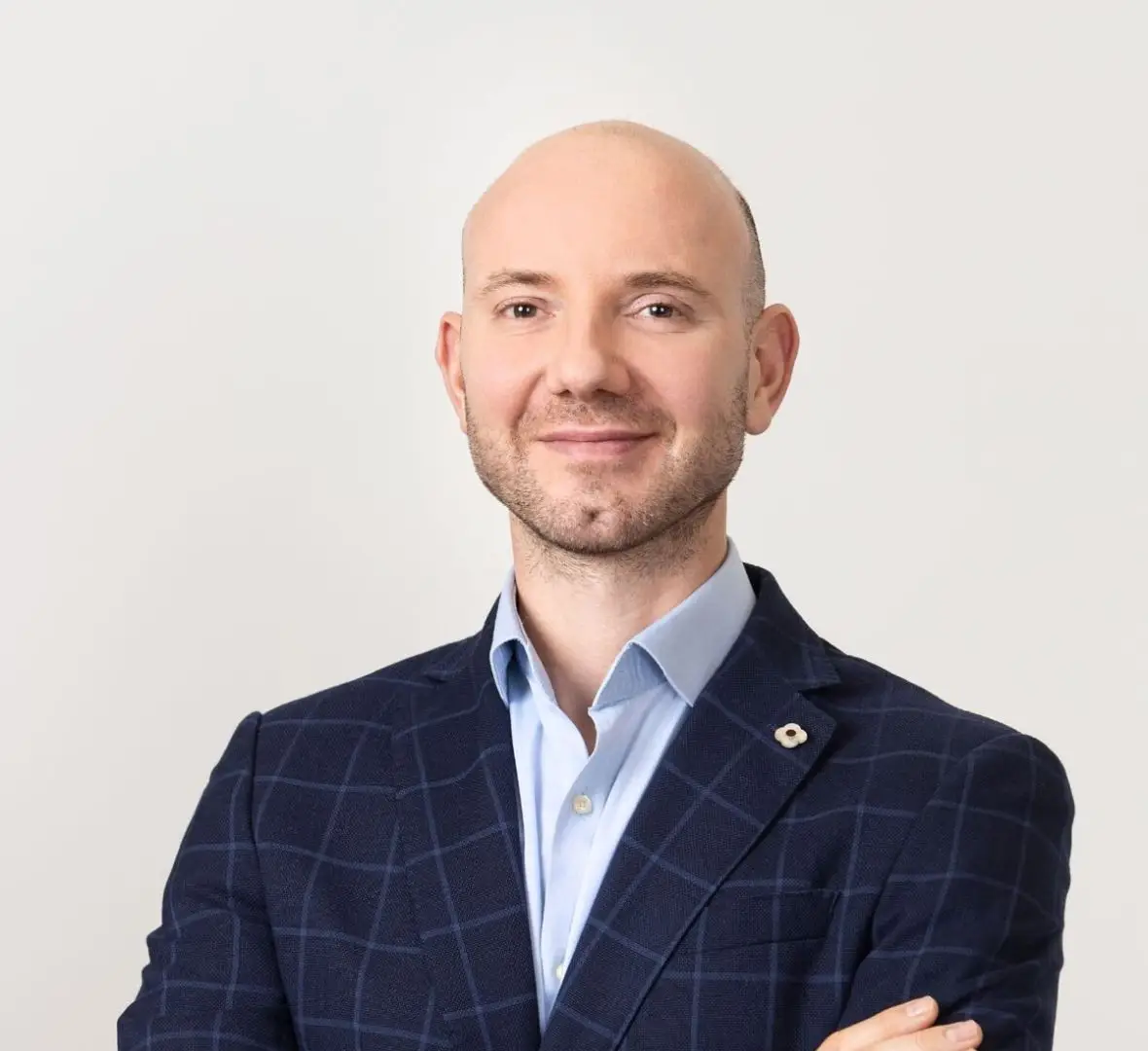
Author: Dr Ivica Jeremić
PhD in Medical Sciences (Molecular Medicine and Immunology), rheumatology subspecialist, dermatology resident.
Updated:
Expert sources