Seborrhoeic Keratosis Removal in Belgrade
Seborrhoeic keratoses are common, benign skin growths. They can be flat or raised, light brown or dark, with a smooth or rough surface. They most often bother people because of their appearance, itching or rubbing against clothing and jewellery.
At Imedic poliklinika, we remove them with a CO2 laser or radiofrequency. Before the procedure, the dermatologist examines the lesion and chooses the removal method according to its size, thickness and location.
Keratosis removal at a glance
| What is removed | Seborrhoeic keratoses, after examination |
|---|---|
| Methods | CO2 laser or radiofrequency |
| Anaesthesia | Local, depending on the extent and type of procedure |
| Duration | Depends on the number, size and location of the lesions |
| Dermoscopy | When the dermatologist considers it necessary |
| Skin mark | Possible skin discolouration or scarring |
| Price | In the current dermatology price list |
What is keratosis and what does it look like?
Seborrhoeic keratoses, also known as senile warts, most commonly appear in middle age and later. They can occur on the face, neck, chest, back and other parts of the body. Sometimes there are only a few of them, and sometimes they are numerous.
They often look as if they have been “stuck on” to the skin. Their surface may be waxy, rough or scaly, and the colour ranges from skin-coloured to dark brown.
They are not infectious and are not the same as viral warts. If they do not bother you and an examination has confirmed what kind of lesion it is, they do not have to be removed.
Soft, hanging growths on a stalk, particularly on the neck and in skin folds, may be fibromas (skin tags). You can read more about them on our page about removal of papillomas and fibromas.
When does it make sense to remove a keratosis?
Keratoses are most commonly removed when:
- they bother you because of their appearance;
- they catch on clothing or jewellery;
- they are often irritated when shaving or getting dressed;
- they itch or become injured.
If a lesion grows, changes appearance or bleeds without injury, it should be examined before removal. If necessary, the dermatologist performs a dermoscopic examination. When the finding is not clear enough, they may recommend a skin biopsy and analysis of the sample.
Types of keratosis: seborrhoeic and actinic
Under the name keratosis, two different changes are most commonly meant. Seborrhoeic keratoses are benign growths, whereas actinic keratoses develop on skin damaged by prolonged sun exposure. They usually appear as persistent rough or scaly patches, particularly on the face, ears, scalp and backs of the hands.
Actinic keratoses require evaluation by a dermatologist, appropriate treatment and monitoring. Their treatment differs from the removal of seborrhoeic keratoses described on this page.
How are keratoses removed?
At Imedic poliklinika, we use a CO2 laser and radiofrequency. The method is chosen after an examination. Important factors for the decision are the appearance and thickness of the lesion, the area being treated and any need to preserve a sample for analysis.
Keratosis removal methods
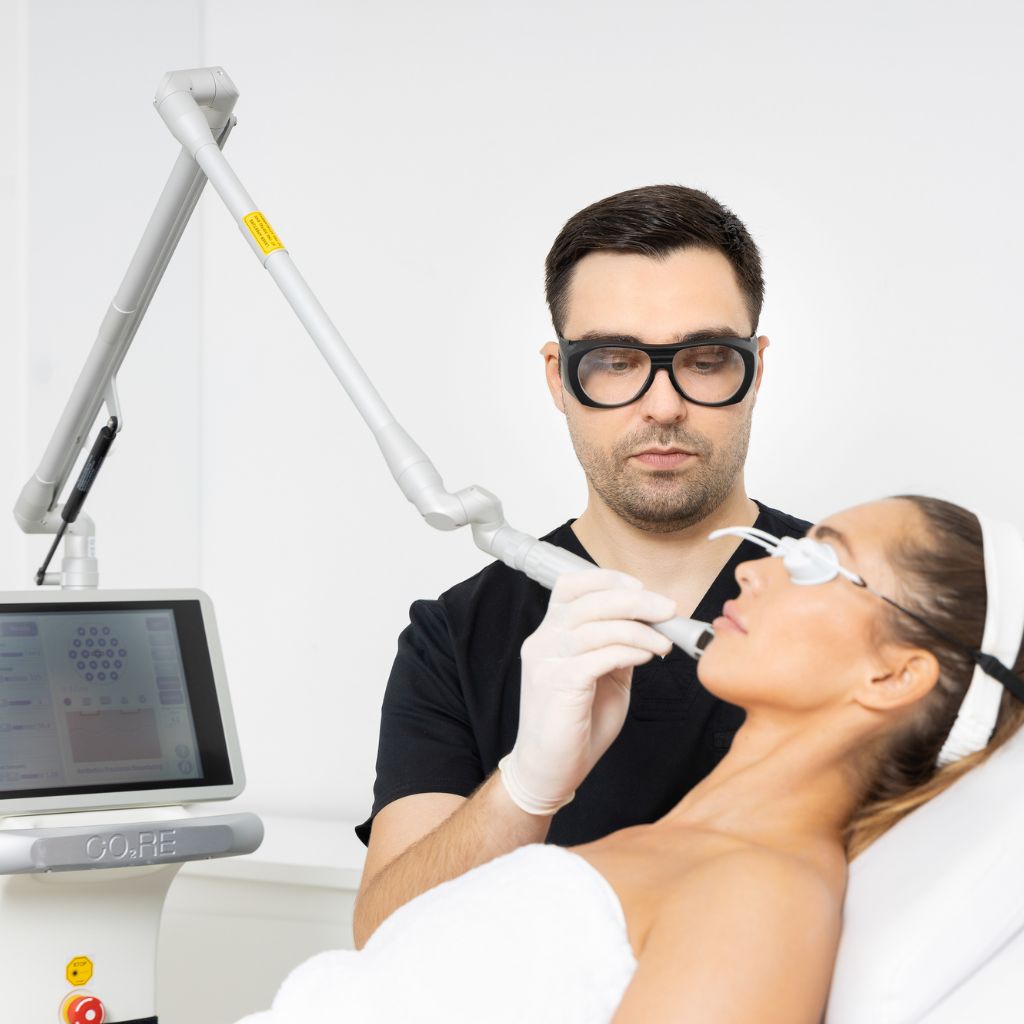
CO2 laser removal of keratoses The
CO2 laser removes the lesion tissue layer by layer. The doctor controls the area and depth of the treatment, and a small superficial wound remains at the site, which heals with the recommended aftercare.
With laser tissue vaporisation, no sample remains for histopathological analysis. If analysis is required, the sample is taken prior to such treatment or an alternative removal method is chosen.
Radiofrequency keratosis removal
The radiofrequency method uses high-frequency energy to remove the lesion. The procedure is usually performed under local anaesthesia, and for superficial removal, stitches are usually not needed.
If histopathological analysis is required, the doctor plans the method of taking the sample in advance. The possibility of analysis depends on the removal technique and tissue preservation.
Can multiple keratoses be removed?
Multiple lesions can be removed during a single visit. In the case of a larger number of keratoses, the procedure may be divided into several appointments, depending on the area being treated and the expected healing time.
Examination and preparation for removal
The first step is a dermatological examination. You can also come for an examination if you are not sure whether the lesion is a keratosis, a mole, a wart or a fibroma.
Tell the doctor what medications you are taking, whether you have allergies to local anaesthetics, and whether you have previously developed prominent scars.
Do not stop your prescribed therapy on your own, including medicines that affect blood clotting. Instructions for preparation will be provided according to the planned procedure.
Skin recovery and care
After removal, a small superficial wound remains, and a scab may form during the healing process. Do not pick it off or rub the treated area.
Healing time depends on the depth and extent of the procedure, as well as the area of the body. Therefore, the same timeframe does not apply to every lesion and every part of the body.
The doctor will explain:
- how to clean and care for the treated area;
- whether a bandage is needed;
- when you can use make-up and everyday cosmetics;
- how to protect your skin from the sun.
You can often return to your daily activities shortly after the procedure, while protecting the treated area from friction and injury.
Will removal leave a scar?
At the site of the removed keratosis, the skin may be pink, lighter or darker than the surrounding area. The colour difference may become less noticeable over time, but it is sometimes permanent. A scar is also possible.
The appearance of the skin after healing depends on the lesion itself, the method of removal and individual propensity for scarring.
Can keratoses recur?
Most removed seborrhoeic keratoses do not return, but new ones may appear elsewhere. If you notice a growth appearing again on the treated area, show it to a dermatologist.
Keratosis removal price
The price depends on the number and size of the lesions, the chosen method and the scope of the procedure. Following an examination, you will receive a removal proposal and cost information.
View current prices in our dermatology price list. According to the current price list, a dermatological examination is not charged separately if the lesion is being removed; the exception is treatment with liquid nitrogen.
Our dermatologists
Who performs keratosis removal?
Have a question?
Frequently asked questions about keratosis removal
Does keratosis removal hurt?
Local anaesthesia reduces pain during the procedure. Its application may sting briefly, and once the effect wears off, the treated area may feel tender. If you feel pain during the removal, tell the doctor.
Can keratosis be malignant?
Seborrhoeic keratosis is benign and does not turn into skin cancer. Actinic keratosis is a different lesion: it develops on sun-damaged skin and can progress in some patients, so treatment and monitoring are required. Some malignant lesions can resemble keratosis, which is why every lesion is examined before removal. dermatoscope.
How do you remove keratosis from the face?
On the face, keratoses are most commonly removed using a CO2 laser or radiofrequency, with careful dosing to ensure the skin heals as well as possible. The method is determined by the doctor based on the size and thickness of the lesion and the region.
Which is better — CO2 laser or radiofrequency?
No single method is best for every keratosis. The dermatologist chooses the removal method based on the findings and whether a sample is required for analysis.
Can keratoses be removed naturally or at home?
There is no home or natural remedy that removes seborrhoeic keratosis, as it is a thickening of the skin rather than a surface deposit. Do not cut, pluck or treat keratosis with wart removers without an examination. Such procedures can damage the skin, and the lesion you consider to be a keratosis may be something else.
Can keratoses be removed in summer?
Yes. Keratoses are removed using radiofrequency, while CO2 laser treatments are carried out from October to the end of March. The treated area must be protected from the sun until it heals, so if you are planning sunbathing or a trip to the seaside, please mention this when booking so that you can choose a suitable time.
Can a photograph replace an examination?
No, but it can be helpful for initial information. You can send a photograph via Viber or WhatsApp to 064 237 0707, for a rough price estimate. The type of lesion and the method of removal are determined during an examination.
Book keratosis removal in Belgrade
Imedic poliklinika is located at Kneza Miloša 23, 2nd floor, Belgrade. Opening hours: Monday–Sunday, 9:00–21:00.
Appointments can be booked by phone: 064 237 0707. If you contact us from abroad, we are also available via Viber and WhatsApp on the same number.

Author: Dr Ivica Jeremić
PhD in Medical Sciences (Molecular Medicine and Immunology), rheumatology subspecialist, dermatology resident.
Updated:
Expert sources
DermNet: Seborrhoeic keratoses
American Academy of Dermatology: Seborrheic keratoses – Diagnosis and treatment
Professional dermatological supervision and reliable information
The text on this page is written in accordance with the clinical practice of Imedic poliklinika and verified by a specialist in dermatovenereology. The expert sources are listed above. Keratoses are removed by a dermatovenereology specialist. The choice of method – CO2 laser or radiofrequency – is made individually, based on the examination, size, thickness and position of the lesions. An in-person examination by a dermatologist is essential for diagnosis and treatment planning.