Ultraformer III
Ultraformer III is a device for non-surgical lifting and skin tightening using focused ultrasound. The energy penetrates deeply at the level of the SMAS, the fibromuscular layer that a surgeon tightens during a facelift, while the surface of the skin remains untouched. There are no cuts, no needles, and no downtime.
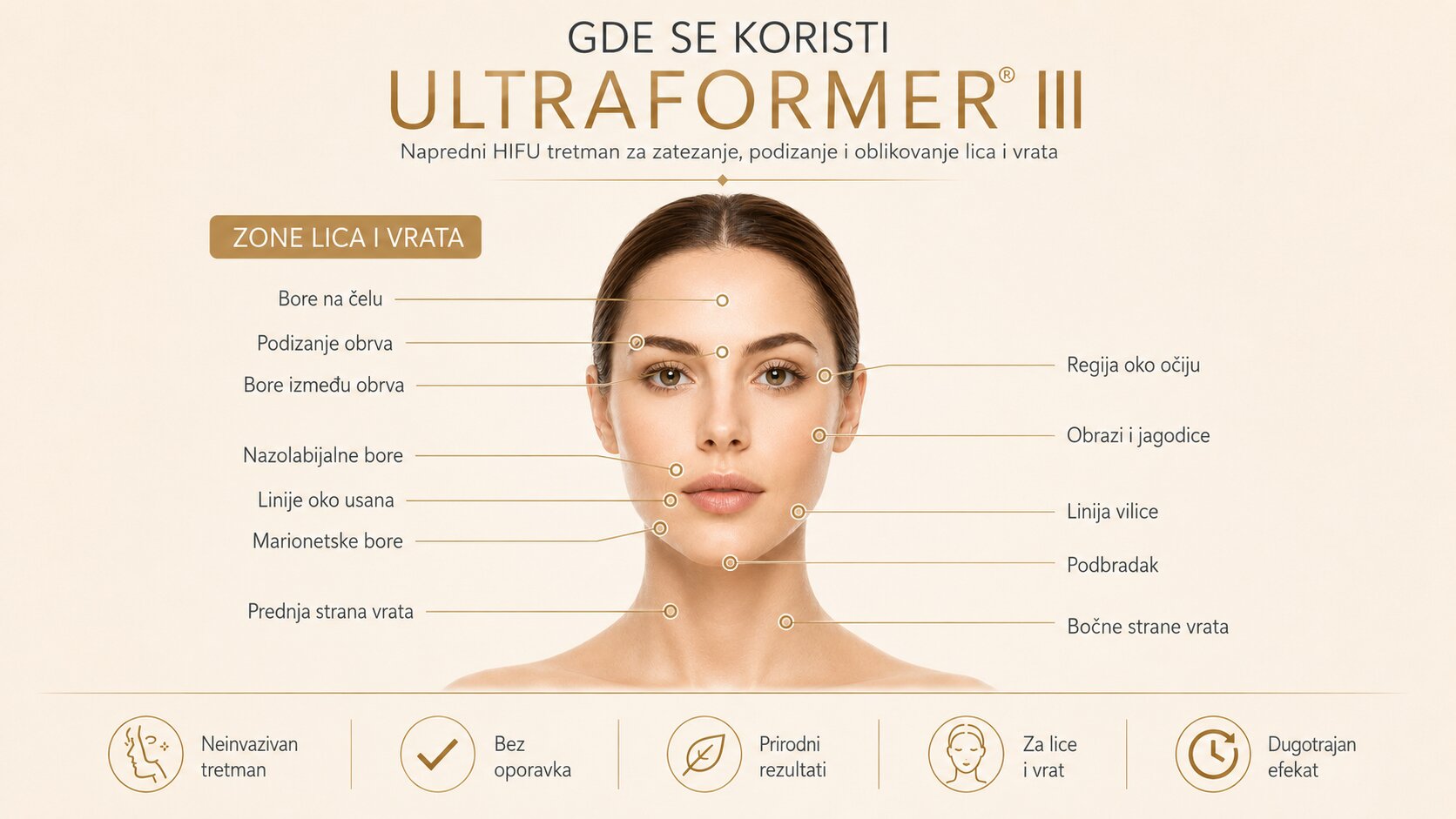
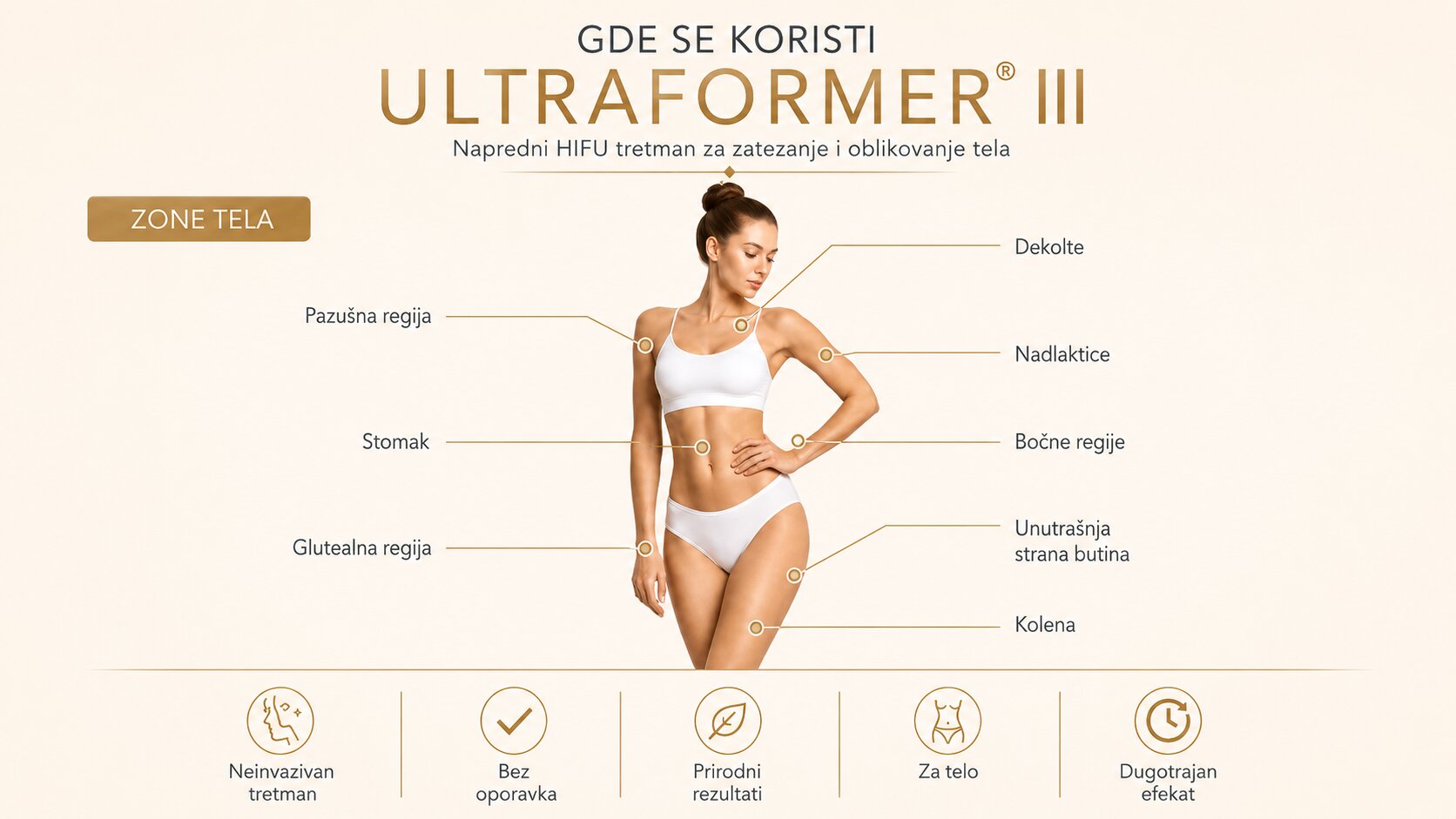
On the face and neck, the treatment achieves a more defined jawline, a less pronounced double chin, lifted cheeks and firmer neck and décolletage skin. How Ultraformer is combined with other neck treatments is described on our page about neck rejuvenation. On the body we work with deeper cartridges, so the same technology tightens skin of the upper arms, stomach, hips, thighs, knees and buttocks — areas that most commonly lose tone after childbirth or significant weight loss.
The result develops gradually. The first changes are felt after a few weeks, with the full effect after two to three months, which is how long the skin needs to form new collagen.
Treatment prices Ultraformer III
The price depends on the region being treated. The table shows the prices for individual regions and the most common combinations.
| Area | Price |
|---|---|
| Face | 84.000 RSD |
| Face and neck | 96.000 RSD |
| Face (excluding forehead) + neck | 84.000 RSD |
| Lower third of the face | 48.000 RSD |
| Lower third of the face + double chin | 60.000 RSD |
| Lower third of the face, double chin + neck | 72.000 RSD |
| Eye area | 24.000 RSD |
| Neck | 24.000 RSD |
| Under the chin | 20.000 RSD |
| Body region (10 × 10 cm) | 18.000 RSD |
Prices are in dinars. Payment by card in instalments is also available.
Ultraformer III – at a glance
| What it treats | Mild to moderate sagging of the facial skin, neck and décolletage, localised fat deposits and sagging skin on the body |
|---|---|
| Method | Focused ultrasound that acts down to the SMAS level |
| Anaesthesia | Not needed |
| Duration of treatment | 30 to 60 minutes |
| Number of treatments | Face: one to two; body: two to three |
| Maintenance | Once a year |
| Result | First changes after a few weeks, full effect after two to three months |
| Recovery | No cuts, no needles and no recovery time |
| Before treatment | Consultation and skin assessment to draw up a treatment plan |
What is Ultraformer III?
Ultraformer III is an ultrasound device made by the South Korean company Classys, designed for skin tightening and reshaping facial and body contours without surgical intervention. It operates on the principle of focused ultrasound: the waves converge at a single point at a predetermined depth. The skin surface remains intact, so the treatment can be performed all year round, on all skin phototypes.
Most patients who come to us for a consultation are between 35 and 55, with a recurring description: the jawline has lost definition, the cheeks have dropped, and the skin on the neck is no longer as taut as it used to be. These are the changes that occur when the SMAS, the supporting layer of the face, gives way, and at that stage surgery is not yet something they are considering. Ultraformer III provides a noticeable improvement in such cases and delays the moment when a surgical facelift becomes the only solution. We apply the same principle to the body, for skin that has lost its tone after childbirth or significant weight loss — on the stomach, upper arms, thighs and flanks.
Ultraformer III treatment
Are you a candidate for the Ultraformer III treatment?
Ultraformer III gives the best result in patients with mild to moderate skin laxity and loss of facial tone, who want a visible change without surgery and with no recovery time.
We consider the treatment if you want to:
- lift a sagging jawline and reduce a double chin,
- tighten the skin of your neck and décolletage,
- restore the firmness and elasticity of your facial skin,
- soften fine lines and wrinkles,
- maintain your contours without injectables or surgery,
- tighten the skin on your stomach, upper arms, thighs or flanks.
The treatment is safe for all skin types and is carried out all year round.
With very thin skin the approach is different, as such skin tolerates less energy. We then work more conservatively and more frequently combine Ultraformer III with treatments that affect skin quality.
During the examination, we assess the thickness and quality of the skin, the degree of sagging, and the amount of subcutaneous fat in each region. Based on this, we create a plan and tell you what results you can realistically expect.
How does Ultraformer III affect the skin?
Ultraformer III operates on the principle of focused ultrasound using MMFU technology (micro- and macro-focused ultrasound). The waves originate from a broad field, pass through the skin, and converge at a single point, where they release heat. The surface of the skin and the layers through which the waves pass remain intact. The effect occurs only where the beams meet.
The depth of that point is chosen in advance, by selecting the cartridge we place on the probe. On the face we work at depths from 1.5 to 4.5 millimetres, where the target is the dermis and SMAS. On the body we go deeper, from 6 to 13 millimetres, down to the subcutaneous adipose tissue.
How it affects the SMAS layer
The SMAS is the musculoaponeurotic layer that holds the soft tissues of the face in place. Over time it slackens, the tissues drop, and the jawline loses its definition. It is the layer that a surgeon tightens during a facelift and the only one where a lift truly takes place.
- Precise depth. We reach the SMAS using a 4.5-millimetre cartridge, which delivers energy precisely at the depth where this layer is located in most patients.
- Thermal coagulation points. The waves converge at a single point, heating the tissue there to around 65 °C. This creates microscopic thermal coagulation points — controlled micro-injuries within the SMAS itself, while the surrounding tissue remains intact.
- Immediate collagen contraction. Existing collagen fibres shrink and shorten at that temperature. That is where the first tightening effect comes from, which is visible in the first few weeks.
- Neocollagenesis. The micro-injury triggers the healing process. Over the next two to three months, fibroblasts produce new collagen and elastin in the SMAS layer. The supporting structure of the face is thereby lifted, and the contours of the jaw and neck become more defined.
Areas of the face and neck we treat
We use Ultraformer III on the face and neck for areas where the skin has lost its firmness and the contours have sagged. For each zone, we choose a different depth and a different power.
Jawline and double chin
The jawline is the area patients most often come in for. When the SMAS relaxes, the soft tissues of the cheeks descend over the lower jaw and its line is lost. Working at 4.5 millimetres along and beneath the jawline makes the contour more defined and the double chin less pronounced. In cases of a more pronounced double chin, we also use deeper cartridges, which target the subcutaneous adipose tissue in that zone.
Cheekbones and cheeks
On the cheeks we combine two depths. At 4.5 millimetres we lift the supporting layer, and at 3 millimetres we work on skin firmness and texture. This lifts the middle third of the face and makes the nasolabial folds less pronounced, as the tissue that deepens them is pulled back upwards.
Forehead and eye area
Here we use the MF2 cartridge, which is thinner and designed for sensitive areas. The goal is a gentle eyebrow lift and tightening of the upper eyelid skin, along with the reduction of fine lines on the forehead and the outer corner of the eye. This is an area where we keep the energy settings lower.
Area around the mouth
Fine vertical lines above the upper lip and downturned corners of the mouth are treated superficially, at 2 millimetres. The effect is subtle and is best seen in combination with treatment of the surrounding areas.
Neck and décolletage
The skin of the neck is thinner than that of the face and loses its tone earlier. We treat it at a depth of 3 millimetres, with caution in the thyroid gland area and along the major blood vessels, which are not treated. On the décolletage, at the same depth, we reduce the fine vertical lines caused by sleeping on one's side and sun exposure.
Body skin tightening
On the body, we use the macro-focused mode and deeper cartridges, from 6 to 13 millimetres. At those depths, the energy reaches the subcutaneous adipose tissue and the connective tissue septa within it, so the skin is tightened from deep within and the contour of the region becomes more defined.
The mechanism differs from the one on the face. Heat at the focal point damages fat cells, which break down through the process of apoptosis, and the broken-down contents are removed by the lymphatic system and metabolised over the following weeks. At the same time, the surrounding collagen fibres contract, so alongside a reduction in volume, firmer skin is also achieved. This is also the reason why the result on the body is measured by both circumference and skin appearance.
Stomach
We treat the stomach with the deepest cartridge, 13 millimetres. This is the area with the most data: with a single treatment, waist circumference is reduced by an average of about two centimetres. For female patients whose skin has slackened after childbirth, skin tightening is equally important, so we combine the depths.
Upper arms
The skin on the inner upper arm is thin and the fat layer is shallow, so here we use a 6-millimetre cartridge. This is a region where laxity is difficult to resolve through exercise and where patients most frequently seek a non-surgical solution.
Thighs and knees
The inner thighs are treated at 6 or 9 millimetres, depending on the thickness of the subcutaneous tissue. The area above the knees is treated more shallowly, as the fatty layer there is thin and skin laxity is more pronounced.
Flanks and buttocks
The flanks are an area where fat deposits remain despite diet and exercise, so we treat them at 9 or 13 millimetres. On the buttocks, the goal is primarily skin tightening and lifting the lower contour.
What is this treatment not?
Ultraformer III is not a weight loss method. It works on a limited area and a thin layer of tissue within it, so it does not replace a change in diet or liposuction for larger deposits. In patients with significantly increased body weight, the result is barely visible. It gives the best results in people with a stable weight, who have a localised deposit or loose skin left after childbirth or weight loss.
What does treatment at our clinic look like?
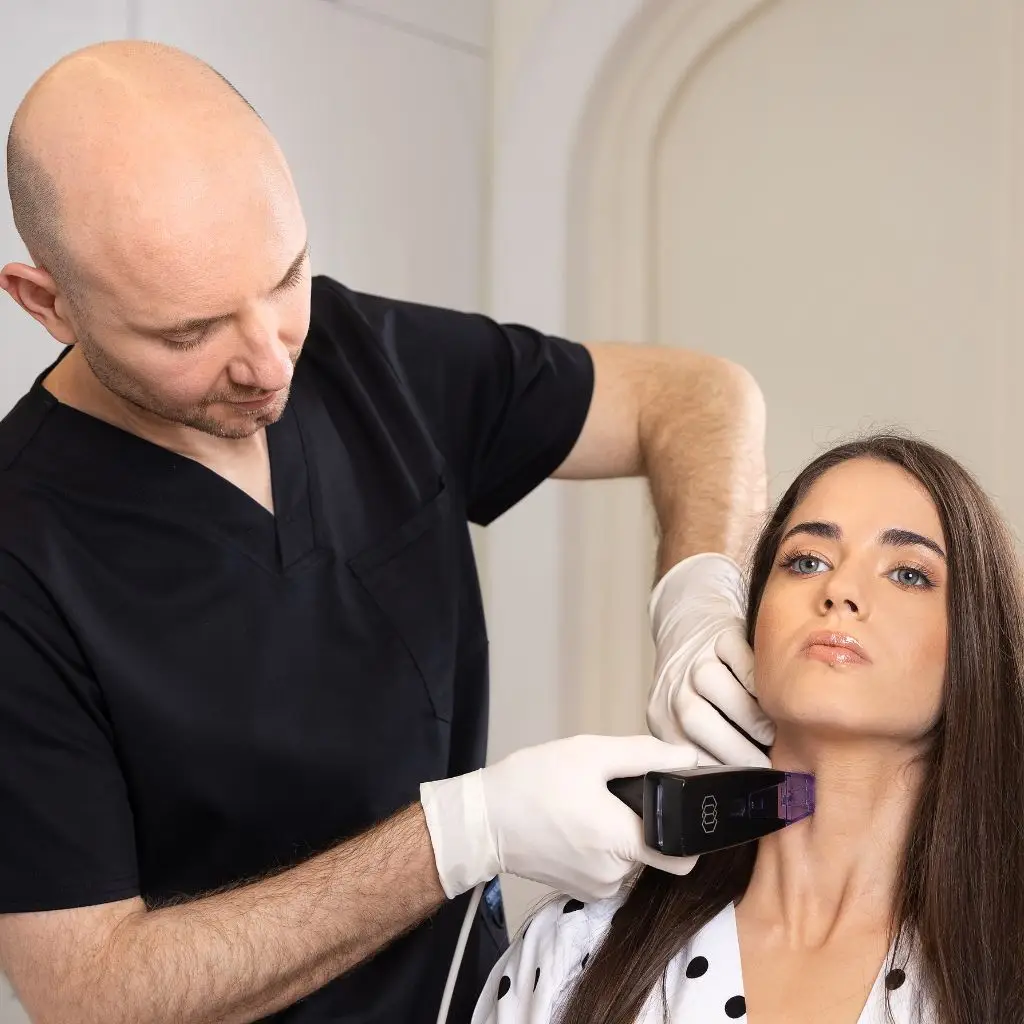
What does a treatment with the Ultraformer III device look like?
The treatment begins with an examination during which we assess the thickness and quality of the skin, the degree of sagging, and the amount of subcutaneous fatty tissue in each region. Based on this, we determine which cartridges to use, how many lines to perform per zone, and at what power. This plan is the reason why two patients using the same device receive different treatments.
We clean the skin and apply ultrasound gel, which ensures contact between the probe and the skin. Without it, the energy does not pass evenly. We then map out the region, as the treatment lines must be evenly distributed — the symmetry of the result depends on this.
The work is done zone by zone. The probe moves along the drawn lines, and with every release of energy you feel a brief warmth. We change the depth by switching to another cartridge, so in a single session the face is usually treated at two or three different depths.
The facial treatment takes between thirty and sixty minutes, depending on the number of areas treated. The body treatment takes longer, in proportion to the surface area. After the treatment, you return to your normal routine immediately — there are no bandages, dressings or restrictions on movement.
Does the Ultraformer III treatment hurt?
Treatment with the Ultraformer III device is not painful and can be described as a brief sensation of mild warmth or a fine prickling under the skin.
To make the treatment as comfortable and pleasant as possible, we follow these simple steps:
- Zimmer cooling
- Tailoring to you: We always fine-tune the pulse intensity according to your sensitivity threshold.
- No recovery time: As soon as the treatment is finished, any feeling of discomfort stops immediately and you can return to your everyday activities straight away.
In most cases, patients describe the treatment as extremely easy to tolerate, and the end result of tightened and refreshed skin as absolutely worth that brief sensation of warmth.
What does recovery look like?
No recovery time is needed. Immediately upon completion you return to your daily routine, without bandages, dressings or restrictions on movement.
In the first few hours the skin is slightly red and warm to the touch. This subsides during the day and is easily covered with make-up. In some patients, sensitivity to pressure remains in the treated region, lasting from a few days to two weeks and resolving on its own. Bruising is rare and occurs mainly in areas where the skin is thin.
For the first twenty-four hours, avoid saunas, hot showers, and strenuous exercise. Heat and increased blood flow during that period can prolong redness, without permanent consequences.
Beyond that, no special regime is needed. We recommend regular moisturising and sunscreen, as usual.
When are the results visible and how long do they last?
The result develops gradually, as it follows the rhythm of collagen production. The first changes are noticed after a few weeks — the skin appears firmer and smoother. The full effect is seen after two to three months, when the new collagen has formed.
Measurements also confirm this. In a study of thirty-two patients, skin elasticity measured by a cutometer significantly improved on the cheeks, stomach, and thighs. Another study, involving thirty-eight patients, showed that the best result is achieved if the treatment is repeated after three months. In a series of twenty female patients, three-quarters were satisfied with the results achieved.
In the majority of patients, the effect lasts 12 to 18 months. Skin continues to age at its usual pace, so the treatment is repeated once a year or as assessed.
How pronounced the result will be depends on your starting point. In patients with mild to moderate laxity, the change is clearly visible. For more pronounced laxity, we plan two treatments or combine it with other treatments. What this treatment reliably does is slow down the loss of skin tone — in patients who repeat it regularly, the difference compared to the natural course is visible in photographs from year to year.
How many treatments are needed?
For the face, one treatment a year is usually sufficient. In cases of mild to moderate sagging, a single procedure delivers results that last for twelve to eighteen months, so the next appointment is only planned once the effect starts to wane.
For more pronounced laxity, we plan two treatments in the first six months. The interval between them is at least three months — that is how long it takes to see the full effect of the first, so we perform the second treatment on already improved skin, thereby compounding the results.
As a rule, the body requires two to three treatments. Regions such as the stomach and flanks have a thicker tissue layer and a larger surface area, so the change builds up gradually.
Combining with other treatments
Ultraformer III fits well into a broader treatment plan, but we do not perform it in the same session as other procedures. Every treatment leaves the tissue in a recovery phase, and overlapping energies and injections on a single day unnecessarily burden the skin and make it harder to tell which treatment produced which effect.
Together with with hyaluronic acid fillers we leave a one-month gap in both directions. If a filler has already been injected, we do not direct the energy straight over the treated area, as the heat can affect its dispersion and longevity. For this reason, we always ask what was done and when during the consultation.
The same interval applies to botulinum toxin. As a rule, we perform Ultraformer III first and plan the injectable treatments a month later — on skin that has already tightened, the required amount is often smaller.
With treatments that work on skin surface quality, such as microneedling or radiofrequency, the combination makes sense because the depths do not overlap. Here, too, we keep an interval of at least four weeks.
Ultraformer III device technology
What does MMFU mean?
MMFU stands for micro and macro focused ultrasound (Micro & Macro Focused Ultrasound) and denotes two operating modes of the same device.
- Microfocused ultrasound delivers energy into small, precisely distributed points within the shallow and middle layers of the skin. This achieves tightening, lifting and better skin quality, which is why it is the mode we use for the face, neck and décolletage.
- Macrofocused ultrasound carries a higher energy density and acts deeper, at the level of the subcutaneous adipose tissue. We work on the body with this mode, where the goal is both skin tightening and contouring.
Why is depth of action key?
The depth at which energy is delivered determines what we will achieve with the treatment. Seven interchangeable cartridges cover a range from 1.5 to 13 millimetres, and each operates at its own frequency — the deeper the targeted tissue, the lower the frequency.
On the face we use depths from 1.5 to 4.5 millimetres. The 1.5 mm cartridge works in the superficial dermis and with it we improve skin texture and firmness. The 2 mm MF2 cartridge has a thinner design and is intended for sensitive areas — the forehead, the eye area and around the lips. At 3 millimetres we reach the deep dermis.
The 4.5-millimetre cartridge is the one that delivers the actual lift. In most patients, the SMAS lies at that depth — the fibromuscular layer that holds the soft tissues of the face in place and sags over time. When the SMAS contracts, the contours are lifted. Working in the superficial layers provides better skin quality, but not a lift, which is why those depths on the face are most commonly combined.
On the body, the depths are greater because the tissue has a different structure. The 6, 9 and 13-millimetre cartridges reach the subcutaneous fat tissue and the connective septa within it, so the skin on the stomach, upper arms and thighs is tightened from deep within.
Because of this, during the consultation we do not choose a treatment, but rather a combination of cartridges and the number of lines per region. We adjust the power within a range of 0.1 to 3.0 joules and tailor it to each zone individually — differently around the eyes than along the jawline.
The seven Ultraformer III cartridges
Each cartridge operates at a single frequency and depth. The table shows what we have available and what is achieved with each cartridge.
1. Micro-focused cartridges (Face, neck and décolletage)
- L7-1.5 (7 MHz / 1.5 mm): Works on the superficial dermis. Excellent for fine lines, texture, pores and delicate firmness.
- MF2 (5.5 MHz / 2.0 mm): Specifically designed, narrow cartridge for sensitive and narrow areas (forehead, around the eyes, around the mouth, periorbital wrinkles).
- L7-3.0 (7 MHz / 3.0 mm): Targets the deep dermis for collagen stimulation and tightening of the middle layer (cheeks, neck, décolletage).
- L4-4.5 (4 MHz / 4.5 mm): Reaches the SMAS layer (superficial musculoaponeurotic system). Crucial for the lifting effect, defining the jawline and reducing a double chin.
2. Macro-focused cartridges (Body and lipolysis/contouring)
All three body cartridges operate at a frequency of 2 MHz to achieve deeper penetration and higher energy density in order to target subcutaneous adipose tissue and tighten body skin:
- MF6 (2 MHz / 6.0 mm): Superficial subcutaneous adipose tissue and tightening of smaller/thinner areas on the body (knees, upper arms/bingo wings, upper stomach).
- MF9 (2 MHz / 9.0 mm): Medium-depth adipose tissue (thighs, flanks, inner legs).
- MF13 (2 MHz / 13.0 mm): Deepest subcutaneous adipose tissue (stomach, love handles, buttocks).
Is Ultraformer HIFU?
Ultraformer III is often referred to in practice as a HIFU device and that is not wrong — HIFU (High-Intensity Focused Ultrasound) is a broader term for all devices that operate using high-intensity focused ultrasound. Ultraformer III belongs to that group. The difference is that most HIFU devices operate only in micro-focused mode and cover a narrower range of depths, whereas Ultraformer III combines both modes and seven cartridges, ranging from 1.5 to 13 millimetres. Because of this, a single device can treat both the delicate skin of the eyelids and the subcutaneous fat of the stomach.
For the patient, this practically means that the treatment plan does not boil down to choosing the device, but rather to selecting the depth and mode for each region individually.
Have a question?
Answers to frequently asked questions
What problems is Ultraformer III used for?
On the face and neck, we perform the treatment for a sagging jawline and prominent double chin, drooping cheeks, pronounced nasolabial folds, sagging skin on the neck and décolletage, as well as for a mild eyebrow lift. On the body, we use it for sagging skin on the stomach, upper arms, thighs and flanks, most commonly after childbirth or weight loss. A detailed overview by area can be found in the face and body sections.
When is the full effect of the Ultraformer III treatment seen?
The first changes can be noticed after a few weeks, and the full effect develops over two to three months. At that point, the change in tightness and contour of the treated region is assessed at a follow-up appointment.
How long does the effect last?
In most patients, twelve to eighteen months. After that, the skin continues to age at the usual rate, so the treatment is most commonly repeated once a year. The claim that a single treatment every two to three years is sufficient, which is sometimes found on the internet, does not correspond to what we see in practice or to published results.
Does the treatment affect facial expressions?
No. Ultraformer III acts on the skin and the supporting SMAS layer, not on the muscles of facial expression and their nerves. Facial expression remains completely preserved — skin firmness and the position of the contours change, not mobility.
Can the face become thinner after Ultraformer III treatment?
With a correctly performed treatment, no. On the face we work at depths of up to 4.5 millimetres, where the target is the SMAS, not the fat pads. Loss of volume is described in the literature as a complication that occurs with incorrectly set parameters, repeated passes over the same zone or insufficient spacing between energy treatments. Therefore, the depth, power and number of lines are determined individually, and in patients with a thinner face we consciously take a more conservative approach.
Does Ultraformer III melt body fat?
It acts on subcutaneous fatty tissue, but it is not a weight loss method. With deeper cartridges, the heat damages fat cells in a limited zone; they break down and are removed by the lymphatic system over the following weeks. In the case of the stomach, the circumference is reduced by about two centimetres after a single treatment. With larger deposits, the result is barely visible, and other methods are better in such cases.
Is any preparation needed before the treatment?
Special preparation is not required. It is enough that the skin on the day of the treatment is clean, without make-up and without active inflammatory changes. At the consultation, please tell us which aesthetic procedures you have had and when, as the appointment depends on this.
Can face and body treatments be done in the same appointment?
Yes, absolutely. You can treat two (or more) regions simultaneously during the same visit – for example, the face and a body region (such as the stomach, upper arms or knees).
Can the treatment be done in summer?
Certainly. The energy is delivered beneath the surface, the skin remains intact and the treatment does not increase sun sensitivity. Regular sun protection still applies, as always.
From what age can you have Ultraformer III?
There is no fixed age limit; rather, it depends on the condition of the skin. The majority of our patients are between 35 and 55 years of age. In younger individuals, the treatment is sometimes performed to preserve skin tone, but only when there is a genuine indication for it, not as a rule.
How soon after fillers can I have Ultraformer III?
We leave a one-month gap, in both directions. We do not direct energy straight over the zone where the filler was injected, as the heat could affect its distribution and longevity.
What is better — Ultraformer III or Morpheus8?
They do not solve the same problem. Ultraformer III works with focused ultrasound, without punctures, and delivers energy deeply, at the level of the SMAS layer — which is why it is stronger when there is a need to lift a sagging contour, jawline, or double chin.
Morpheus8 emits radiofrequency energy through fine needles and acts in the dermis, yielding a better result on skin texture, pores, acne scars, and fine lines.
Ultraformer III requires no recovery time and is usually performed just once, whereas Morpheus8 involves a few days of redness and is done in a series. Some patients have both concerns, so we plan both treatments in the same programme, at separate appointments and with an interval of at least a month.
When is Ultraformer III not enough?
When there is truly a lot of excess skin and it gathers into larger folds, focused ultrasound cannot solve this. In those cases, a surgical lift provides the result, and we tell you this during the consultation, rather than performing a treatment without the prospect of a result.
Contraindications
Focused ultrasound treatment (Ultraformer III) is extremely safe and non-invasive, but to preserve the patient's health, it is not applied to pregnant women and nursing mothers, nor to people with implanted pacemakers, metal implants, or stents in the region being treated.
Also, the treatment is contraindicated in patients with active bacterial, viral or fungal skin infections (including active herpes simplex or open wounds at the treatment site), autoimmune diseases in the active phase, blood coagulation disorders or those using anticoagulant therapy.
Additionally, the procedure is not performed on areas with cancerous lesions, severe forms of acne, nor immediately after the application of hyaluronic acid fillers, botulinum toxin or threads in the treatment zone (until an adequate time gap has been made in agreement with a doctor).
Expert sources
- Ko EJ, Hong JY, Kwon TR, et al. Efficacy and safety of non-invasive body tightening with high-intensity focused ultrasound. Skin Res Technol. 2017;23(4):558-562.
- Choi SY, Yoo KH, Suh JH, et al. Tightening effects of high-intensity focused ultrasound on body skin and subdermal tissue: a pilot study. J Eur Acad Dermatol Venereol. 2016;30(9):1599-1602.
- Lee IH, Kim MB, Kim HW, et al. Efficacy of high-intensity focused ultrasound for lifting and tightening of the face and neck. Arch Aesthetic Plast Surg. 2015;21(2):65-69.
- Byun KA, Lee JH, Lee SY, et al. High-intensity focused ultrasound decreases subcutaneous fat tissue thickness by increasing apoptosis and autophagy. Biomolecules. 2023;13(2):392.
- Fabi SG, Goldman MP, Mills DC, et al. Combining microfocused ultrasound with botulinum toxin and temporary and semi-permanent dermal fillers: safety and current use. Dermatol Surg. 2016;42(Suppl 2):S168-S176.
- Classys Inc. Ultraformer III User Manual & Technical Specifications. Seoul, South Korea; 2020.
Related topics
Book an Ultraformer III treatment in Belgrade
Imedic poliklinika is located at Kneza Miloša 23, 2nd floor, Belgrade. Opening hours: Monday–Sunday, 9:00–21:00.
Appointments can be booked by phone: 064 237 0707. If you contact us from abroad, we are also available via Viber and WhatsApp on the same number.
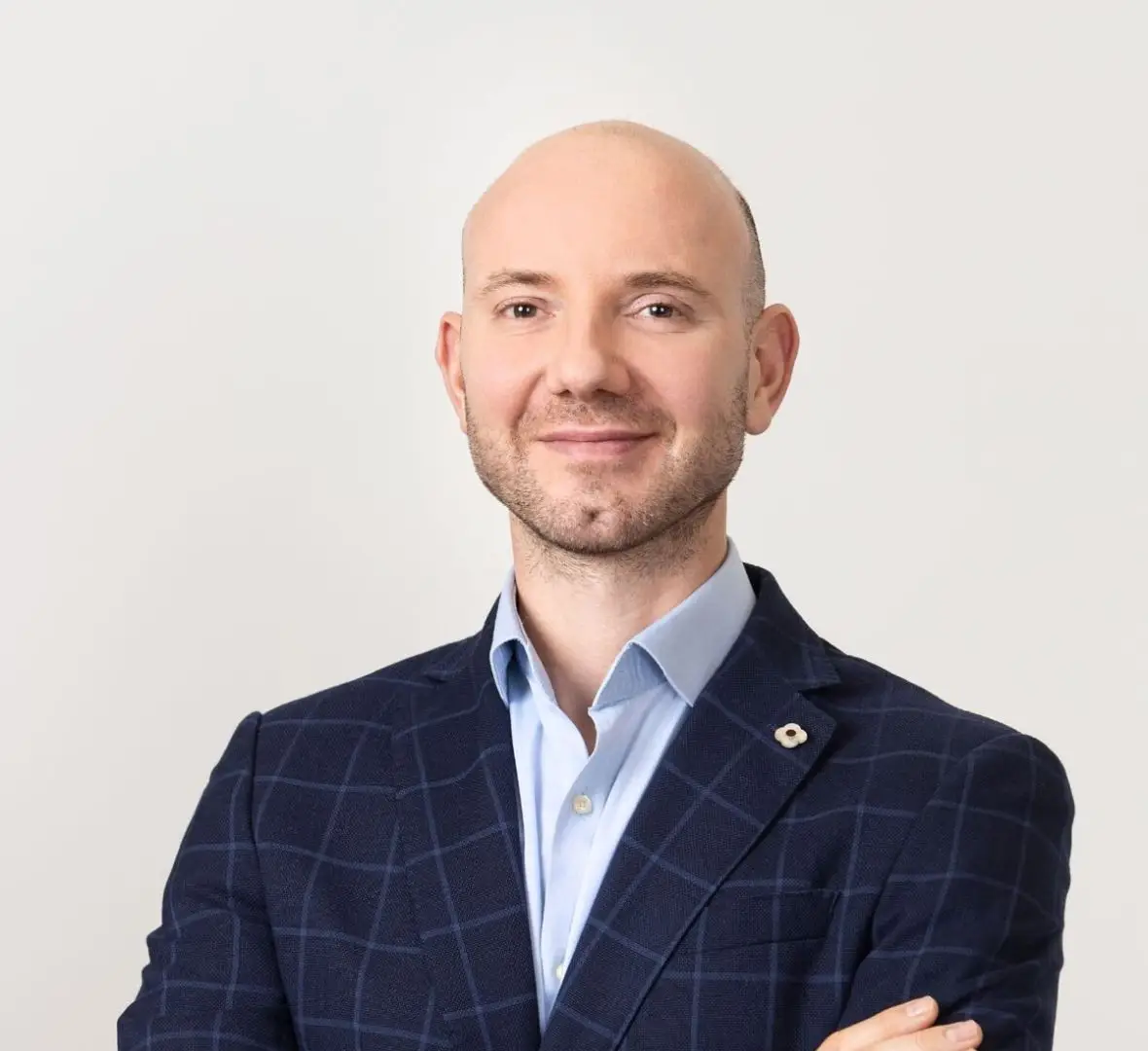
Author: Dr Ivica Jeremić
PhD in Medical Sciences (Molecular Medicine and Immunology), rheumatology subspecialist, dermatology resident.
Updated: