Fractional CO2 laser in Belgrade
Fractional CO2 laser skin resurfacing is used for acne scars, shallower wrinkles, hyperpigmentation, stretch marks, excess skin on the eyelids and other imperfections.
CO2 laser – in brief
| What it treats | Fine to moderately deep wrinkles, sun damage, scars, skin firmness and texture |
|---|---|
| Anaesthesia | Anaesthetic cream |
| Duration of treatment | Usually 20 to 60 minutes, depending on the area |
| Recovery | Redness and swelling, followed by skin darkening and peeling; the redness subsides over the following weeks |
| Result | Firmer, smoother and more even skin; the effect continues through the production of new collagen |
What is the Candela CO2 fractional laser?
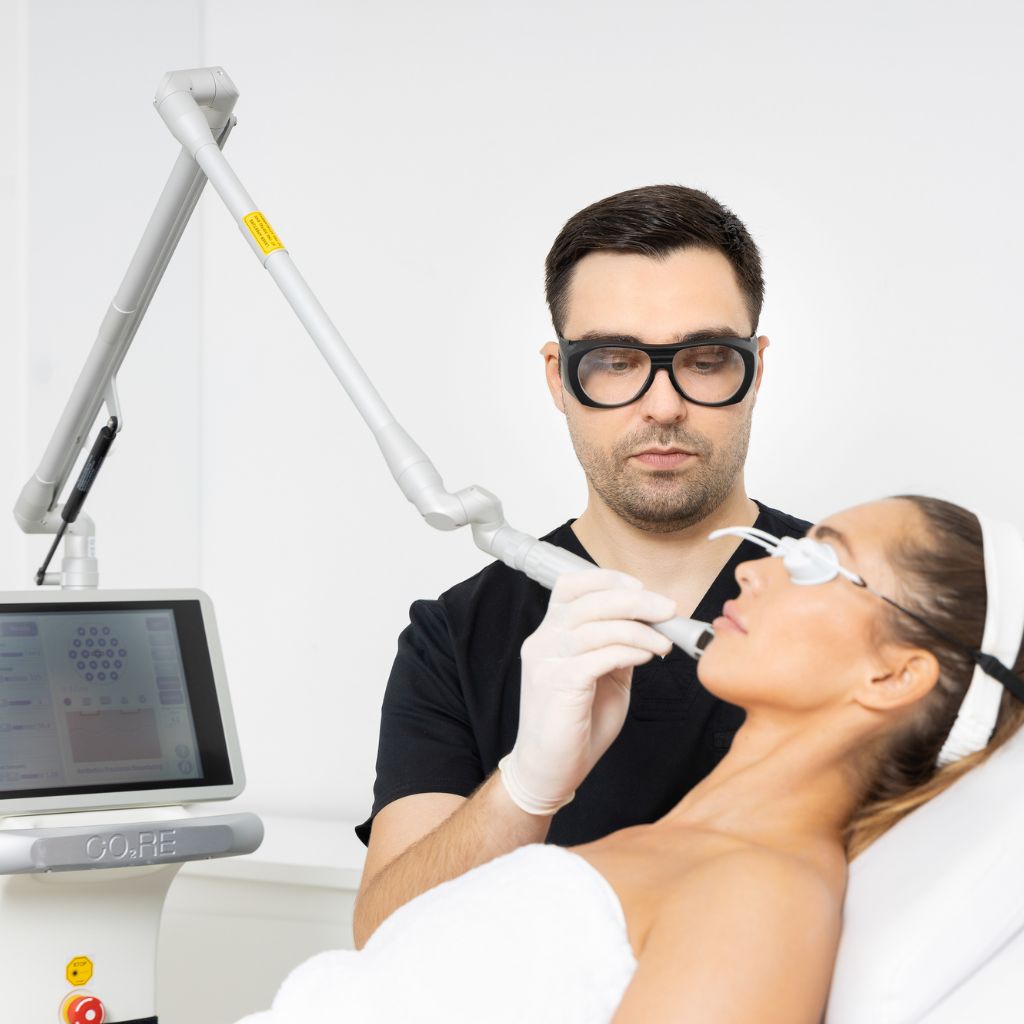
A CO₂ laser is a medical laser used for skin resurfacing, tightening and rejuvenation, as well as for treating various skin conditions. It is applied in aesthetic medicine, dermatology and plastic surgery, most commonly when a more pronounced improvement in skin quality is needed. It is an ablative fractional laser, which means it works in a targeted way – it creates microscopic zones in the skin that trigger a powerful regeneration process, while the surrounding healthy tissue remains intact. In this way, the skin is renewed from within, the production of new collagen is stimulated, and the skin becomes firmer, smoother and more even. The CO₂ laser enables the precise treatment of various skin depths, depending on the problem being addressed – from surface irregularities, through wrinkles and scars, to more pronounced signs of ageing. It is precisely this depth control that allows for a good balance between treatment effectiveness and recovery time. For selected depressed scars related to deeper tissue, the plan may also include scar subcision; the need for a combined approach is assessed at a consultation.
A CO₂ laser is also used for removing selected skin lesions, including xanthelasma on the eyelids. Treatment of the eyelid area requires a special treatment plan and eye protection during the procedure.
How a CO2 laser works and what it treats
How does a CO2 laser work?
The Candela fractional CO2 laser is unique in that it operates on the principle of using a dual laser wave which can simultaneously treat the surface layer of the skin epidermis and the deeper layer of skin dermis. The CO2R laser treatment itself begins with an ablative procedure, namely the removal of a thin, superficial layer of damaged skin.
After that, the laser creates micro-channels in the deeper layers of the skin while simultaneously heating the tissue, thereby stimulating the production of collagen and new, healthy skin cells. It targets exclusively damaged skin, while the surrounding healthy tissue remains untouched. This enables faster skin healing and consequently significantly shortens the recovery period.
What problems does the CO2 laser solve?
The CO2 laser can be used for treating the face and body, specifically for:
- scars and acne scars
- fine lines and wrinkles, deep wrinkles
- tightening sagging skin
- skin rejuvenation
- uneven skin tone
- warts and papillomas
- stretch marks
- hyperpigmentation, pigmented spots, age spots
- removal of minor excess skin and tightening of the eyelids.
The CO2 fractional laser precisely removes outer layers of damaged skin and stimulates its regeneration. In this way, fine to moderately deep wrinkles, sun damage and scars can be treated, and skin firmness, texture and laxity can also be dramatically improved. For acne scars, the CO2 laser is most often part of a combined treatment plan, and you can find out more about this on our page about laser acne scar treatment.
What are the characteristics of the CO2 laser?
The CO2 laser allows for operation in several different modes, which means the treatment can be precisely tailored to the condition of the skin and the problem we want to solve. It is precisely this flexibility that makes it possible to treat various conditions with a single device – from surface imperfections to deeper wrinkles and scars.
- Light mode is the mildest mode of operation and is used for superficial skin renewal. It acts as a controlled peel that removes damaged cells and refreshes the complexion. It is often combined with treatments such as PRP, mesotherapy or biorevitalisation in order to further improve hydration and skin quality.
- Mild mode works on both the surface and deeper layers of the skin. Alongside gentle regeneration of the epidermis, this mode stimulates collagen production, leading to improved skin texture, firmness and a more even appearance.
- Deep mode penetrates deeper into the skin and is used when a more pronounced effect is desired. It is intended for treating wrinkles, fine lines and scars, as it more intensively stimulates collagen remodelling and the renewal of the skin's structure.
- Fusion mode combines surface and deep effects, meaning it merges the Light and Deep operating modes. This simultaneously achieves skin surface renewal and collagen stimulation in the deeper layers, leading to visible skin tightening and rejuvenation.
What does the treatment involve?
What does recovery look like – day by day?
Recovery after a CO2 laser usually takes 5 to 7 days, depending on the intensity of the treatment. This is a normal and expected part of the skin regeneration process.
- Day one: The skin is red, warm and tight, with a stinging sensation similar to a bad sunburn. Mild swelling is also possible, particularly in the eye area.
- Days 2–3: Redness and swelling are still present, and the skin is starting to darken and a thin surface crust forms. This is a sign that the skin renewal process has begun.
- Days 3–5: Skin peeling occurs. The old, damaged layer is gradually removed, and new, more sensitive skin appears underneath. During this period, it is important not to peel the skin mechanically and to adhere to the recommended skincare routine.
- Days 5–7: Most surface changes settle down. The skin is still slightly pink, but looks fresher, smoother and more even.
- The following weeks: The redness gradually subsides, while the effect of the treatment continues from within through the process of new collagen creation. The skin becomes firmer, more elastic and of visibly better quality.
What are the advantages of the CO2 laser?
- Long-lasting results. The CO2 laser skin resurfacing procedure will ensure that the impressive results do not fade overnight, which is one of the greatest benefits of this treatment.
- Minimally invasive procedure. Laser treatment does not require general anaesthesia, incisions or bandages, unlike surgical skin procedures. Considering this, CO2 laser treatment has fewer potential complications and risks compared to surgical procedures. Likewise, laser skin resurfacing results in milder side effects that disappear within a few days of the procedure itself.
- Reduced recovery period. It is true that following the CO2 laser treatment you will experience minor redness and swelling, which can last for a few days. Since it acts exclusively on damaged skin, while the surrounding healthy tissue remains intact, the laser treatment enables faster skin healing and therefore significantly shortens the recovery period.
CO2 laser for the eyelids and under-eye area
The skin of the eyelids and the under-eye area is thin and is the first to show fine wrinkles and a loss of firmness. In this area, the fractional CO2 laser tightens the skin of the upper eyelids, softens wrinkles around and under the eyes, and improves the texture of wrinkled under-eye skin.
The laser gives a good result for mild to moderate excess skin on the upper eyelids and for fine lines under the eyes. Pronounced excess skin and fatty bags under the eyes are resolved surgically, so at the consultation we assess which approach suits you. Xanthelasma, yellowish deposits on the eyelids, are also removed with a CO2 laser.
After the treatment, the eyelids are swollen and red for a few days. The skin recovers in 5 to 7 days, and the tightening continues over the following months as new collagen is produced.
CO2 laser facial rejuvenation and fillers – before and after


CO2 laser tightens the skin and evens out texture, while fillers restore lost volume. The photographs show female patients in whom a fractional CO2 laser was combined with fillers: the skin is smoother and more even, and the facial features look more rested.
Result
Firmer, smoother and more even skin
Recovery
Five to seven days, with redness and peeling of the skin
Season
From October to the end of March
Acne scars before and after CO2 laser

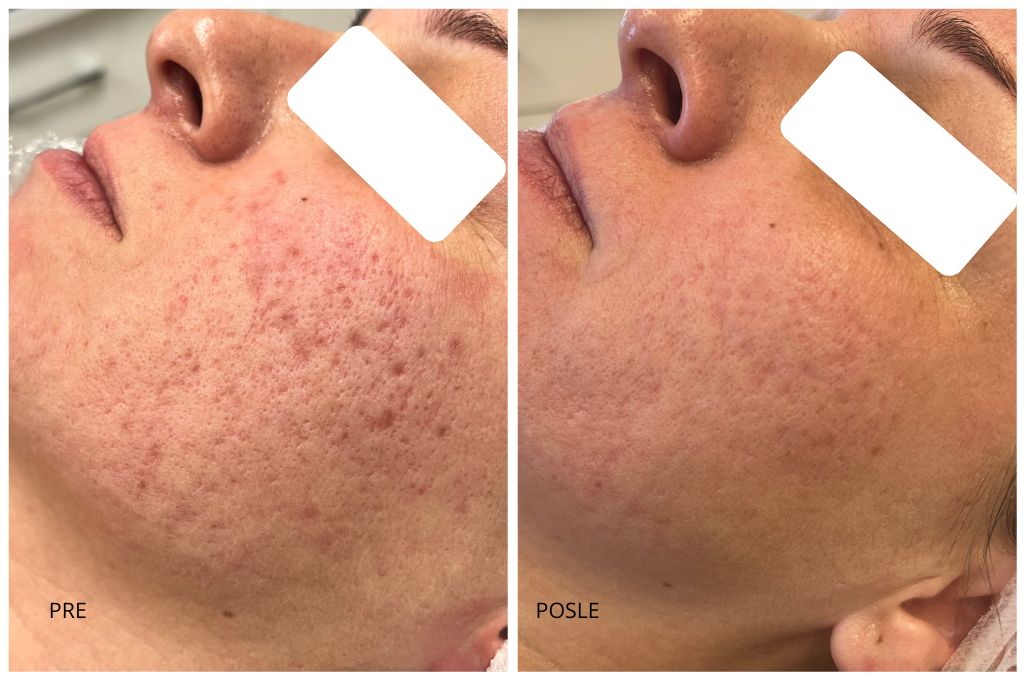
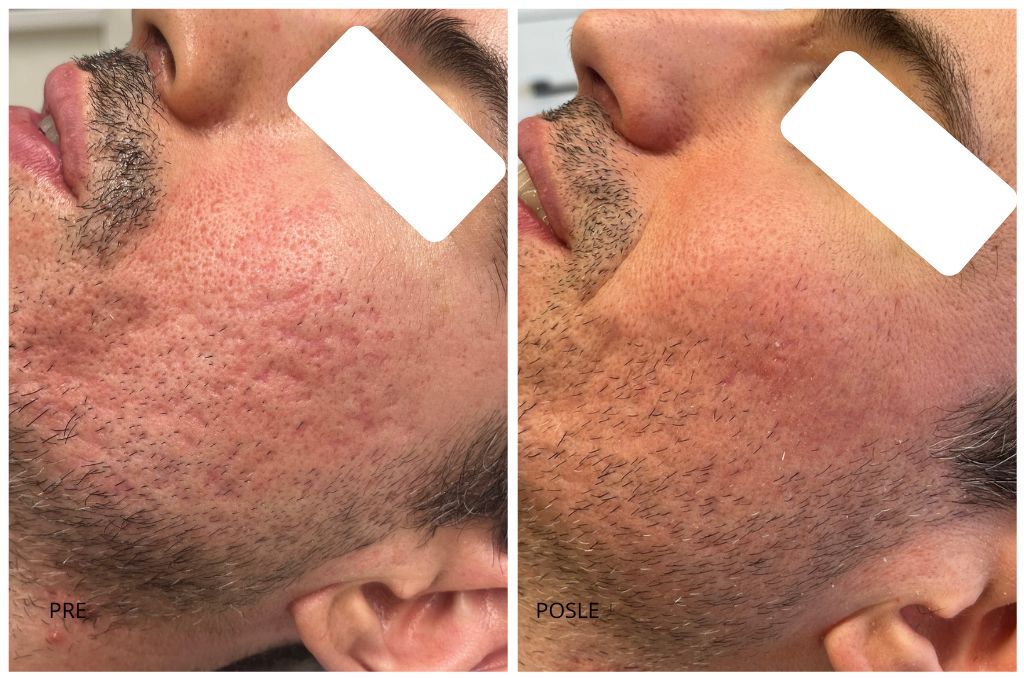
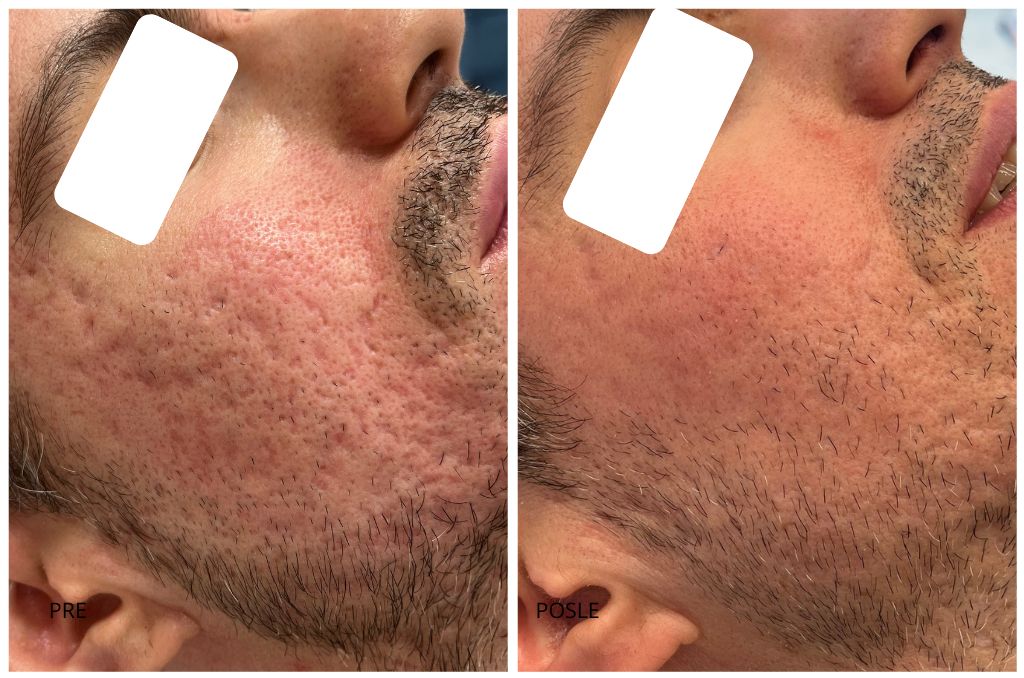
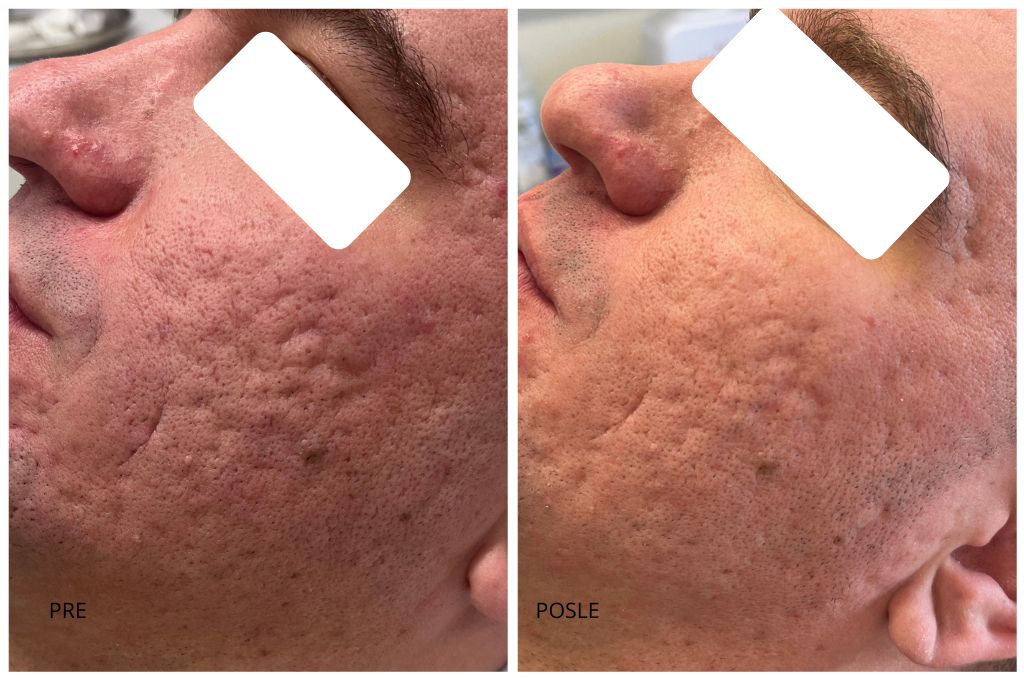
The fractional CO2 laser gradually softens acne scars and evens out skin texture. The photographs show patients' cheeks before and after treatment: the scars are shallower and the skin surface is smoother.
Anaesthesia
Anaesthetic cream
Duration of treatment
Usually 20 to 60 minutes, depending on the area
Effect
It continues through the creation of new collagen
CO2 laser price
Have a question?
Answers to frequently asked questions
How do you prepare your skin for this treatment?
- Avoid sunbathing or intense sun exposure and use sunscreen for at least four weeks before the treatment. Avoid deep facial peels for four weeks before the treatment (including chemical peels and other laser treatments).
- Do not use photosensitising medicines for at least 72 hours before treatment.
- If you have previously had herpes in the area to be treated, inform your doctor and start using antiviral medication according to the instructions. Inform your doctor if you are using any medication.
What time of year is CO2 laser treatment performed?
Fractional CO2 laser treatment is performed during periods of lower solar activity, most commonly from autumn to early spring. The ideal time is when there is no intense sun exposure, as the skin is more sensitive after the treatment and requires strict photoprotection.
Why is a CO2 laser not recommended in summer?
Following the treatment, the skin goes through a regeneration process and is temporarily more prone to pigmentation. During this period, the sun increases the risk of dark spots, prolonged redness and uneven recovery, which is why CO₂ laser treatments are performed from October to the end of March rather than during the summer months.
Is the treatment painful?
Thanks to the anaesthetic cream, the treatment is in most cases well tolerated. While the laser is working, warmth or a slight stinging sensation may be felt, but without pronounced pain.
How many treatments are needed?
Depending on the problem being treated, one treatment is sometimes sufficient, while for scars five to six treatments are required, at intervals determined by the doctor.
Can a CO₂ laser remove shallower wrinkles and scars?
The CO2 laser can significantly soften deep wrinkles and scars and improve skin quality, but it cannot completely erase all imperfections. The goal of the treatment is a visible improvement, not perfect, “filtered” skin.
CO2 laser, ClearLift and Erbium laser – what is the difference?
CO₂ fractional laser
A CO₂ laser is an ablative laser, meaning it works by removing microscopic layers of skin and triggering powerful regeneration. It is used when problems are more pronounced – deeper wrinkles, acne scars, noticeable sun damage and a significant loss of skin quality.
The advantage of a CO₂ laser is its powerful rejuvenating and resurfacing effect, albeit with a noticeable recovery period. The skin goes through a phase of redness, peeling and regeneration, and the results develop gradually over the following weeks and months.
ClearLift (non-ablative laser)
ClearLift is a non-ablative laser, which means it does not damage the skin's surface. Energy is delivered to the deeper layers while the epidermis remains intact. This treatment is intended for mild to moderate conditions, such as fine lines, uneven texture, mild sagging and subtle hyperpigmentation.
The advantage of ClearLift is minimal or non-existent recovery, but the results are also more gradual and milder compared to the CO₂ laser. It is often performed in a series of treatments.
Erbium laser
An Erbium laser is an ablative laser, but it works more shallowly and in a more controlled manner compared to CO₂. Because of this, it provides a good balance between effectiveness and recovery. It is most commonly used for superficial wrinkles, fine texture, discolouration and refreshing the complexion.
The recovery time is shorter than with the CO₂ laser, but the effects are also less intense, particularly in the case of deeper scars and pronounced skin sagging.
How do you know which laser is right for you?
The choice of laser depends on the depth of the problem, the condition of the skin, recovery tolerance and the expected result.
– If the goal is powerful regeneration and addressing pronounced changes, a CO₂ laser is chosen.
– If the priority is gradual improvement without interrupting daily activities, ClearLift is the better option.
– If a medium effect with a shorter recovery time is needed, the Erbium laser is often a good compromise.
In practice, these lasers do not compete, but are often combined or used in different stages of treatment, depending on the skin's needs.
When is a laser not the right choice?
Laser treatments act exclusively on the skin – on its surface and, depending on the type of laser, at various depths within the skin itself. What is important to understand is that no laser can lift a sagging face, return descended tissues to their original position, or resolve the loss of firmness in subcutaneous tissue and muscles.
When laxity of the deeper facial structures, descent of the fat pads and loss of support in the subcutaneous tissue occur, a laser can improve the quality of the skin covering it, but it cannot tighten or lift what is beneath the skin. In those cases, the skin may look smoother and fresher, but the facial contour remains unchanged.
That is why lasers are not the right choice for pronounced loss of facial firmness, sagging cheeks, a sagging jawline or a double chin caused by the shifting of deeper tissues. In such situations, treatments that act below the skin level are needed, such as certain radiofrequency procedures, injection methods or surgical interventions, depending on the degree of change.
A laser is a great tool for improving skin quality, but not for a face lift. Understanding this distinction is key to having realistic expectations and a good final result.
When are the results of CO₂ laser treatment for acne scars visible?
The change develops after the skin has healed and continues through collagen remodelling over the following months. A series of treatments is often planned for scars, depending on their depth and surface area.
Contraindications
The treatment is not recommended during pregnancy and breastfeeding, in cases of active skin infections, herpes, pronounced inflammatory changes, a tendency towards keloid scars, nor in individuals who have recently had intensive sun exposure. A tendency to form keloids is an important contraindication for cosmetic CO2 resurfacing, whereas the targeted treatment of an already existing keloid is a separate medical indication, which the doctor assesses individually. You can read more about this on our page about treatment of keloids and hypertrophic scars.
Which laser is the right choice for your skin?

Answer a few short questions and find out which laser treatment best suits your skin type, concern and expectations. The result is based on indications, the severity of the skin changes and recovery tolerance.
Related topics
Book a CO2 laser treatment in Belgrade
Imedic poliklinika is located at Kneza Miloša 23, 2nd floor, Belgrade. Opening hours: Monday–Sunday, 9:00–21:00.
Appointments can be booked by phone: 064 237 0707. If you contact us from abroad, we are also available via Viber and WhatsApp on the same number.

Author: Dr Ivica Jeremić
PhD in Medical Sciences (Molecular Medicine and Immunology), rheumatology subspecialist, dermatology resident.