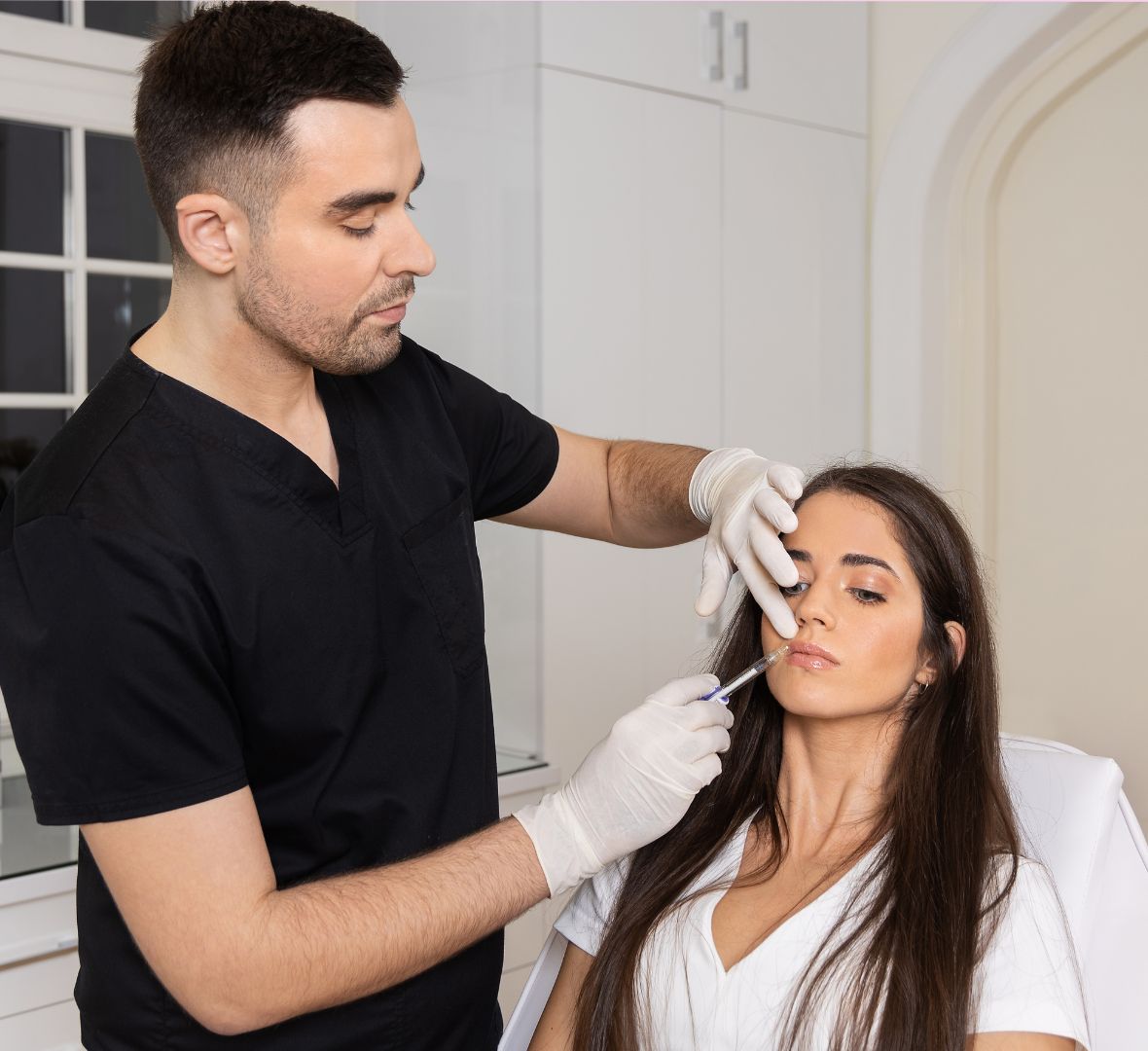
It may seem unusual to discuss the treatment of acne scars precisely in the spring and ahead of summer, when a large number of scar treatments are actually not performed. With the arrival of sunny days, procedures such as fractional CO2 lasers and erbium lasers, and even more aggressive chemical peels, are generally stopped or carefully …
Acne scar treatment begins with an examination and planning, regardless of the time of year. The scheduling of certain procedures is adapted to the condition of the skin, sun exposure and the ability to carry out post-treatment care. The examination determines what makes sense to do now and what to leave for later.
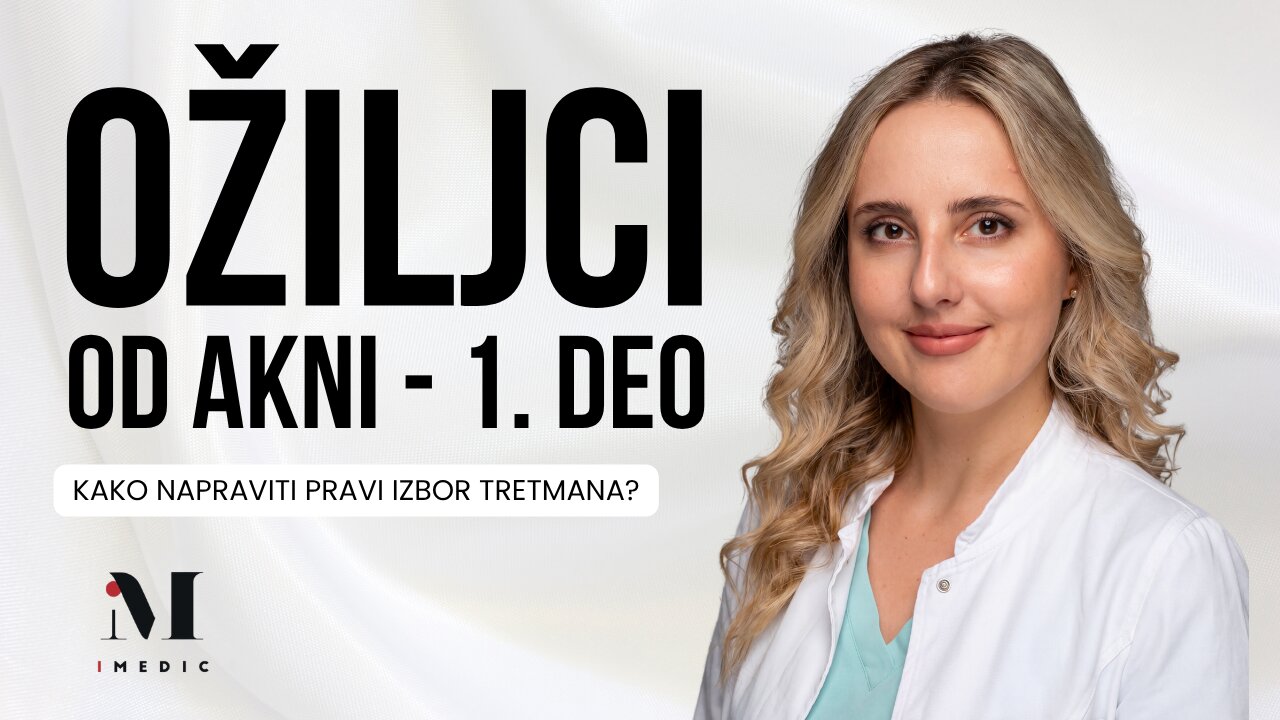
In the video, Dr Marina Ćirović explains why it is important for a patient to be well-informed before every treatment cycle: what options are available, what treatments can be performed, what expectations to have, and how long the whole process can actually take. Acne scar treatment is not a single procedure, a single visit or a single result. It is a process that requires an examination, a plan, continuity, and a realistic understanding of how skin heals, how scar tissue is remodelled, and why results do not happen overnight.
Everything about acne scar examination and treatment at Imedic can be found on our page about acne scars.
Before treatment, the most important thing is to know what you are getting into
When someone decides to treat acne scars, they usually already have one idea in mind: “I want to remove them.” And that is completely understandable. Scars on the face are not just an aesthetic detail, but something a person sees every day in the mirror, in photographs, in certain lighting, often much more than others notice them. However, the first step should not be choosing a treatment, but getting informed. Before entering into any therapy cycle, it is important to know what can realistically be achieved, how many treatments may be needed, in what order they are done, and why the same approach is not applied to every patient.
Not all acne scars are treated the same way. Changes that have occurred recently and those that have existed for years are not the same. It is not the same when the skin has already been treated before and when nothing has ever been done. Nor is it the same when the patient still has active acne and when the acne has calmed down, but scars have been left behind. If the acne is still active, the dermatologist includes its treatment in the plan and determines the sequence of further procedures. More about the examination, therapy and follow-ups can be found on our page about acne treatment. Therefore, a good start saves a lot of time, money and disappointment. Otherwise, it is easy to fall into the trap of random attempts — a little of one treatment, a little of another, then a third, without a clear plan and without clearly monitoring the effect. Raised scars require a different approach from depressed ones, and you can find out more about them on our page about treatment of keloids and hypertrophic scars.
The examination is the basis of the whole plan
Before any treatment, especially when it comes to acne scars, the first step should be a consultation that includes an examination. That is not just a chat of a few minutes, nor a routine look at the skin. The examination is the moment when the initial picture is created: what the current condition is, where things are starting from, and what makes sense to do first.
During that examination, the doctor assesses several things. It matters how old the scars are, how old the patient is, or rather what stage of life they are in, how the acne was previously treated, whether the scars have already been treated and in what way, as well as whether there is still active acne. All this information changes the approach.
Also, it is important to determine what type of scars the patient has. This is precisely where the problem often arises, because patients generally come in with the desire to “flatten” the skin, but do not know that different scars require different approaches. Therefore, the examination does not only serve to say: “We will do this treatment.” It serves to determine what to start with, which treatments make sense in the initial phase and which options can be part of the further course of therapy. In other words, you do not need to know every step for the next two years right away, but you do need to know a good first step.
What should you prepare and ask at your first appointment?
Bring information on previous treatments and the therapy you are using, as well as photographs of your prior condition if you have them. Tell the doctor how your skin reacted to past procedures and how much time you can set aside for recovery.
- Are my post-acne marks pigmentation spots, or depressed or raised scars?
- Should active acne be calmed down first?
- Which method suits my scar type and what are its limitations?
- What recovery and care should I plan for?
- When do we evaluate the result and decide on the next step?
The number of sessions and the order of procedures are determined individually. Dermapen and SkinPen can be part of the plan for selected scars, but they are not the right choice for every scar.
Why is it good to have a single doctor guide you through the process?
In acne scar treatment, continuity is very important.Ideally, you should have as many treatments as possible done at a single clinic or with a single doctor, as this will allow the doctor to monitor your skin from start to finish. This does not mean it is wrong if you have had some treatments at multiple locations. However, in that case it is important to have medical documentation — what was done, when it was done, and what the course of therapy was like. Why is this important? Because acne scar treatments are not unrelated procedures that are chosen at random.
A large number of them have their own purpose, sequence and timing for when they are best applied. If a doctor does not know what has already been done, it is harder to assess what the next best step is. Imagine it as putting together a treatment roadmap. If someone sees only a single point and does not know what came before it, it is difficult for them to determine precisely where to go next. This is especially true for acne scars, because the effects are often built up over time and the skin reacts gradually. Therefore, continuity is not just a matter of practicality. It directly affects how purposefully the therapy will be guided and how much will be gained from each treatment.
The most common misconception: “I've come for a CO2 laser”
One of the scenarios frequently seen in practice is that a patient comes in already decided: they want a CO2 laser because they have heard that it is the treatment for acne scars. And indeed, the CO2 laser is the gold standard. In many cases, treatment can begin with it, and it is the ideal treatment for a large number of acne scars.
However, there is an important point here: the CO2 laser is not the only treatment used for acne scars. Nor is it a treatment that will have the same effect on everyone. For some it can be an excellent starting point, for some part of a broader plan, and for others it will not be sufficient on its own. That is why it is not a good idea to come in with the mindset that a single treatment automatically solves the whole problem.
Acne scars often require a combination of different methods, as they do not all lie in the same layer of the skin, do not have the same depth, and do not behave in the same way. Because of this, it is much more important to know what your skin specifically needs than to insist on a single procedure in advance. A CO2 laser can be excellent, but it is not a magic wand. If it were, dermatology would be a much shorter discipline — and a lot more boring.
How to create an acne scar treatment plan
Once an examination has been carried out and an insight into the condition of the skin has been gained, a recommendation for starting therapy is then made. This means that the treatments worth starting with are determined. Following that, the doctor also explains to the patient what else can be done in the further course of treatment, depending on the type of scars and the skin's reaction.
This is very important: a plan does not mean that everything has to be done immediately. A plan means that therapy has a direction.
With milder forms of acne scarring, very good results can be achieved in a relatively short time. With more severe forms, treatments are most often repeated successively, and different methods are frequently combined to achieve a result with which the patient is satisfied. That is why the treatment plan is not a set list that applies forever. It is adapted. We monitor how the skin reacts, what has been achieved, and what else makes sense to do. This is precisely where the difference can be seen between a serious approach and a “let's try something” attempt. With acne scars, unstructured attempts usually just exhaust one's patience. And patience here is, realistically, half the battle.
How long does acne scar treatment take?
This is the question that interests patients the most — and it is completely justified. The treatment of acne scars can take a varying amount of time, depending on what the scars are like, what the patient wants to achieve and how pronounced the problem is.
In some cases, with milder forms of scarring, a good result can be achieved in about six months. With more pronounced scars, the process usually takes longer — a year, a year and a half, or even two years. With more severe forms of acne scarring, the therapy can last even longer when we talk about maintaining results or periodic boost treatments. This can mean repeating a CO2 laser or doing a skin booster treatment once a year or once every two years, in order to maintain the results that were achieved during the active treatment period.
So, the point isn't just to “have a treatment done”. The point is to guide the skin through a process. With milder scars, the journey can be shorter. With severe ones, more steps, more combinations and more time are needed. But that doesn't mean the result isn't visible until the end of the process. Progress can be noticed gradually; it is just important to understand that the skin doesn't change overnight.
Why do the results take time?
The most important thing a patient needs to know at the beginning is that acne scar treatment will take time. The reason is not that the therapy is being made complicated, but the way the skin works. Most acne scar treatments are based on stimulating the scar tissue to remodel. This means that treatments trigger cells to produce new collagen and encourage the skin to change over time. And everything that involves collagen production and scar remodelling takes time.
The result isn't just what happens on the day of the treatment. The real result comes later, as the skin goes through its renewal process. Only over time does a different skin condition become visible on the surface compared to what the patient presented with at their first consultation. That's why it's important for the patient not to expect an instant change. With acne scars, the skin doesn't work on a click. It works at its own pace—sometimes slower than we would like, but it is this very process that yields more stable results.
What are realistic expectations of treatment?
Realistic expectations are one of the most important parts of therapy. If a patient enters the process thinking that a single treatment will completely resolve scars, they can very quickly become disappointed. But if they know from the beginning that treatment is a process, that results are built up gradually and that treatments are chosen according to the type of scars, then the entire course of therapy is experienced differently.
The goal is to achieve a result that the patient is satisfied with. Sometimes the doctor may assess that something more can be done, that there is room for further improvement, but the moment the patient is satisfied with the result is the moment when treatments can be stopped. That is a very important message. Treating acne scars does not have to be an endless pursuit of perfection. It should be a process in which it is clearly known where one starts, what is being done, why it is being done, and when the result is good enough for the person living with that skin every day.
When does therapy not have to be continued?
With aesthetic treatments, there is often a feeling that a little more is always possible. Another treatment, another improvement, another step. But when treating acne scars, it is very important to know when enough is enough. It can happen that the patient is satisfied with the result, while the doctor sees room to achieve even more. In that case, an additional option may be proposed, but the decision does not have to lead to an endless continuation of therapy.
If the patient is satisfied with the aesthetic outcome, that is a completely valid point to stop. This is particularly important because the treatment of acne scars is measured not only by medical capabilities, but also by the patient's personal feeling. For some, the goal is a major improvement in texture; for others, softening the most pronounced changes; and for others still, a stable result that does not require constant new procedures. Therefore, a good plan does not just entail the start of therapy. It also entails a clear assessment of when therapy can be finished or moved into a maintenance phase.
What is important to remember before you start treatment?
Acne scar treatment best begins with information, an examination, and a realistic plan. It is important to know that not all scars are treated the same. It is important to know that the CO2 laser is one of the most important treatments, but it is not the only one.
It is important to understand that treatments have a specific sequence and that continuity of care can significantly help the therapy to be guided purposefully. If treatments are carried out in multiple places, it is good to have medical records so that the doctor knows what has been done previously. If it is done with a single doctor, it is easier to track the progress, the skin's reaction and the effect of each subsequent step.
Also, it is important to accept that results take time. Collagen is not synthesised instantly, scar tissue does not remodel in a few days, and changes on the skin's surface happen gradually. That is precisely why starting the therapy is so important. When you start the process with good information, clear expectations, and a proper assessment, the treatment of acne scars becomes much more organised, understandable, and effective.
In the next part of the series read, why multiple methods are combined for acne scars and what role different procedures have in the treatment plan. For a broader explanation and the complete context, watch the video in which Dr Marina talks about how to properly start acne scar treatment and what is important to know before the first treatment.
Expert sources
American Academy of Dermatology – overview and treatment options for acne scars
Book an acne scar consultation in Belgrade
Imedic poliklinika is located at Kneza Miloša 23, 2nd floor, Belgrade. Opening hours: Monday–Sunday, 9:00–21:00.
Appointments can be booked by phone: 064 237 0707. If you contact us from abroad, we are also available via Viber and WhatsApp on the same number.
IMEDIC NOVOSTI
Be among the first to know about discounts and special offers
Sign up and receive notifications about current promotions, new treatments and useful advice from our doctors.
DISCOUNTS · NEW OFFERS · DOCTOR'S ADVICE
Sign-in is currently unavailable. Please try again in a few moments.
One more step: check your email and click on the confirmation link.
Want to see our new texts on Google more often?
Add imedic.rs as a preferred source in Google Search. When we publish a new text on skincare, aesthetic medicine or dermatology, Google will show it to you more frequently among the top stories. Setup takes a few seconds and can be changed at any time.
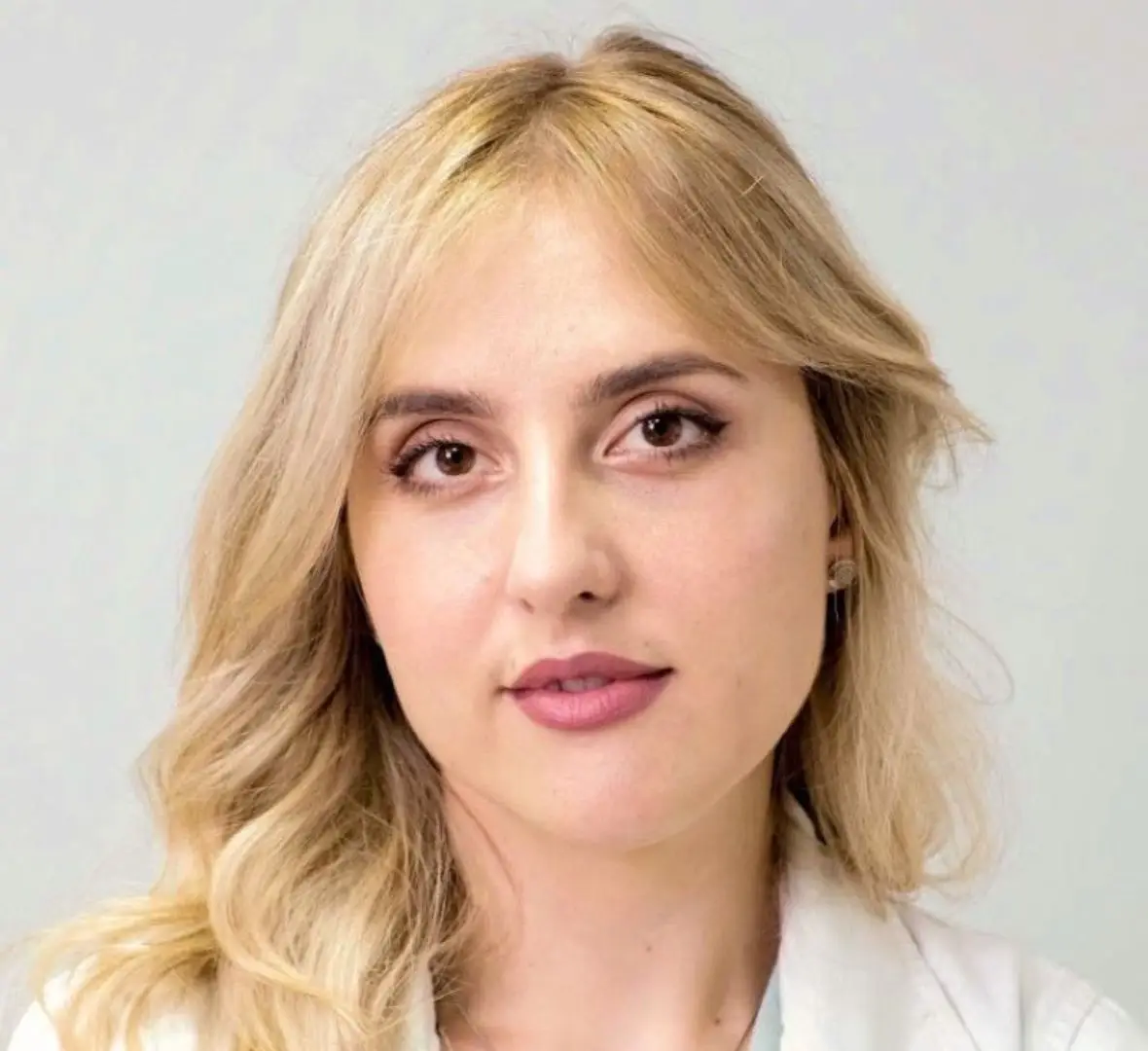
Dr Marina Ćirović
The Imedic team writes educational articles on dermatology, aesthetic medicine and skincare – clear, reliable information for patients.
Updated: