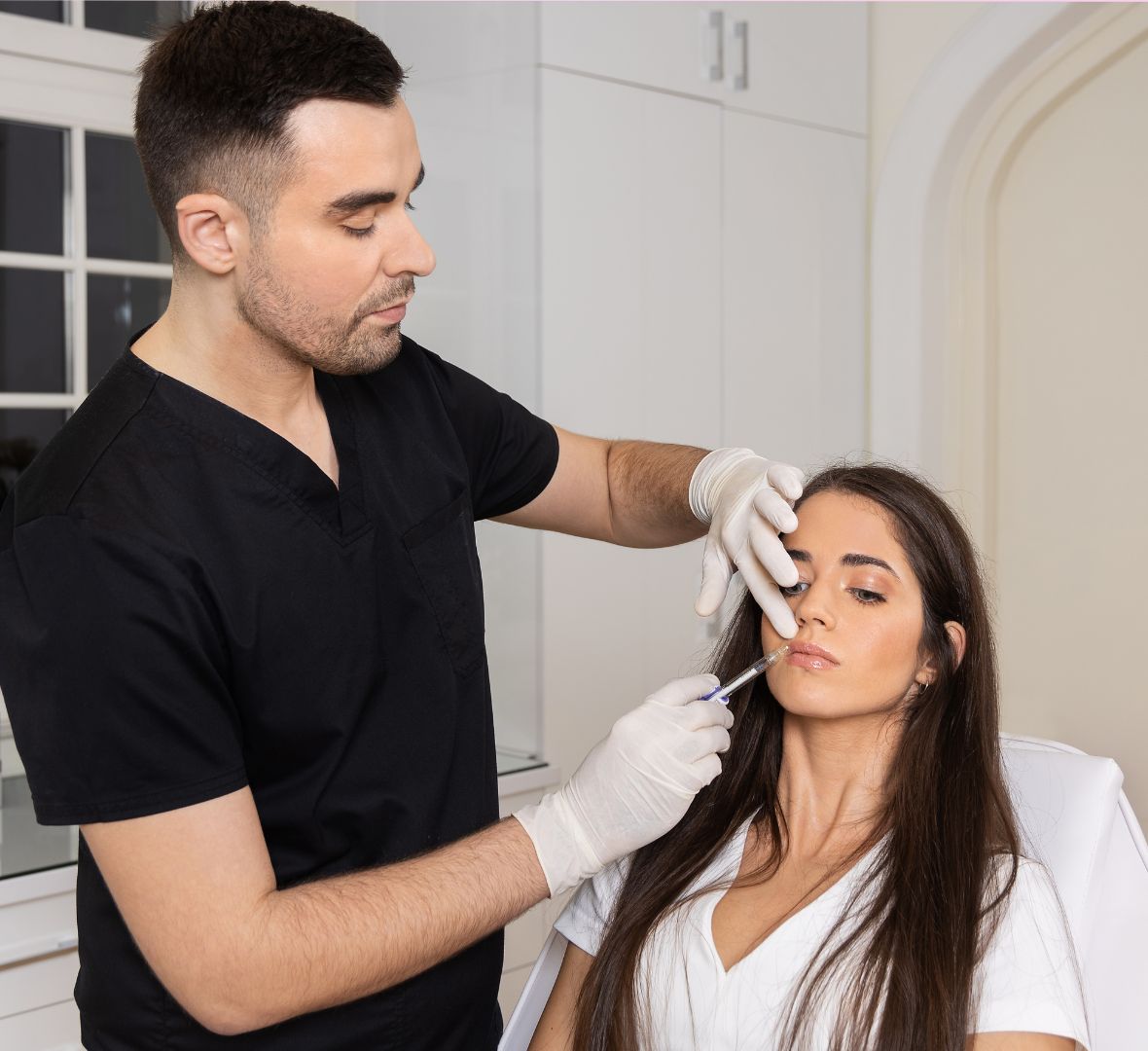
Acne scars are not always treated with a single method. In this part of the series, Dr Marina explains how lasers, radiofrequency and traditional microneedling, subcision, skin boosters, polynucleotides, collagen stimulators, peels and surgical excision work on stubborn scars.

In the first part of the series, we spoke about why acne scars are not the same for every person. Some are shallower and wider, some are narrow and deep, while with certain scars there are fibrous bands that pull the skin inwards. That is why before choosing a treatment it is important to understand not only how the scar looks on the surface, but also what is happening in the deeper layers of the skin.
Once we know that, the next question is: which acne scar treatments make sense in a specific case? The answer is most often not a single treatment, a single device or a single procedure. A scar often has to be treated in layers — in the depths, in the middle layers of the tissue and on the skin's surface itself.
In this section Dr Marina discusses the methods used in the treatment of acne scars: laser treatments, radiofrequency microneedling, traditional microneedling, subcision, skin boosters, polynucleotides, collagen stimulators, chemical and laser peels, as well as surgical excision for certain resistant scars.
The aim is not just to list the treatments, but to explain why they are combined. One method may act on deeper adhesions, another may stimulate the production of new collagen, whilst a third can further even out the skin's surface. That is why acne scar therapy is usually built up gradually, according to the type of scars, the depth of the blemishes and the skin's response to the treatments.
How acne scars are examined and treated at Imedic is described on our page about acne scars.
What do acne scar treatments have in common?
When we list all the treatments used for acne scars — CO2 laser, erbium laser, radiofrequency microneedling, traditional microneedling, chemical peels, skin boosters, collagen stimulators and subcision — at first glance it seems as though we are talking about completely different procedures.
However, what they all have in common is that they are trying to remodel the scar. The difference lies in the way they do it.
One treatment group uses devices, namely machines that work with the help of energy. In the technical literature, the term frequently used for them is energy-based devices, for short EBD. That group includes laser treatments and radiofrequency treatments.
The second group of treatments does not work via the device's energy, but involves the introduction of certain substances into the tissue or the mechanical release of the scar. Therefore, the following are also mentioned in the treatment of acne scars skin boosters, polynucleotides, collagen stimulators and subcision.
So, the treatments are not the same and are not chosen at random. They all aim to affect the appearance of the scar, but each of them does so through a different mechanism.
How do lasers and radio waves affect acne scars?
One treatment group for acne scars uses devices that employ a specific form of energy. In the medical literature, they are frequently referred to as energy-based devices, or EBD treatments. This group includes laser treatments and radiofrequency treatments.
These devices can use various energy sources, such as laser or radiofrequency energy. Their aim is to create a controlled micro-destruction within the tissue, that is, a very precise damage to a specific part of the tissue. This damage is neither accidental nor uncontrolled. It is created precisely so that the skin triggers a process of renewal.
When such micro-destruction is created in the tissue, an inflammatory reaction is triggered. In everyday speech, inflammation sounds like something bad, but in this context it has a beneficial role. It activates cells that participate in tissue repair and stimulates fibroblasts to produce new collagen.
Which laser is chosen for which type of scar and how it is combined with other methods is described on the page laser acne scar treatment.

Classic microneedling: when can it help, and when is it not enough?
Classic microneedling works on a similar principle to treatments that cause controlled micro-destruction of tissue, but without using laser or radiofrequency energy.
This group includes treatments such as Dermapen, SkinPen and other devices that use microneedles. These devices make tiny punctures in the skin at a certain speed and depth. Although described this way it may sound aggressive, in practice microneedling is classified as a minimally aggressive treatment.
For acne scars, classical microneedling can yield nice results when the changes are milder. It can be especially useful for enlarged pores, where it often provides a very good effect on skin texture.
However, when we are talking about more pronounced acne scars, microneedling is usually not sufficient as the sole method. The result depends on the technique used, the depth of treatment, and the number of repetitions, but in practice it is most commonly used as part of a combination therapy.
Therefore, it should not be viewed as a treatment that independently resolves all acne scars. Its role is important, but it is most often complementary — especially when there are deeper indentations, more pronounced tissue changes, or scars that require stronger stimulation of remodelling.
This is important because we most commonly see an acne scar as a depression on the skin's surface. To aesthetically soften this depression, it is not enough to act only on the surface. It is necessary for the tissue beneath the scar itself to change and gradually fill up from within.
Therefore, a large number of treatments performed with devices function on a similar principle: energy is directed into the tissue beneath or around the scar, controlled micro-destruction is created, and then inflammation, remodelling and the production of new collagen are triggered. In this way, over time, the scar tissue itself is altered and better support is achieved beneath the depression.
How is it decided whether microneedling is sufficient?
The decision is based on the type and depth of scarring, the presence of adhesions, active acne and the response to previous treatments. For scars tethered to deeper tissue, or narrow and deep lesions, repeating microneedling on its own may not help sufficiently; the doctor will also consider other targeted methods.
The number of sessions and intervals are determined individually, and the plan is reviewed at follow-up visits. Combining multiple procedures is not mandatory for everyone and does not guarantee complete removal of scars.
Injectable treatments: why are they added alongside lasers and microneedling?
On the other hand are treatments that do not destroy tissue, but instead involve the introduction of certain substances into the skin. These can be amino acids, polynucleotides, collagen stimulators, skin boosters and other preparations used to further stimulate tissue replenishment.
In this group of acne scar treatments, the most commonly mentioned are skin boosters, polynucleotides and collagen stimulators. Many of these preparations are found in solutions or gels that also contain hyaluronic acid. This additionally hydrates the tissue and creates a better base for the action of the active substances.
These treatments play an important role because they enhance the effect of procedures that cause controlled tissue destruction. When a laser, radiofrequency microneedling or similar treatment triggers inflammation and remodelling, the skin also needs to recover, return to balance and receive additional support for collagen production.
That is why injectable treatments are not just for „injecting something“ into the scar. Their role is to help the tissue recover after more intensive procedures, to restore its moisture, nutrients, and additional stimulating substances, such as collagen stimulators, polynucleotides, amino acids, and peptides.
In this way, destructive and regenerative treatments complement each other: some trigger change in the scar, while others help the tissue to recover better and gradually fill in.

Subcision: when the scar is pulled by fibrous bands
A special place in the treatment of acne scars is held by subcision. It is most commonly referred to in cases of scars where there is an inward pull of the skin, that is, when fibrous bands beneath the skin keep the scar tethered down.
Although subcision often sounds to patients like something very aggressive, the procedure itself does not look as dramatic as is usually imagined. It is performed using a thin, blunt, and flexible cannula, which is an instrument used to enter beneath the skin's surface through a small opening.
The aim of subcision is to use that instrument to sever the fibrous bands that pull the skin inwards. Once they are released, the skin surface can rise and the scar can become flatter.
The problem arises when subcision is performed as an isolated method. The fibrous bands can be severed and the skin temporarily lifted, but if nothing is inserted into that space to help modify and fill the tissue more permanently, those connections can form again over time. In that case, after initial improvement, the scar may become visible again much like before.
Because of this, subcision is rarely used on its own. Much more frequently, it is combined with injectable treatments, particularly with collagen stimulators. After the fibrous bands are severed with the cannula, a collagen stimulator can be injected into those spaces using the same cannula. In this way, the freed-up space is not left empty; instead, tissue filling and the levelling of the previously depressed area are encouraged.
Chemical and laser peels: the finishing touch on the skin's surface
All the treatments we have mentioned so far generally act on the part of the scar that lies beneath the skin's surface. Of course, laser treatments can also act on the surface, depending on the type of laser and the settings used, but when it comes to acne scars, a deeper action within the scar tissue itself is often discussed.
When we move towards the skin's surface, that is where chemical peels and laser peels come in. They are used to smooth out fine textural changes that scars create on the skin's surface. In other words, when working on the deeper parts of the scar, it is also necessary to pay attention to what the patient sees on the outside: unevenness, rougher texture, and small surface irregularities of the skin.
Laser peels work using energy. Most commonly, thermal damage is caused to the skin's surface, after which this surface layer peels off and is replaced by a new layer of skin, namely a normal epidermis.
Chemical peels work differently. They use acids which, through their chemical, or rather caustic action, lead to the denaturation of proteins, the breakdown of the superficial layer of the skin, and peeling. Depending on the peel used, they can work superficially, moderately deeply, or deeper.
These treatments can be carried out on their own, but for acne scars they are very often combined with other methods. They then have a synergistic effect: while other treatments work on the deeper parts of the scar, peels help to further even out the skin's surface and improve the final aesthetic appearance.

Why are scars treated in multiple layers of the skin?
When all is said and done regarding treatments used for acne scars, the bottom line is that the scar most frequently has to be treated across multiple layers. It is not enough to treat just one level of the skin and expect all scars to behave in the same way.
For scars that have a deeper component, the treatments must act on the deeper layers of tissue. This involves remodelling, collagen stimulation, the release of fibrous bands, or filling the space that keeps the scar tethered inwards. This is the part of the therapy that is not immediately visible from the outside, but is important for changing the scar itself.
On the other hand, in the end it is also necessary to work on the surface of the skin itself. Here, fine textural changes, unevenness and surface roughness that scars can leave are treated. For this very reason, chemical or laser peels are often used as a final step, that is, as a fine finishing of the skin surface.
The aim of this approach is not to treat the scar merely from the „surface“, but to repair what makes it depressed, uneven or resistant to simpler treatments. Only when deeper treatments and surface skin resurfacing are combined can a better aesthetic result be expected.
When is surgical scar excision performed?
In some cases, there are scars that are particularly deep, particularly wide or large in surface area. These are scars where rapid or pronounced progress is not expected from treatments such as lasers, radiofrequency microneedling, injectable methods or subcision alone.
Then it can be considered surgical excision of the scar may be considered. This means that the specific scar is excised, and then the edges of the healthy skin are sutured. At first glance, this may sound to patients like the most unfavourable option, as a small surgical incision is made on the face. However, healing of the facial skin often yields a much better result than expected.
This method is not intended to „excise all acne scars“. It is performed selectively on individual scars that are particularly stubborn, deep, or respond poorly to other treatments. For example, if a scar does not respond sufficiently to a CO2 laser, injectable methods, subcision, or a combination of subcision with a collagen stimulator, then surgical removal may be a better solution than repeating a large number of aggressive procedures without a sufficiently good response.
That is why surgical excision is most often viewed as part of a broader acne scar treatment plan. It is used when, among a larger number of scars, there are individual scars that stand out in depth, width, or resistance to therapy. With such lesions, the goal is not to continue indefinitely with the same treatments, but to remove the problematic scar and replace it with a significantly more discreet surgical scar.
Punch excision for deep ice-pick scars
A special form of surgical removal can be used for deeper and larger ice-pick scars. These are narrow, deep scars that often do not respond well enough to milder methods and sometimes require a more direct approach.
In those cases, it is possible punch excision. It is performed using a small instrument called a punch. This is used to make a small, circular, drill-like excision that removes the specific scar.
After that, a very small wound is produced which is closed with a single small stitch. Such a wound usually heals in six to seven days, and a small, barely visible line remains in that spot.
That small scar can be treated further at a later stage, for example with a CO2 laser. Therefore, punch excision can be useful for particularly stubborn, resistant, large or deeper scars, where repeating other treatments would yield a slower or weaker result.
Why are acne scar treatments planned individually?
When all these methods are considered together, it is clear why there is no single treatment that resolves all acne scars. Some scars require action in deeper tissue layers, some respond better to treatments that stimulate collagen, while with others, additional work must be done on the surface texture of the skin.
That is why different methods are often combined in practice. Laser treatments, radiofrequency microneedling, traditional microneedling, injectable treatments, subcision, chemical peels and surgical excision do not have the same role. Each method works in a different way and is chosen according to what the scar is like, how deep it is, how wide it is and how it responds to previous treatments.
For milder changes, less aggressive treatments and gradual skin stimulation are sometimes sufficient. For more pronounced scars, a combination of methods that work both deeply and on the surface is often necessary. And for particularly stubborn, deep, or resistant scars, surgical removal of the individual scar may also be considered.
Among injectable treatments, collagen stimulators are also used, such as Juvelook, which gradually restore tissue density at the site of the depression and thereby reduce the visibility of the scar.
That is why an examination is an important part of treatment planning. Only when the type of scars, their depth, distribution and the condition of the skin are assessed can it be determined which treatments make sense and in what order they should be carried out. With acne scars, the most important thing is not to choose a procedure just because it is popular, but because it suits the specific type of scar.
An overview of treatment options and booking information can be found on our page about acne scar treatment at Imedic.
Watch the whole video about acne scar treatments
In the text, we have highlighted the most important parts, but in the video, Dr Marina explains in more detail how acne scar treatments are chosen, why different methods are often combined, and in which cases lasers, microneedling, subcision, collagen stimulators, or surgical removal of individual scars are considered.
If you have acne scars and are not sure which treatment would make the most sense in your case, watch the full video below. It explains why therapy is not chosen solely by the name of the treatment, but rather according to the type, depth, and appearance of the scar itself.
Expert sources
American Academy of Dermatology – treatment options for various acne scars

Updated: