Which collagen for skin and which for joints? Dr Ivica Jeremić explains the difference and why choosing the wrong type cancels the effect.

Collagen is a topic you've probably had the chance to hear about — at seminars, on the internet, at the pharmacy. Sooner or later, most patients ask the same question: Should I take collagen and which one should I choose?
The answer is not simple — and that is precisely where the problem lies. Dr Ivica Jeremić in his video, he explains that one of the most common mistakes is taking the wrong type of collagen for the wrong indication, which practically cancels out any effect.
In this blog, we share the most important points from that explanation — based on medicine and science.
In order to understand which collagen to use and why, we must first understand what collagen actually is. It is the most abundant protein in the human body — collagen makes up nearly a third of all proteins in our body and is a key component extracellular matrix. Its main function is to preserve the firmness, elasticity and integrity of tissue — from skin and bones, to blood vessels and joints.
Below we explain how collagen is formed, what the most important types are and how to properly tell them apart, why we lose it faster than we think, and what we can do about it.
What happens to collagen after ingestion and what studies show, we explain in the text collagen peptides, and to whom and when it is recommended in the text Who is collagen recommended for.
What is collagen and how is it produced?
Imagine collagen as your body's scaffolding. Just as steel reinforcement holds concrete together so it doesn't collapse, collagen keeps your skin, bones, tendons and blood vessels firm and elastic.
Chemically speaking, collagen is a protein that has a very specific structure. Dr Ivica explains in the video that it is about the so-called triple helix — three strands twisted around each other, packed into fibres that are exceptionally strong and resistant to mechanical forces. Precisely because of this structure, our connective tissue, bones and skin can withstand the pressure and strain of everyday life.
Each collagen chain is built from amino acids, and the most important are glycine, proline and hydroxyproline. Glycine repeats as every third amino acid in the chain and is crucial for the entire structure.
When it comes to the creation of collagen, the process is quite complex — yet it takes place every day in almost all of our tissues. It begins inside the cell, where genetic information is transcribed and the first chains are built. Those chains are then hydroxylated and glycosylated, which are protein-processing steps, and only then are they expelled from the cell. And it is precisely outside the cell that the final cross-linking occurs — the fibres intertwine, creating tropocollagen, and only then do we get that true, firm collagen. For that final step, what is also essential is copper, which participates in the enzymes responsible for cross-linking.

Why is vitamin C essential for collagen?
One of the steps in collagen formation that Dr Ivica particularly highlights is hydroxylation — the process in which proline and lysine, amino acids in the collagen chain, are chemically treated so that the entire structure is stable and functional. Without that step, collagen simply cannot form properly.
And that is precisely where vitamin C comes into play. It is an essential factor for that hydroxylation step — without it, the process grinds to a halt.
The most obvious example of what happens when there is not enough vitamin C is scurvy. Dr Ivica points out that scurvy, which arises due to a serious vitamin C deficiency, is not actually a disease that directly attacks the skin or bones — it prevents the normal synthesis of connective tissue. Because of this, one of the very first signs are weakness of the blood vessels, the appearance of bruises and bleeding from the gums. The body literally loses the ability to build and maintain collagen.
Therefore, when you see that a collagen preparation also contains vitamin C in its composition, it is not a marketing gimmick. Dr Ivica explains this clearly — vitamin C is there for a specific medical reason, as it directly participates in collagen synthesis and without it, supplementation does not have its full effect.
Types of collagen: 28 types and the three most important
To date, science has described exactly 28 different types of collagen. It sounds complex, but in everyday clinical practice, three types are of the utmost importance — and understanding the difference between them directly determines whether supplementation will make sense or not.
| Type | Where is it located | Role |
|---|---|---|
| Type I | skin, bones, tendons, ligaments | firmness; the most prevalent type in the body |
| Type II | articular cartilage | cartilage resistance to compression |
| Type III | skin, blood vessels, internal organs | elasticity and tissue repair; goes with type I |
| Type IV | basement membranes, thin layers beneath the skin and around blood vessels | mesh tissue support |
| Type V | UZ type I in skin, hair and cornea | regulates type I fibre thickness |
Types I and III (for skin) and type II (for joints) are used in supplements. The other types are important for tissue structure, but are not taken as a supplement.
Type 1 collagen
This is the most abundant type of collagen in the entire body and is found in the skin, bones, tendons and ligaments. We can think of it as the true reinforcement of the skin and bones — it is what gives the dermis its firmness, tone and resilience. When we talk about collagen in the context of skin ageing, wrinkles and loss of elasticity, we are almost always talking precisely about type 1.
When used as a supplement, type 1 is taken in hydrolysed form. This means that the collagen molecule has been broken down into smaller fragments, known as peptides, which are more easily absorbed through the digestive system. A whole, unbroken collagen molecule would be too large to pass through the intestinal barrier in a way that would have a biological effect.
Type 3 collagen
Type 3 is closely linked to type 1 and is almost always used alongside it. It is found in the skin and blood vessels and is responsible for tissue elasticity and regeneration — so while type 1 provides firmness, type 3 contributes to suppleness and the tissue's ability to return to its original shape. In practice, type 3 is almost never used in isolation, but always in combination with type 1, and it is also used exclusively in hydrolysed form.
When you see beauty collagen or anti-ageing collagen on the label, there is a high probability that it is precisely a combination of type 1 and type 3.
Type 2 collagen
Type 2 is a completely different story and it is precisely here that many people make a mistake. This type of collagen is found primarily in joint cartilage and is specific to chondrocytes — the cells that build and maintain cartilage. It is used in people who have cartilage problems, that is, in osteoarthritis, and has no role whatsoever in aesthetic applications.
What makes it special and sets it apart from types 1 and 3 is that type 2 is not taken in a hydrolysed form — it is taken as a native, unbroken molecule. Native type 2 works through the immune system rather than through direct cartilage building, which is a completely different principle from how types 1 and 3 work.
It is precisely because of this difference — hydrolysed for the skin, native for the joints — that it is so important to know which type of collagen you are taking and why.
Beauty vs. Joint collagen — why choosing the wrong type cancels out the effect
When all is said and done, in clinical practice collagens can be divided into two main groups: beauty collagens and joint collagens — that is, those used for the health and appearance of the skin, and those used for joint health.
Beauty collagens are types 1 and 3 in hydrolysed form. Their role is to support the dermis, to slow down the loss of skin firmness and elasticity, and they are used as part of an anti-ageing approach. They are absorbed through the digestive system thanks to being broken down into smaller peptides, and in that way they reach the fibroblasts — the skin cells responsible for the synthesis of new collagen fibres.
Joint collagen is primarily type 2 in its native form. Their application is exclusively related to the joints and cartilage, that is, for conditions such as osteoarthritis. The mechanism of action is completely different — the native collagen molecule acts through the immune system, rather than as a building material that directly repairs the cartilage.
And right here is where the most common mistake happens. Someone has joint pain, buys the first collagen they see in the pharmacy, and that collagen is actually a beauty formula with type 1 and type 3 in hydrolysed form. The result — zero effect on the joints, because the wrong type of collagen, applied in the wrong way, cannot achieve the desired effect. The reverse is also true — there is no point in taking native type 2 in the hope that it will improve the appearance of the skin.
So, before you reach for collagen, the first question isn't which one is the most popular or the most expensive — but what is your indication.

How and when do we lose collagen?
Most people assume that collagen is lost gradually and evenly throughout life. The reality is somewhat different — and it is important to understand this before making a decision about supplementation.
From around the age of 25, our bodies begin to lose collagen. It sounds early, but it is true. The rate of loss is initially about 1% per year — which on an annual basis might not seem dramatic, but over a decade accumulates into noticeable changes in the skin, joints and connective tissue.
However, what is particularly interesting is that ageing does not always proceed linearly. Research carried out on a large number of people has shown that there is a phenomenon known as exponential ageing — a period when the organism ages suddenly in a relatively short time. You have probably noticed it yourself — you haven't seen someone for six months or a year, and you are surprised by how much they have changed. That is not a coincidence, it is a biological process.
Analyses have shown that there are two characteristic peaks of that exponential ageing — the first appears around the age of 44, and the second around the age of 60. During those periods, the loss of collagen and changes in the appearance of the skin can be significantly more pronounced than in the years before and after.
For women, the situation is further complicated by the menopause. After entering the menopause, women can lose up to 30% of the collagen they have in the first five years alone. This is an extremely rapid and dramatic drop—especially when you consider that for most women, this process coincides precisely with the period around the age of 60, and thus with the second peak of exponential ageing. Because of this overlap, the loss of collagen in women tends to be significantly more pronounced than in men of the same age.
Intrinsic vs extrinsic ageing — what can we change?
When we talk about skin ageing, it is important to understand that there are two main types of ageing. The first is intrinsic ageing — it takes place at a speed programmed by our genetic code and we can't influence it very much. The second is extrinsic ageing — and that is what we can modify.
When it comes to Extrinsic skin ageing is primarily influenced by sun rays. UV radiation affects collagen in two ways. Firstly, it directly damages collagen and elastin through the generation of free radicals. Secondly, and perhaps more importantly, UV rays can induce so-called in the skin matrix metalloproteinases. These are enzymes that are very active in the breakdown of collagen and elastin, practically accelerating the decay of what we have built up over the years.
Here is also a fact that many do not know — our skin and almost all of our tissues have a very small capacity for elastin synthesis after childhood. Unlike collagen, elastin is practically not renewed in adulthood, what it means that any damage caused to elastin is long-term.
Besides the sun, various external pollutants are also significant factors that accelerate the depletion of collagen. And what people often forget — smoking. Smoking has a very dramatic effect on the skin in multiple ways simultaneously: it increases the production of free radicals, reduces microcirculation in the skin and directly damages collagen. The effect is not subtle — it is one of the most aggressive factors in accelerated skin ageing.
The good news is that all these factors can be controlled. Regular sun protection and the use of a protection factor, stopping smoking and the topical application of antioxidants — for example, vitamin C in the form of a serum or cream — are measures that directly protect collagen from further breakdown and which have a clear scientific basis.

Oestrogen, fibroblasts and joints
One of the important, yet often insufficiently explained factors in collagen loss in women is precisely drop in estrogen. Research has shown that oestrogen can directly affect the activity of fibroblasts — skin cells that are responsible for the production of collagen and elastic fibres. While oestrogen levels are high, fibroblasts work at full capacity. When estrogen levels drop, so does their activity, and with it the skin's ability to repair and build new collagen fibres.
That drop is especially dramatic during the menopause. Many women notice precisely then that their skin is thinner, drier and less elastic than before. Damage to the skin barrier often occurs, redness appears, the skin becomes sensitive and a burning sensation develops. These are not merely aesthetic changes — they are concrete biological changes in the skin's structure which are the direct consequence of the drop in hormones.
Well, oestrogen doesn't just affect the skin. About a year after entering the menopause, many women also start to notice joint pain. The reason is the same — the drop in oestrogen accelerates degenerative changes in the joints, or osteoarthritis, and this process can be significantly faster than it otherwise would be.
When it comes to hormone replacement therapy, It can also have a beneficial effect on skin health and the health of the musculoskeletal system. There are cases where the introduction of hormone replacement therapy significantly reduces joint problems. However, hormone replacement therapy is not for everyone. It is particularly considered for women who have entered early menopause and who have no family history of breast cancer. Every decision regarding its use must be made on an individual basis, exclusively in consultation with an endocrinologist.

How to protect collagen?
Understanding how collagen is produced and how we lose it would not make complete sense without concrete measures that we can take. Fortunately, science is clear on this.
The first and most important measure is photoprotection. Regular use of sun protection is not just an aesthetic recommendation — it is direct protection of collagen from degradation. UV rays are, as we have already explained, one of the most aggressive factors that damage collagen through free radicals and matrix metalloproteinases. Sun protection factor which is used daily, throughout the entire year, is one of the most effective things we can do to preserve collagen in the skin.
The second measure is smoking cessation. Smoking simultaneously increases free radicals, reduces microcirculation in the skin and directly damages collagen — it is hard to imagine a combination of harmful effects more aggressive than this. No supplement can make up for the damage that smoking inflicts on collagen every day.
The third measure is the local application of antioxidants. Vitamin C in the form of a serum or cream directly protects collagen from oxidative damage and slows down its breakdown. As we have already explained, vitamin C also plays an internal role in collagen synthesis, but applied topically to the skin it acts as a shield against external harmful influences.
Only when these foundations are in place, collagen supplementation is gaining real meaning. Taking collagen while simultaneously exposing oneself to the sun without protection and smoking — doesn't make much sense. Prevention and supplementation must go hand in hand.
Conclusion
Collagen is far more than just a trendy supplement featured in adverts. It is the most abundant protein in our body, and its role is fundamental to the health of our skin, joints, bones and blood vessels.
What is important to understand is that collagen supplementation has a scientific basis — but only if approached in the right way. This means choosing the right type of collagen for the right indication, understanding the difference between hydrolysed and native forms, ensuring enough vitamin C which is essential for synthesis, and combining all of this with basic protective measures such as SPF and avoiding smoking.
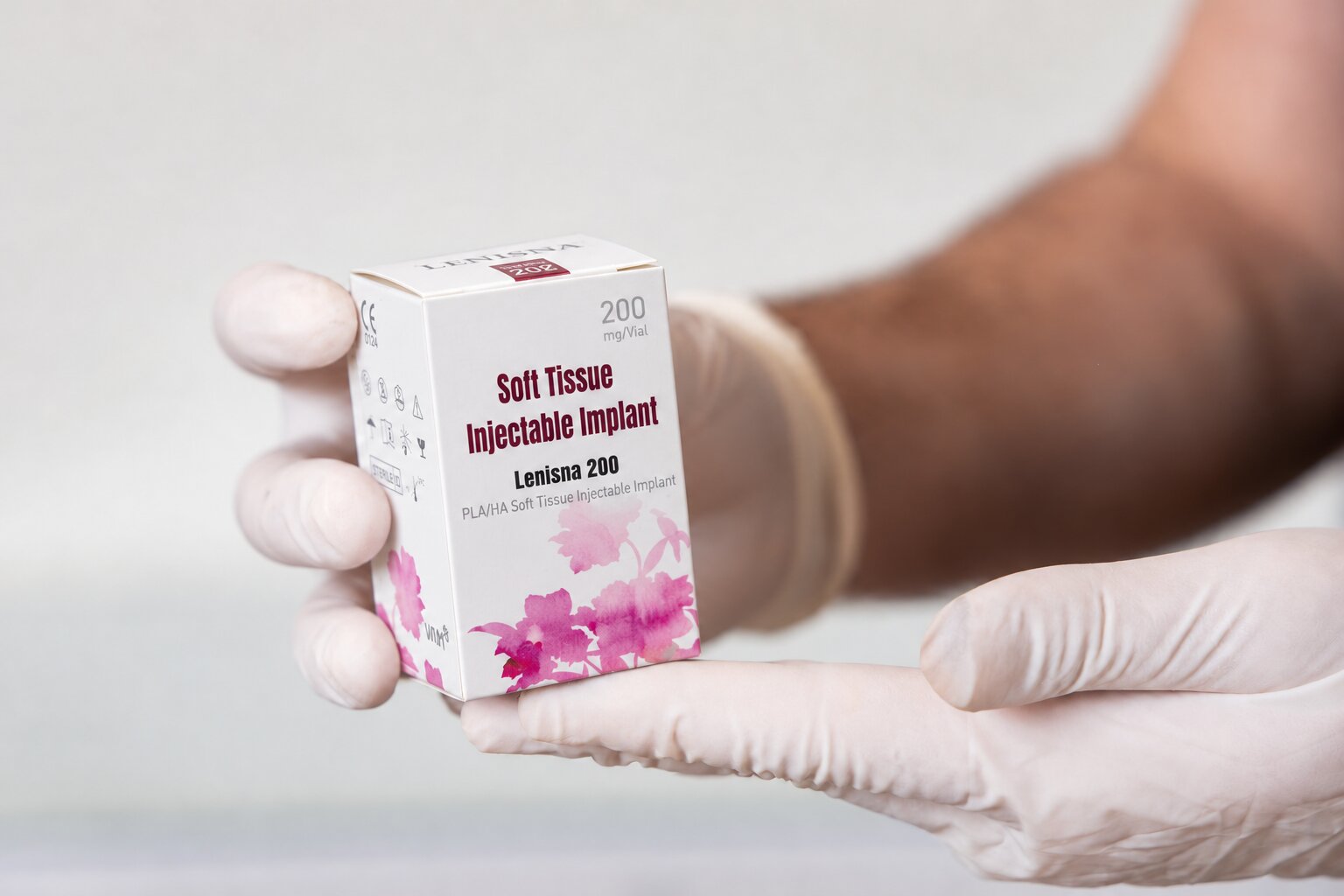
Supplements work from the inside and gradually. When the goal is visibly firmer facial skin, a doctor may also recommend a treatment at the polyclinic: collagen stimulators are injected into the skin and stimulate it to produce new collagen on its own.
A mistake in choosing the type of collagen doesn't just mean wasted money — it also means the absence of the effect that was possible with the right approach. Type 1 and type 3 in hydrolysed form for the skin, type 2 in native form for the joints — that is the starting point of every serious decision about supplementation.
And for everyone who wants to hear the full medical explanation firsthand — Dr Ivica Jeremić goes through all these topics in detail, step by step, based on science in the video. Watch the full video and find out everything you need to make the right decision.
https://www.youtube.com/watch?v=gFOGKJAzwe8
Expert sources

Updated: