What happens when you drink collagen? Dr Ivica Jeremić explains how collagen peptides work, which doses make sense to take and where collagen comes from.

U the previous textwe explained what collagen is, how it is produced and why choosing the right type is so important. We discussed the difference between type 1, 2 and 3, why we lose collagen from the age of 25, and how ageing, the sun and smoking accelerate that process.
Now we are going a step further.
When someone decides to take collagen, the following question naturally arises — what actually happens after you drink it? Do those peptides really reach the skin? Does the body know what to do with them? And what do studies actually show?
Dr Ivica Jeremić gives precise answers to all these questions in the rest of the video — and in this blog, we share the most important ones, step by step.
Why does collagen have to be hydrolysed?
When collagen is used as a supplement, it cannot be taken in its natural, whole form. Collagen chains are extremely long — we can imagine them as long ropes — and as such, they simply cannot pass through the intestinal wall and enter the body.
Therefore, the collagen must be chopped into smaller chains, so-called short low-molecular-weight peptides. Only in this form can the peptides pass through the intestinal barrier and exert their effect.
What is interesting — it was long believed that proteins had to be broken down into their smallest possible building blocks for the gut to be able to absorb them at all. Today, it is known that this is not the case. Smaller peptides — primarily dipeptides and tripeptides — can also pass through the gut wall. And that is precisely the point of collagen hydrolysation.
The smaller the peptides, the faster they reach maximum concentration in the blood. Roughly an hour to two hours after intake, collagen peptides reach their peak in the plasma. This is precisely why low molecular weight peptides are insisted upon — the sooner they reach the target tissues, the sooner they can start working.
How do peptides travel from the gut to the skin?
After passing through the intestinal wall, collagen peptides enter the circulation. From there, they travel to various target tissues — and have been shown to accumulate precisely in the skin.
When they reach the skin, two important things happen. First, the peptides act as a substrate — as building blocks for the synthesis of one's own collagen. Second, and perhaps even more importantly, these peptides have a signalling role. They directly activate fibroblasts — the skin cells responsible for the production of collagen, elastin and hyaluronic acid.
Therefore, collagen peptides do not just act as “raw material” that the body processes. At the same time, they send a signal to skin cells to begin more intensive production of extracellular matrix elements — and not just collagen, but also elastin and hyaluronic acid.
That is the reason why low-molecular-weight hydrolysed collagen makes sense as a supplement. It is not a case of eating collagen and it going directly “into the skin” — the mechanism is more sophisticated than that. The peptides travel through the body, recognise target tissues and activate processes that are already naturally present in the skin, but which slow down with ageing.
Native type 2 collagen — a completely different mechanism
While hydrolysed collagen works through peptide absorption and fibroblast activation, native type 2 collagen functions in a completely different way — and it is important to understand this before choosing a supplement.
Native collagen is taken in smaller amounts and is completely unaltered. It is not hydrolysed, nor is it broken down into peptides. And that is precisely the point.
When native type 2 collagen reaches the gut wall, it is recognised there by special cells — so-called antigen-presenting cells. These in turn activate regulatory cells whose task is to calm the immune response to that collagen. This process is called oral tolerance.
To understand why this is important, it is useful to know how our body normally functions. The immune system is constantly alert and ready to respond to foreign molecules. At the same time, there is a huge number of microorganisms in the digestive tract — incomparably more than there are cells in the entire body. If the immune system were to react to everything that passes through the gut, it would be extremely problematic. Therefore, the body naturally develops tolerance to what we ingest through the mouth — instead of triggering a defence reaction, it recognises these molecules as friendly.
In osteoarthritis, there also appears to be a certain autoimmune component — the body's reaction to its own collagen in the joints. By administering native type 2 collagen orally, the exact aim is to reduce this reaction and establish tolerance to cartilage collagen.
Because of this, native type 2 is not interchangeable with hydrolysed collagen — these are not two forms of the same product, but two completely different mechanisms of action.
What do the studies show?
When it comes to skin, the most research has been done precisely on hydration and elasticity. A review of 26 randomised clinical trials with a total of 1,721 participants showed that collagen increases skin hydration and elasticity compared to placebo (Pu et al., 2023Long-term use can lead to the reduction of fine lines caused by skin dehydration, as well as an increase in dermal density.
As for timing — patience is required. Patients are standardly advised to allow for about three months before the effects clearly show. However, certain improvements in the biomechanical properties of the skin and the quality of the dermal matrix can be noticed as early as after eight weeks.
When it comes to joints, clinical studies with native type II collagen have shown a reduction in pain, a decrease in stiffness, and an improvement in joint function in people with osteoarthritis (Lugo et al., 2016Collagen supplements are very often combined with glucosamine and chondroitin, which have also been shown to reduce pain and stiffness in osteoarthritis. Some studies have shown that such preparations can also affect the reduction of the rate of cartilage degradation. No one has managed to stop joint ageing, but this is one way to slow that process down.
What is mentioned less often, yet is worthy of attention, is the use of hydrolysed type 1 collagen in athletes and fitness enthusiasts. In one study, taking gelatine with vitamin C one hour before a short workout increased collagen synthesis, which is important for tendons and ligaments (Shaw et al., 2017Whether that reduces injuries has not yet been proven.
Collagen precursors — amino acids and glycine
Aside from hydrolysed and native collagen, there is a third category of supplements — the so-called collagen precursors. These are different amino acids that support the body's natural synthesis of collagen.
It is important to understand that their effect is not the same as the effect of taking collagen directly. These are building blocks that can help the body produce collagen on its own, but that is a different mechanism from the one achieved by collagen peptides.
One of the amino acids that has become popular in recent months, especially in America, is glycine. We saw that glycine is otherwise a constituent of the collagen chain – every third amino acid in that chain is precisely glycine. However, taking glycine as a supplement does not have the same effect as taking collagen. Glycine has some other effects – for instance on sleep and certain other actions – but it cannot replace the collagen peptide.
So, if the aim is direct support for the skin or joints, precursors and isolated amino acids are not an equivalent substitute for hydrolysed collagen.
Dosage — how much collagen makes sense to take?
One of the most common questions when it comes to collagen supplementation is precisely the question of dosage. And here too, there is a clear distinction between hydrolysed and native collagen.
For hydrolysed collagens, the standard dosage used in studies ranges from 2.5 to 10 grams per day. Beneficial clinical effects begin to appear at a dose as low as 2.5 grams a day. Most supplements on the market come in doses of 5 or 10 grams, depending on the manufacturer.
When it comes to native type 2 collagen, the situation is completely different. Here, we are talking about significantly smaller quantities — a few hundred milligrams, and effectiveness has been shown even at doses of a few tens of milligrams. The reason for this lies in the mechanism of action itself — native collagen does not act as a building material, but through the immune system, so considerably smaller quantities are required for that effect.
The exact dose in each individual case will depend on the form of collagen, the type of preparation and the indication. This is something that is determined individually, and not on the principle of the more, the better.
Origins of collagen — fish, bovine, porcine, and the myth of plant-based collagen
There are collagens of various origins on the market — fish, bovine, chicken — and the so-called plant-based collagen is also appearing with increasing frequency. It is important to understand the difference because the origin directly determines which type of collagen you are getting and what you can use it for.
Marine collagen mainly contains type 1 collagen, typically has a low molecular weight and is used for skin, hair and nails, and is also good for tendon health. The only note regarding marine collagen concerns allergies — people who are allergic to fish or seafood should avoid it.
Bovine collagen contains type 1 and type 3, is used in hydrolysed form and is intended for skin, bones and connective tissues. It is one of the most common sources of collagen hydrolysate found on the market.
Chicken cartilage is a source of type 2 collagen — and therefore precisely the one used for joint health, or rather for joint formulations.
When it comes to plant-based collagen — collagen as such does not exist in plants. Collagen is an animal protein and that is a simple biological fact. What is found in supplements of this kind are usually various amino acids — glycine, hydroxyproline, proline — along with zinc and copper which serve as cofactors for collagen synthesis. However, these amino acids are usually not present in large doses, because pure amino acids in larger quantities are not well tolerated by the gut and can cause nausea. Therefore, it is a marketing trick, rather than real collagen.
What to take with collagen?
Collagen is not a supplement that works in isolation. There are several substances that directly support its synthesis and that make sense to take alongside a collagen preparation.
At the top of the list is vitamin C, which we discussed in detail in the previous blog. It is essential as a hydroxylation factor — without it, collagen synthesis cannot take place properly. For this reason, high-quality hydrolysed collagen supplements already contain vitamin C in their formulation.
Alongside vitamin C, copper is also important — essential for that extracellular packaging of collagen into final structures. Then there are zinc and manganese, which also play a role in collagen synthesis.
For people taking collagen supplements for bone health, calcium and vitamin D can also be useful additives.
Aside from supplements, it is important to look after your lifestyle. Photoprotection and quitting smoking are measures we have already mentioned, but adequate sleep should not be neglected, nor should a sufficient intake of protein and micronutrients through diet. All of this together affects the body's collagen status.
Physical activity and collagen
One thing that is often left out when talking about collagen is physical activity. And the results that research shows are truly noteworthy.
Moderate physical activity has proven to be beneficial on two levels — both for the joints and for the skin.
When it comes to joints, moderately physically active individuals are significantly less likely to develop osteoarthritis. And for those who already have osteoarthritis, the pain is significantly less compared to those who are not physically active. An important note here — we are not talking about professional sports, but about moderate physical activity.
What is perhaps surprising is that physical activity also has a beneficial effect on collagen in the skin. Research shows that regular physical activity has a beneficial effect on the structure of the skin and its collagen (Crane et al., 2015).
So, physical activity is not only good for fitness and heart health — it directly preserves collagen in both the joints and the skin. That is yet another reason why a healthy lifestyle is the foundation of everything, and supplementation is merely one of the tools that makes sense once that foundation is in place.
Conclusion
Collagen is a topic that deserves a more serious approach than what is most commonly heard in advertisements. It is not enough simply to take the first supplement you see in the pharmacy — it is important to understand which type of collagen you are taking, in what form, at what dose and with what.
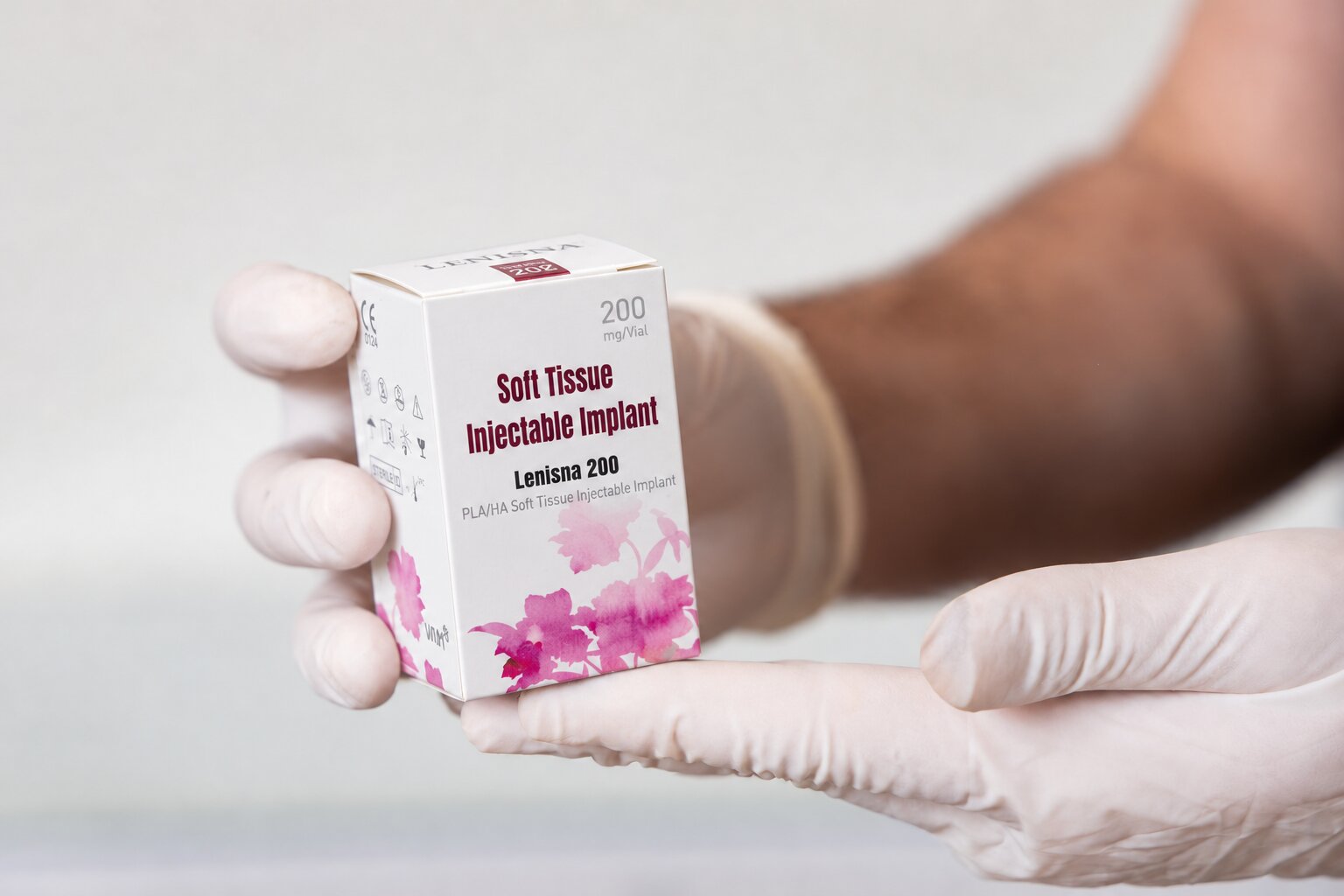
Supplements work from the inside and gradually. When the goal is visibly firmer facial skin, a doctor may also recommend a treatment at the polyclinic: collagen stimulators are injected into the skin and stimulate it to produce new collagen on its own.
Hydrolysed collagen types 1 and 3 for skin, tendons and bones. Native collagen type 2 for joints and cartilage. With vitamin C, copper, zinc and manganese. With patience — effects are not seen overnight, but after eight weeks at the earliest, and full results usually only after three months.
And all that with a foundation that no supplement can replace — sun protection, stopping smoking, sufficient sleep, moderate physical activity and a balanced diet.
Collagen supplementation It has a scientific basis and studies confirm this. However, it only makes sense when it is part of a broader approach to skin and joint health care.
For everyone who wants to hear the complete explanation first-hand — Dr Ivica Jeremić goes through all these topics in detail in the video, step by step, based on science and clinical experience. Watch the full video.
Expert sources
- Pu and colleagues, 2023 — systematic review and meta-analysis of oral collagen for skin
- Shaw et al., 2017 — Vitamin C-enriched gelatin supplementation before intermittent activity augments collagen synthesis
- Lugo et al., 2016 — native type II collagen in knee osteoarthritis
- Crane et al., 2015 — physical activity and skin ageing

Dr Miloš Živković
The expert team at the Imedic Polyclinic writes educational articles in the fields of dermatology, aesthetic medicine and skin care, with the aim of bringing modern treatments closer to patients in a clear, reliable and understandable way.
Updated: