Lip fillers
Lip fillers they are used to increase volume, define contours, correct asymmetry, and restore volume that may decrease over time. For some patients, the goal is a subtle enhancement of naturally thin lips, while for others, it is more important to restore a clearer contour or correct existing asymmetry. At the Imedic Polyclinic in Belgrade, we plan the treatment according to the natural lip anatomy and facial proportions. The quantity and method of application are determined individually, in accordance with the existing volume, tissue quality, mimicry, and the goal of the treatment. The goal is neither a pre-determined shape nor excessive augmentation, but rather a correction that follows the natural characteristics of the lips and the rest of the face.
Lip fillers – briefly
| Preparation | hyaluronic filler intended for lip treatment |
|---|---|
| Quantity | it is determined individually; in patients, the effect of a smaller amount, approximately 0.5 ml, and 1 ml of filler is often compared |
| Anaesthesia | local anaesthetic cream; some preparations also contain lidocaine |
| Duration of treatment | approximately 15–20 minutes for the application itself, with additional time for preparation and anaesthesia |
| Result | the change is visible immediately, while the final appearance is assessed after the swelling subsides |
| Recovery | Swelling, tenderness and bruising are possible during the first few days |
| Duration of results | approximately 6–12 months, with individual variations |
What are hyaluronic lip fillers?
Hyaluronic lip fillers are hyaluronic acid-based gel fillers injected into specific tissue layers to correct lip volume, contour and proportions. Hyaluronic acid is a substance naturally found in the body and has the ability to bind water. In aesthetic medicine, specially formulated preparations of varying softness, elasticity and cohesiveness are used to suit a region that is constantly in motion during speech, smiling and eating. In lip treatments, the choice of preparation depends on whether the goal is discrete volume enhancement, contour definition, asymmetry correction or replenishment of lost volume. Therefore, the same filler and the same amount are not used for every patient. A hyaluronic acid filler is a temporary material that gradually breaks down over time, so the result is maintained with subsequent treatments as needed.
Lip filler treatment planning
What can be achieved with lip fillers?
With fillers, the lip contour can be enhanced, volume added, and certain asymmetries corrected. During the consultation, we will agree on how pronounced a change you would like and which shape suits your facial features.
Lip filler treatment does not necessarily mean a large increase in volume. Depending on the anatomy and the goal of the treatment, the filler can be used for the subtle correction of one or more elements.
- Volume increase – for naturally thin lips or when volume has diminished over time.
- Defining the contour – for a clearer lip line and emphasis on the natural shape without necessarily increasing size much.
- Correction of asymmetry – when there is a difference between the left and right side or between individual parts of the lip.
- Replacement of lost volume – when lips become thinner and less defined with age.
- Alleviation of the downturned appearance of the corners of the mouth – when the anatomy and cause of the change allow for correction with a filler.
- Smoother and fuller lip appearance – the appropriate hyaluronic acid filler can contribute to fullness and a softer appearance of the tissue.
The aim of the treatment is not to make every patient's lips look the same. Facial proportions, existing volume, the ratio of the upper and lower lips, profile and facial expressions influence which correction will look harmonious.
Russian lips or a natural lip shape?
“Russian lips” is a popular term for an approach to lip shaping where different application techniques are used to emphasise the height and central part of the lip, while striving to limit excessive forward projection.
There is no single technique that yields the same result in all patients. Lip anatomy, tissue thickness and elasticity, existing volume and previously placed filler determine what is possible and appropriate to do.
Here at Imedic, we do not start from a photograph or the name of the technique to be copied. We adapt the application method to the individual patient's anatomy, with the aim of preserving the natural contour and mobility of the lips.
Different techniques can be used on different parts of the lips for a single patient, depending on whether more definition, volume, or correction of asymmetry is needed.
Needle or cannula – what does the choice of technique depend on?
Lip hyaluronic acid filler can be applied with a sharp needle, a blunt cannula or a combination of both techniques. No approach is universally better – the choice depends on lip anatomy, the region being corrected, the type of product used and the planned result.
- Needle it enables very precise placement of a small amount of filler and is often used when contour correction, specific parts of the lip, or asymmetry is required.
- Cannula It has a blunt tip and can enable the distribution of products through the tissue with a fewer number of entry points. It can be useful in certain volume corrections and the surrounding region.
Different techniques can be used on different parts of the lips in a single patient. The method of application is determined by a doctor following an examination, based on the anatomy, existing filler, and what needs to be corrected.
Both the needle and the cannula require a sound knowledge of the anatomy of the lips and blood vessels. Neither technique completely rules out the possibility of complications, which is why the choice of instrument is not merely an aesthetic decision, but a medical one.
How much filler goes in the lips – 0.5 ml or 1 ml?
One of the most frequent questions before the treatment is whether one is enough for the lips a smaller amount, approximately 0.5 ml, or 1 ml of filler is required. There is no one-size-fits-all amount – the decision depends on the initial volume, lip anatomy, any previously placed filler, and the correction goal.
- About 0.5 ml that can be sufficient when the goal is a discrete change, a slight enhancement of the contour, or a minor volume correction.
- 1 ml it can be a suitable choice when a more pronounced increase in volume, restoration of lost fullness, or correction of multiple parts of the lips is required.
This amount does not give the same result for every person. One millilitre in naturally very thin lips and one millilitre in lips that already have pronounced volume will not give the same effect.
Therefore, the quantity is not determined in advance solely based on the desire for “larger” or “smaller” lips. During the examination, the tissue capacity, existing volume, the ratio of the upper and lower lips, asymmetries and facial proportions are assessed.
If a larger correction is needed, it can be scheduled at the doctor's discretion gradually, over several treatments.
How are the quantity and method of correction determined?
When it comes to lip fillers, you don't start with a pre-selected shape that needs to be “created”. The treatment plan is based on the natural anatomy of the lips and their relationship with the rest of the face.
Before the treatment, the following are assessed:
- ratio of the upper to the lower lip and their existing volume;
- lip contour and projection in profile and from the front;
- existing asymmetries and the way the lips move when speaking and smiling;
- relationship of the lips to the nose, chin and lower third of the face;
- quality, thickness and elasticity of the tissue;
- possible presence of a previously placed filler.
Based on the examination, it is determined where the filler is truly needed, in what quantity, and by what technique it is most appropriate to apply it.
For some people, a small correction to the contour will make the biggest difference, for others it will be volume replacement, and for a third group, the balance between individual parts of the lip. Therefore, this amount of filler should not be distributed in the same way for every patient.
The goal is to improve the existing anatomy, rather than to replace it with a pre-determined shape.
Which lip fillers do we use at Imedic?
For the lip treatment we use hyaluronic acid fillers tailored to the moving tissue of the lips, including Juvéderm Smile, Teosyal Kiss and Belotero.
The product is not chosen solely by brand or quantity. Different fillers have different characteristics, so the choice depends on lip anatomy, tissue quality, existing volume, and whether the goal is a discreet enhancement, contour definition, or the correction of asymmetry.
- Juvéderm Smile – is used for correcting lip volume and contour.
- Teosyal Kiss – filler developed for the treatment of the lips and perioral region.
- Belotero – depending on the specific product, it can be used for more subtle corrections and lip shaping.
The examination determines which product and what quantity best suit specific lips.
Find out more about hyaluronic fillers for other facial regions on the page hyaluronic fillers.
Lip fillers before and after
Before and after photographs make it possible to see how much the result can vary depending on the initial lip anatomy, the amount of filler and the goal of the treatment.
The gallery showcases real results of treatments performed at the Imedic Polyclinic – from subtle volume enhancement and contour definition to correcting asymmetry and accentuating specific parts of the lips.


The result is individual and depends on starting anatomy, quantities and types of product, existing filler and treatment plan. Photographs do not represent a guarantee that the same result will be possible for every patient.
Duration of treatment
Around 15 to 20 minutes for the application
Result
Visible immediately, final after the swelling subsides
Duration of results
Roughly 6 to 12 months
Treatment, recovery and duration of results
How to prepare for a lip filler treatment?
No special preparation is required for the treatment, but it is important that the doctor knows before the procedure which medications, supplements, and therapies you are using, as well as whether you have previously had reactions to fillers or frequent episodes of cold sores.
Before treatment:
- come to the appointment without any make-up on your lips and the area around your mouth;
- be sure to tell your doctor if you are using any medicines or supplements that can affect blood clotting or bruising;
- do not independently stop the prescribed therapy;
- Tell your doctor if you have recently had or are soon planning a dental procedure;
- if you are prone to cold sores, mention this to your doctor prior to the procedure so they can assess whether preventive treatment is necessary;
- if you have an active cold sore, infection or pronounced inflammation in the lip area, the treatment is postponed until the condition subsides.
We recommend planning your injectable treatment at least two weeks before an important event. If a series of treatments is required, the plan should start earlier to allow enough time for the full effect to develop.
What does lip filler treatment look like?
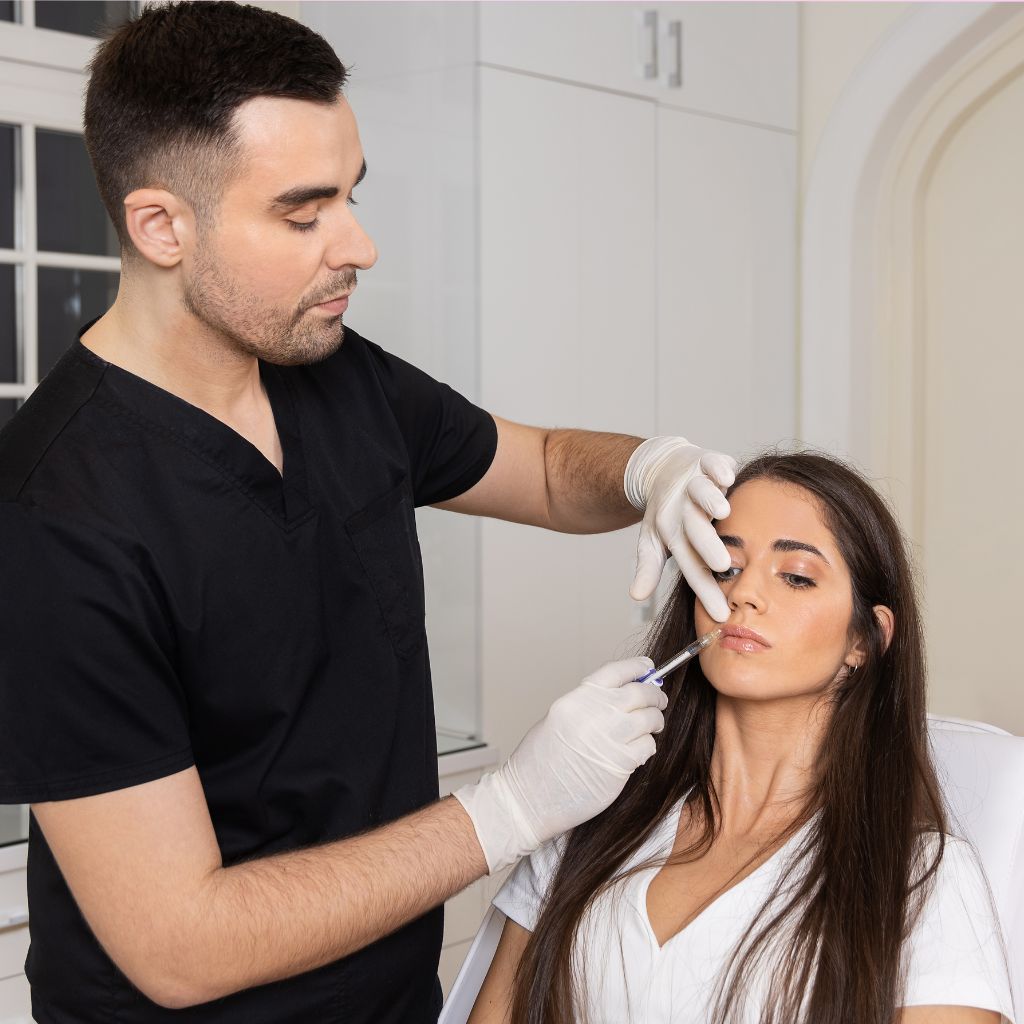
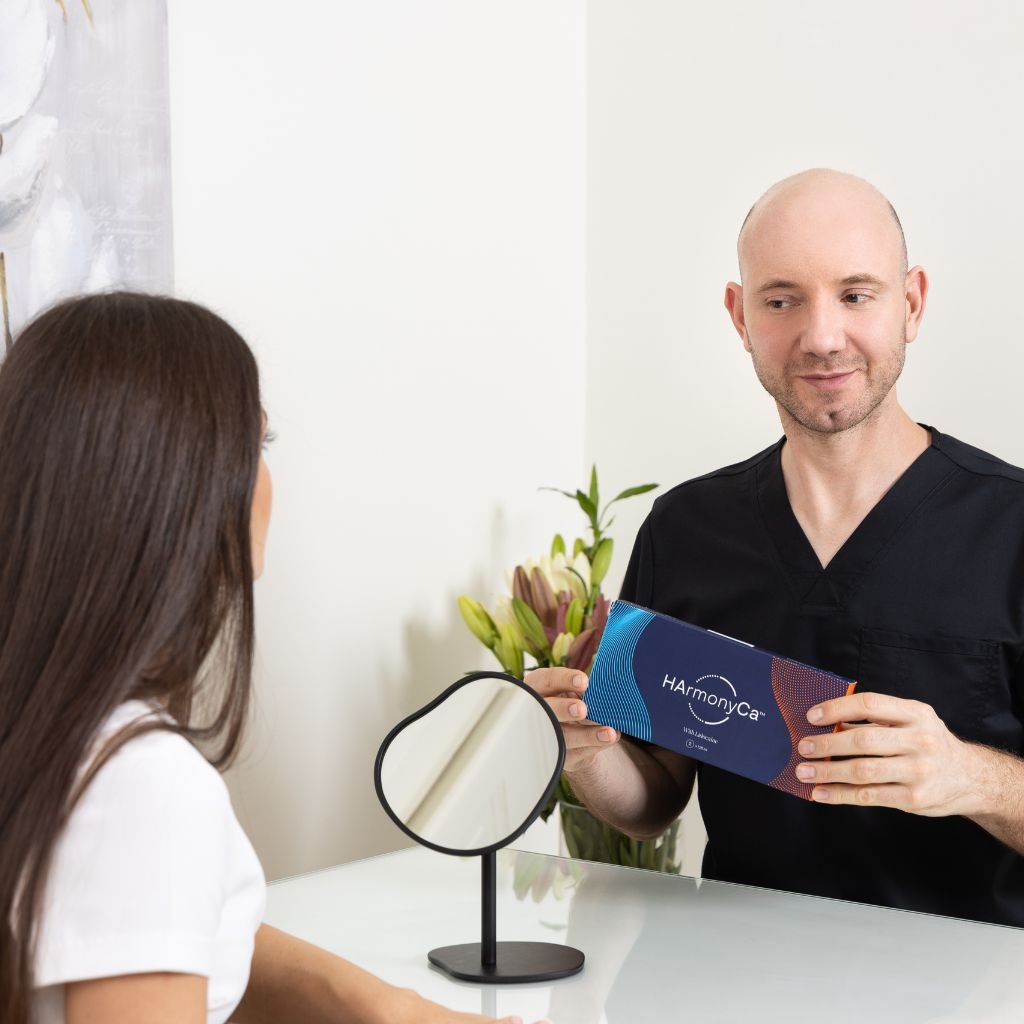
The treatment begins with an examination and assessment of the lip anatomy, existing volume, asymmetries and the relationship of the lips to the rest of the face. Based on this, the amount of product, the areas to be corrected and the technique of application are determined.
Before the treatment itself, the lips and surrounding area are cleansed and disinfected, and then a local anaesthetic cream is applied. Once the anaesthesia takes effect, the filler is carefully administered using a needle, cannula or a combination of techniques, depending on the treatment plan.
The application itself usually takes about 15–20 minutes, while the total length of stay includes preparation, anaesthesia and the final assessment of results.
During the treatment, the doctor monitors symmetry, contour, projection and volume distribution and adjusts the application if necessary. After completion, the appearance of the lips is assessed and instructions on how to behave during the first few days are given.
The result is visible immediately, but the final appearance is not assessed on the same day due to expected swelling. For a realistic assessment, it is necessary to wait for the tissue to settle.
Swelling and recovery after lip fillers
Mild to moderate swelling, sensitivity and possible bruising Reactions are expected after lip filler treatment. Their intensity varies from person to person and depends on anatomy, the amount of product used and the technique of application.
During the first few days, the lips may look fuller or slightly asymmetrical due to swelling, so the result is not assessed immediately after the treatment. As the swelling subsides, the shape becomes clearer, and the final assessment is made once the tissue has settled.
During the first 24–48 hours, it is recommended to:
- avoiding intensive workouts, saunas and other sources of high heat;
- avoiding alcohol, especially immediately after the treatment;
- do not press or massage the lips unless otherwise instructed by a doctor;
- keep the region clean and avoid unnecessary touching;
- If necessary, use cold compresses briefly and without strong pressure.
How long do lip fillers last?
As a general guideline for the duration of hyaluronic acid lip fillers, Imedic gives approximately 6–12 months, but the result is not equally long-lasting for every patient.
The duration may be affected by:
- type and characteristics of fillers which was used;
- product quantity and the manner of its distribution;
- anatomy and mobility of the lips;
- individual degradation rate of hyaluronic acid;
- previous treatments and the amount of filler already present in the tissue.
When is a lip filler not the right solution?
Filler can correct volume, contour and certain asymmetries, but not every change in the lip region is a problem that is solved by adding hyaluronic acid filler.
- Vertical lip lines can be the result of changes in skin quality and facial expressions, so the treatment plan may include a small amount of filler, skinbooster, laser treatment or a combination of procedures.
- A longer space between the nose and the upper lip It cannot be shortened with a filler. In cases of certain anatomical relationships, additional volume can even accentuate the length of that region, so it is assessed during the examination whether a filler is the appropriate choice.
- Pronounced asymmetry that is not solely the result of volume deficiency may require a different or combined approach.
- With a larger amount of previously placed filler, unevenness, or suspected migration An assessment must be made first before any new application.
What if there is already filler in the lips or migration has occurred?
If dermal filler has already been applied to the lips previously, it is important to assess how many preparations are still present, how is it distributed, and is the lip anatomy preserved before a new correction is planned.
When filler migration is suspected, it may be visible or palpable beyond the natural border of the lip, or it may create lumps and thickening that alter the natural contour.
In such situations adding a new amount of filler is not always the best solution. Depending on the findings, the doctor may recommend that the existing filler be partially or completely dissolved first, and then, after the tissue has recovered, a new treatment plan be made.
Can a hyaluronic acid filler be dissolved?
Yes. Hyaluronic filler can be dissolved with hyaluronidase, with an enzyme that breaks down hyaluronic acid.
Hyaluronidase can be used when there is an undesired result, migration, unevenness, or when the doctor assesses that the existing filler needs to be partially or completely dissolved before a new correction.
The amount of enzyme and the number of treatments depend on types and quantities of fillers, regions, and the reason why the filler is dissolving. It is not always possible to determine in advance how many treatments will be needed.
Cost of lip filler
The price of a lip filler depends on type of product and amount of filler required for the planned correction. The exact amount is determined after an examination of the lip anatomy, existing volume and any previously applied filler. Please see the current prices of products and treatments in price list of aesthetic treatments. To book a consultation, please call 064 237 0707.
Have you got a question?
Frequently asked questions about lip fillers
Will it be noticeable that the lips have been done?
It doesn't have to. How noticeable the change will be depends on initial anatomy, amount of filler, technique of application and desired result. With discrete corrections, the goal is to make the lips look more harmonious and defined, without the impression of excessive volume.
Does lip filler treatment hurt?
The lips are a sensitive area, so the sensation during the treatment can vary from person to person. Before application, a local anaesthetic cream, and certain hyaluronic fillers also contain lidocaine, which further reduces discomfort during the procedure.
How long does the swelling last after lip fillers?
Swelling is usually temporary and gradually decreases during the first few days, but its intensity and duration are not the same for all patients. Minor bruising or sensitivity of the treated area are also possible.
Because of the swelling The final appearance of the lips is not assessed immediately after the treatment. It is necessary to wait for the tissue to settle and only then assess the volume, contour, and symmetry.
When can I return to work?
Most patients can resume their everyday activities on the same day. However, Swelling and potential bruising may be visible for a few days, so it is advisable not to plan the treatment immediately before an important event.
I am prone to cold sores – can I have lip fillers?
Yes, but it is important to inform your doctor about this before the treatment. Injections in the lip area can trigger a new episode in people who have previously had cold sores.
A doctor can assess whether antiviral prophylaxis is necessary and when therapy should be started. If the herpes is active at the time of the scheduled treatment, the procedure is postponed until the infection subsides.
What happens when lip filler starts to break down?
Hyaluronic filler is gradually breaks down, and its effect gradually diminishes. Over time, lips lose the extra volume gained from the treatment and return close to their previous appearance.
The check assesses whether a top-up is needed and in what quantity, rather than planning a new treatment automatically according to a predetermined time interval.
When are lip fillers not performed?
Treatment is postponed in cases of active herpes, infection or pronounced inflammation in the lip region. Elective aesthetic filler treatments are not performed during pregnancy and breastfeeding.
Certain medical conditions, treatments, clotting disorders, previous reactions to fillers or previously administered products require an individual assessment prior to treatment. Therefore, it is important to inform your doctor about any relevant illnesses, treatments and previous aesthetic procedures.
Book a lip filler treatment in Belgrade
The Imedic Polyclinic is located at Kneza Miloša 23 street, 2nd floor, Belgrade. Opening hours: Monday–Sunday, 9:00–21:00.
Appointments are made by phone: 064 237 0707. If you contact us from abroad, we are also available via Viber and WhatsApp on the same number.

Author: Dr Ivica Jeremić
Doctor of Medical Sciences (Molecular Medicine and Immunology), subspecialist in rheumatology, dermatology resident.
Expert sources