
Removal of papillomas in Belgrade
Soft fibromas on the neck and other skin regions
Skin tags, or soft hanging fibromas, can be bothersome because of their appearance or they can catch on clothing, jewellery and razors. At the Imedic polyclinic, removal begins with an examination by a dermatologist, who assesses the type of lesion and the appropriate removal method. The procedure is performed on an outpatient basis, with local anaesthetic when required, and the scope depends on the number, size and position of the lesions.
On this page, we use the term „papillomas“ to skin tags or acrochordons. These are benign skin lesions that are different from viral warts and condylomas [1]. If you are not sure what you have on your skin, the first step is dermatological examination, because different changes can look similar.
Please call to schedule an appointment or for general information before you arrive 064 237 0707. We are also available on the same number via Viber and WhatsApp. Prices and the evaluation method are explained in the section cost of papilloma removal.
Authors: Dr Ivica Jeremić, Dr Marina Ćirović · Updated: 5 Nov 2026.
Skin tag removal – at a glance
| What are you interested in? | What it looks like inside the Imedic clinic |
|---|---|
| What changes | Soft skin tags, following confirmation of the diagnosis |
| Method | Most commonly radiowaves, less frequently Candela CO2 laser; choice depending on the findings |
| Anaesthesia | Local, according to the size and position of the lesion |
| Number of changes | Multiple lesions can be removed in a single visit; we will agree on the scope during the consultation. |
| Price | According to the price list, 6,000–12,000 RSD; the final estimate depends on the number, size and region. The consultation is free of charge if the lesions are removed on the same day |
| Recovery | Scab usually around 7 days; showering after 24 hours |
| Pre-arrival assessment | Clear photograph across Viber or WhatsApp (064 237 0707) for indicative information; final plan after review |
What are papillomas and what do they look like
Soft fibromas can be skin-coloured or darker. They are most commonly tiny, soft to the touch and connected to the skin by a narrower stalk, which is why people often call them skin tags. They appear in both women and men, particularly on the neck and in skin folds. On their own they usually cause no problems, but they can become sensitive when irritated [1].
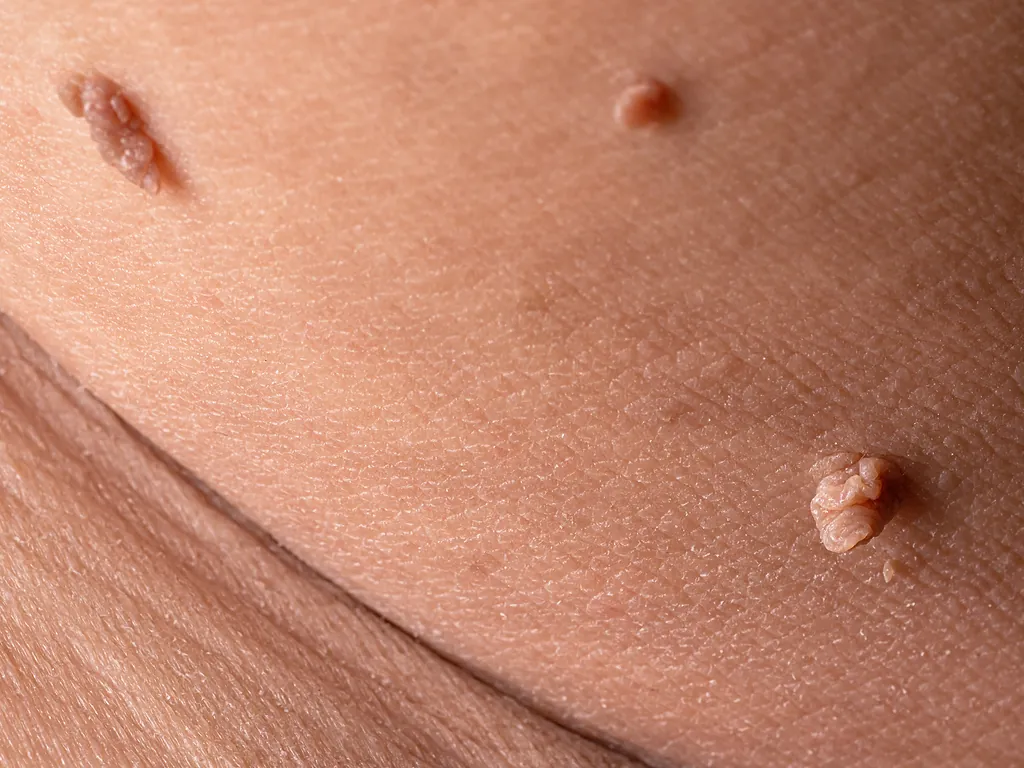
The term „skin tag“ is not a sufficiently precise diagnosis. Verruca, seborrhoeic keratosis, certain moles or other growths can resemble a soft fibroma [3]. Therefore, before removal, we check what kind of lesion it is.
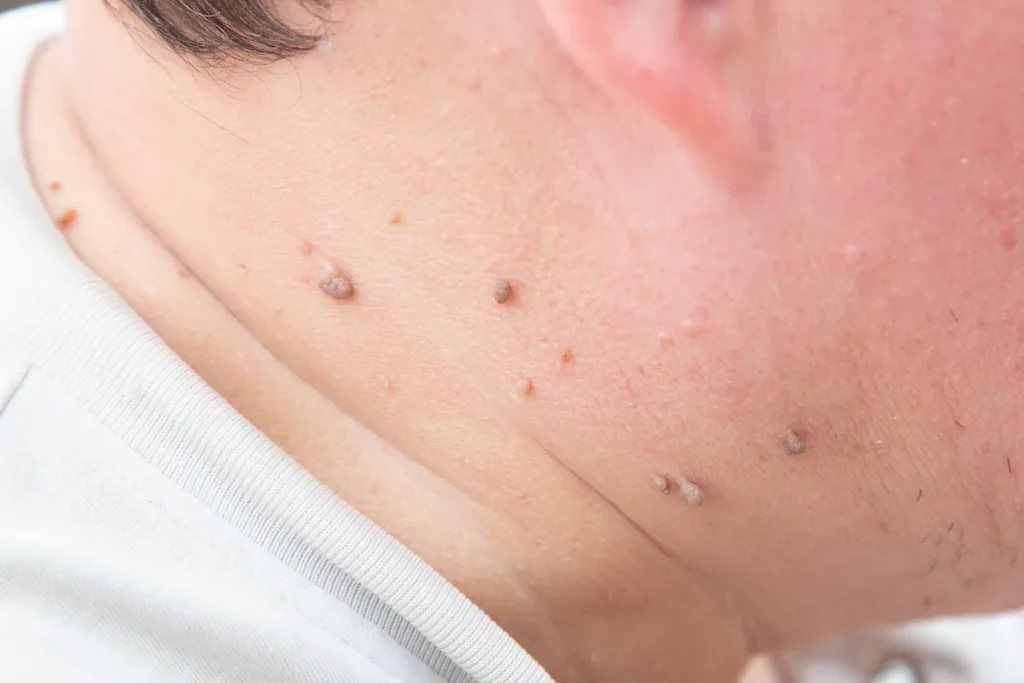
Why do papillomas form
The exact cause is not fully understood. They appear more frequently with age and in areas where skin rubs together, as well as during pregnancy and in people with excess weight or insulin resistance [2] [3]. Papillomas on their own do not mean that you have diabetes. If many new lesions suddenly appear, at the examination we will assess whether further investigation is necessary [2].
The propensity to develop them is individual. By removing them we resolve existing lesions, but new ones may appear over time. Soft fibromas are not considered contagious [4].
When removal makes sense
Removal is considered when the lesion catches on clothing or jewellery, interferes with shaving, is frequently injured, or bothers you aesthetically. If it is a typical soft fibroma that causes no trouble, removal is not mandatory. The decision is made after an examination and a discussion about what you wish to resolve.
The examination is particularly important when a growth is growing rapidly, changes appearance or colour, bleeds without injury, becomes painful or looks different from other lesions [2] [5]. It is then necessary to establish a diagnosis before choosing the method.
When is a histopathological analysis required
A typical soft fibroma does not automatically require histopathological analysis. When the finding is not typical or there is doubt about the diagnosis, the doctor may recommend taking a sample for tissue examination under a microscope [3]. We assess the need for a sample prior to removal, so that we can choose the procedure that will preserve the appropriate tissue for analysis. The analysis is carried out by an off-site laboratory.
How do we remove papillomas
At the Imedic polyclinic, we most frequently remove papillomas using radiowaves, and less often with the Candela CO2 laser. We choose the method according to the appearance, size and position of the lesion. In professional literature, radiowaves are also the method preferred by the majority of specialists for soft fibromas [3]. First, we examine the skin and agree on which lesions are to be removed during that visit. Then we prepare the skin and, when necessary, apply local anaesthesia and wait for it to take effect.
The radiowave instrument enables precise removal of the lesion and control of minor bleeding. When changing a skin tag, its base is treated. The technique is adapted to the position and size, with the aim of minimising damage to the surrounding skin. Radiowaves and lasers are different technologies; the choice of procedure should suit the specific lesion.
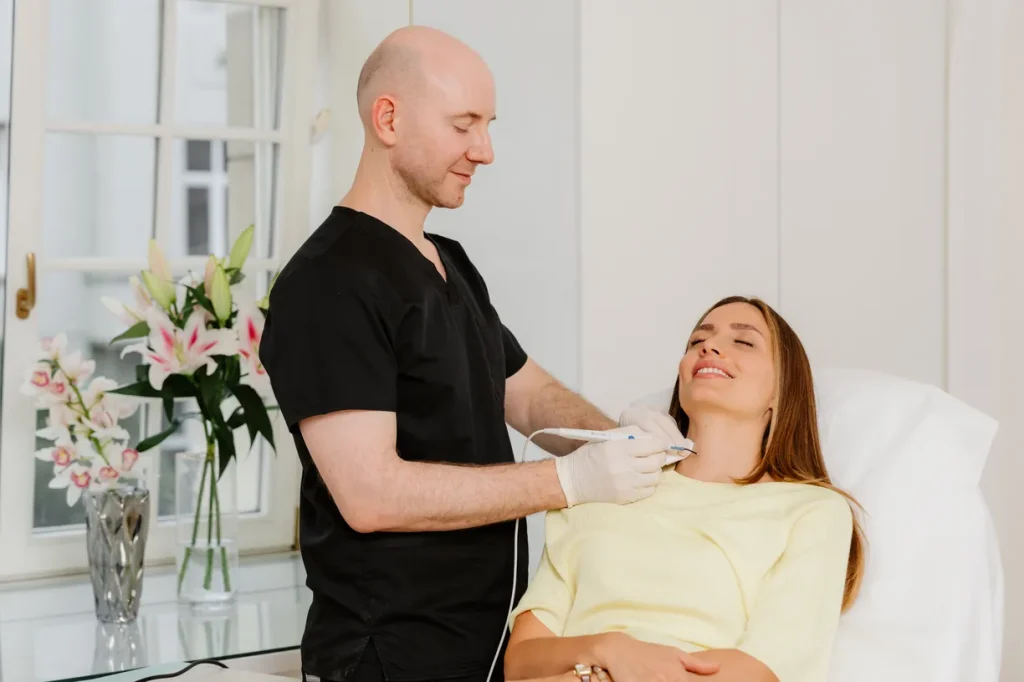
Removal of a single small lesion is brief, while a larger number of skin tags requires a longer appointment. When booking, please state which regions you have them on and approximately how many, so that we can schedule enough time. We can often remove multiple lesions during a single visit, and a larger volume is spread across multiple appointments if necessary.
Finally, we treat the treated area, protect it if necessary and give you instructions for aftercare.
Removal by body area
| Area | What are we paying attention to |
|---|---|
| Neck | Skin tags can catch on a collar, scarf or jewellery. After removal, protect the treated area from friction. |
| Armpit | Sweating, shaving and deodorant can irritate the small wound, so a return to these habits is adapted to the healing process. |
| Under the breasts and groin | It is important to reduce friction and moisture retention, along with clothing that does not press on the treated area. |
| Face and eyelids | Assessment of position and size is especially important near the eye. Changes on the eyelid margin itself or close to the eye require evaluation by an appropriate specialist. |
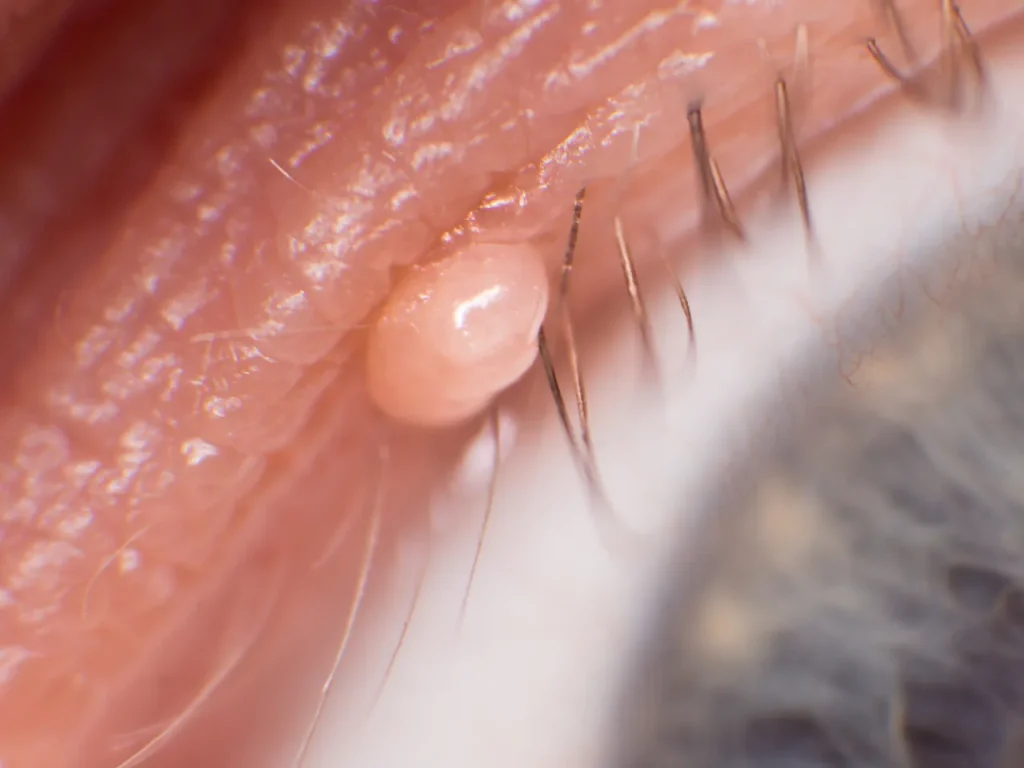
Changes in the genital region must first be examined. Soft fibromas and genital warts They may look similar, but their origin and further treatment plan differ.
Recovery and aftercare following removal
After removal, a small treated area remains which gradually heals. Sensitivity, mild redness and a scab may occur. In our practice, a scab usually lasts about seven days. In the case of larger changes or in areas exposed to friction, recovery may take longer.
Do not remove or pick at the scab. For aftercare, we recommend an antibiotic ointment, and your doctor will tell you which ointment to apply and for how long. Clean the treated area according to the instructions provided, without using acids, wart removers or other preparations on your own initiative.
Showering is permitted after 24 hours, without rubbing the treated area. Postpone shaving and deodorant over that area until the skin has healed and is calm. While there is an open wound, avoid swimming pools and activities that intensely rub or irritate it. Protect the skin from the sun; do not apply cosmetics to an unhealed wound without a doctor's instructions.
If the pain or redness increases instead of subsiding, or if purulent discharge, pronounced swelling or persistent bleeding occurs, contact the polyclinic. A follow-up appointment is arranged according to the findings and the healing process [2].
Does a mark remain after removal
The goal is the neatest possible healing and as inconspicuous a mark as possible. A lighter or darker colour of the treated area is possible, and in the case of some lesions, a small scar [5]. The final appearance depends on the lesion itself, the procedure, the region and your body's healing process. That is why during the consultation we discuss the expected result, especially when it comes to the face and other visible regions.
What to tell your doctor before the procedure
Please let us know about any medications and supplements you are taking, allergies to medicines and anaesthetics, pregnancy, diabetes, previous delayed healing or prominent scarring. Also tell us if you have a pacemaker, defibrillator or other implanted medical device, as this may affect the choice of method [6].
Do not stop the prescribed therapy, including medicines that affect blood clotting, on your own initiative. If a change in therapy is needed, it is agreed with the attending physician [6]. If there are signs of infection or pronounced inflammation, the physician assesses whether the procedure should be postponed or adjusted.
Skin tag removal price
| Service | Price |
|---|---|
| Removal of keratoses, papillomas, fibromas | 6,000–12,000 RSD |
The exact amount for the planned procedure is agreed upon before removal, after assessing the number, size and localisation of the lesions. All prices are in dermatology price list.
The examination is free of charge if the lesions are removed on the same day. If you are coming for an examination only, it will be charged according to the current price list.
You can send the photograph via Viber or WhatsApp to 064 237 0707 for a rough price estimate. A photograph does not replace an examination or confirm a final diagnosis.
Our dermatologists
Who performs the removal of papillomas
Examinations and removals at the Imedic polyclinic are performed by specialist dermatovenereologists: Dr Marina Ćirović and Dr Sanja Kekić. During the examination, we assess whether it is a soft fibroma, choose the appropriate procedure and discuss post-procedure care.

Have a question?
Frequently asked questions about papillomas
Are papillomas contagious and are they caused by HPV?
The soft fibromas discussed on this page are not considered contagious and are not the same as HPV warts. A possible link with HPV has been investigated, but its causal role has not been reliably established. If you are not sure which group your skin lesion belongs to, we check this during the examination.
Are papillomas and condylomas the same?
Nisu. Genital warts Genital warts are linked to an HPV infection, whereas skin tags represent a different type of change. The location in the groin or the „stalk-like“ appearance alone is not enough to reliably tell the difference at home.
What is the difference between a soft and a hard fibroma?
A soft fibroma is usually soft and often hangs on a stalk. The term „hard fibroma“ is often used for dermatofibroma, a firmer skin nodule that is assessed and removed differently. Not every lesion we call a fibroma is suitable for the same procedure.
Is removal painful?
Local anaesthesia, when necessary, makes the procedure easier to tolerate. The anaesthetic injection itself may sting briefly, and during removal you may feel touch or pressure. If you feel pain, tell the doctor so they can adjust the procedure. After the procedure, the area may be tender for a short time.
Can multiple papillomas be removed at once?
Certainly, when the doctor considers it appropriate. The number of lesions removed in a single visit depends on their size, location, and your state of health. In the case of a larger number of lesions, it is sometimes more practical to arrange multiple appointments.
Do papillomas return after removal?
Removed skin tags are usually not returned, but removal does not eliminate the tendency for new soft fibromas to develop. A new growth in the same region does not automatically mean that the previous procedure was unsuccessful. If the lesion reappears at the treated site, we check what it is by means of an examination.
Can papillomas be removed with cream or a piece of string?
Do not cut, tie them off or treat them yourself with acids or preparations for viral warts. You may injure the surrounding skin, cause bleeding or an infection, and there is also a possibility that the lesion is not a soft fibroma. This is particularly important for the eyelids, face and genital region.
Can I remove skin tags during pregnancy?
Make sure to report pregnancy before the procedure. If the lesion does not cause any discomfort, aesthetic removal is usually postponed. If it gets injured, bleeds or there is doubt about the diagnosis, the doctor assesses whether an intervention is necessary and which procedure is appropriate.
When can I shave and use deodorant?
Wait for the treated area to close and settle down, and follow the instructions given for your region. A razor, scented products and deodorant can irritate the wound, so it is important not to apply them directly over it while it heals.
Can I send a photograph before arriving?
You can send a clear photograph in good lighting, along with information on the region and approximate number of lesions, via Viber or WhatsApp to 064 237 0707. That way we can provide approximate information regarding the visit and price; the final assessment is made during the examination.
Book an appointment at the Imedic polyclinic
If your skin tags irritate you, get injured or bother you because of their appearance, book an appointment so we can determine the type of lesions and the removal plan. When booking, please specify the region and the approximate number of lesions.
Kneza Miloša 23, 2nd floor, Belgrade. Opening hours are Monday to Sunday, from 9 am to 9 pm. Call us 064 237 0707; Viber and WhatsApp They are available on the same number.

Author: Dr Ivica Jeremić
PhD in Medical Sciences (Molecular Medicine and Immunology), rheumatology subspecialist, dermatology resident.
Updated:
Author: Dr Marina Ćirović
Specialist in dermatovenereology; she graduated from the Faculty of Medicine, University of Belgrade in 2015.
Updated:
Expert sources
- DermNet NZ. Skin tags (acrochordons). https://dermnetnz.org/topics/skin-tag
- American Academy of Dermatology. Skin tags: Overview, causes, when to see a dermatologist. https://www.aad.org/public/diseases/a-z/skin-tags
- StatPearls [Internet]. Skin Tag (Acrochordon). NCBI Bookshelf; updated 13 Dec 2025. https://www.ncbi.nlm.nih.gov/books/NBK547724/
- NI Direct (Northern Ireland Executive). Skin tags. https://www.nidirect.gov.uk/conditions/skin-tags
- NHS. Skin tags. https://www.nhs.uk/conditions/skin-tags/
- Cambridge University Hospitals NHS Foundation Trust. Pre-operative advice for patients who are due to have skin surgery. https://www.cuh.nhs.uk/patient-information/pre-operative-advice-for-patients-who-are-due-to-have-skin-surgery/
- DermNet NZ. Dermatofibroma. https://dermnetnz.org/topics/dermatofibroma
Professional dermatological supervision and reliable information
The text on this page was written by Dr Ivica Jeremić and Dr Marina Ćirović, a specialist in dermatovenereology, in accordance with the clinical practice of the Imedic polyclinic and the professional sources listed above. Papillomas are removed by a specialist physician in dermatovenereology, following an examination that confirms the type of lesion. When the appearance of the lesion is not typical, the removed tissue is sent for histopathological analysis. A personal examination is necessary for diagnosis and the treatment plan.


