Polynucleotides
Polynucleotides are an injectable treatment for the regeneration and rejuvenation of facial skin. They consist of highly purified fragments of fish DNA, obtained from trout and salmon. The treatment stimulates natural renewal processes and improves skin quality, hydration and elasticity.
Polynucleotides – in brief
| What it is | A product made from highly purified salmon and trout DNA molecules |
|---|---|
| What it treats | Facial skin regeneration and quality, including the eye area |
| Anaesthesia | Anaesthetic cream, as required |
| Duration of treatment | About 20 minutes |
| Number of treatments | Most commonly three to four treatments spaced two to four weeks apart |
| Result | First signs after a few weeks, full effect after about three months |
| Recovery | Possible mild redness, swelling or small injection marks, which settle within one to several days |
What are polynucleotides?
Polynucleotides (PN) are chains of nucleotides. In aesthetic medicine, purified DNA-derived preparations are used, often obtained from fish such as salmon and trout. The designations PN and PDRN are used for related preparations, but their terminology is not completely standardised: composition, chain length and properties may vary. Therefore, the assessment of effect and safety applies to a specific preparation and method of application. Similarity to human DNA or molecular size is not a sufficient basis for claiming that the treatment is risk-free.
Which preparations do we use?
At our clinic, we use products from the Italian manufacturer Mastelli, based on highly purified polynucleotides (PN-HPT):
- Plinest – for improving skin quality on the face, neck and décolletage
- Newest – polynucleotides combined with hyaluronic acid and mannitol, for more mature and dehydrated skin
The doctor determines which product and which protocol are suitable for your skin during the consultation.
Polynucleotide treatment
How do polynucleotides work?
Polynucleotides are long chains of nucleotides. Once injected, they support skin cells. Studies show that they stimulate the activity of fibroblasts, the cells that produce collagen, and help hydrate the tissue. Their anti-inflammatory action has also been described.
Polynucleotides do not provide volume and do not act as a filler. Changes develop gradually, through a series of treatments. Before being used in aesthetics, polynucleotides were used in wound healing and in other branches of medicine.
Indications
Polynucleotides may be considered for:
- thin, dehydrated and tired facial skin
- fine lines and loss of elasticity
- skin around the eyes, especially for dark circles and thin under-eye skin
- neck and décolletage
- preparing the skin for other treatments or helping it recover afterwards
For acne scars and stretch marks, they are used as part of a combined treatment plan rather than as a standalone solution.
We recommend planning your injectable treatment at least two weeks before an important event. If a series of treatments is required, the plan should start earlier to allow enough time for the full effect to develop.
Polynucleotides for under-eye circles
The skin beneath the eyes is thin, so signs of fatigue, fine lines and dark shadows show up on it more quickly. For this area, the doctor adapts the amount of product and the technique to suit thin skin. In studies, polynucleotides are used in a series of three to four treatments, two to three weeks apart.
Polynucleotides do not fill a hollow tear trough like a filler. When the main problem is hollowness, a doctor may suggest a filler or a combination. To find out which type of dark circles you have and which treatment works for them, see our page about removal of dark circles under the eyes.
What you can realistically expect
The aim of the treatment is better-quality skin: better hydration, elasticity and a more even appearance. Changes are gradual and vary from person to person.
Polynucleotides do not change the shape of the face, do not lift tissue and do not replace a filler when volume is needed. After the treatment, most patients return to their daily routines immediately, with possible redness and small marks at the injection sites.
Polynucleotides or hyaluronic acid fillers?
| Polynucleotides | Hyaluronic acid filler | |
|---|---|---|
| Goal | skin quality and renewal | volume and shape of the treated area |
| When results appear | gradually, through a series | immediately; final result once swelling subsides |
| Number of treatments | series of 3 to 4 | most commonly one, with possible correction |
| Changes facial shape | No | Yes, in the treated area |
These two treatments are not mutually exclusive. They are often combined when both are needed. Read more about fillers on our page about hyaluronic fillers.
Combining with other treatments
Polynucleotides combine well with collagen stimulators. While polynucleotides restore cellular function and hydration, Juvelook works on structure — it stimulates new collagen production and restores skin density.
Polynucleotides are often combined with microneedling as well: the product is applied during the treatment with the SkinPen device, as described in our article about SkinPen and polynucleotides.
They can also be scheduled alongside biorevitalisation, PRP or laser treatments, leaving an appropriate interval between them. When volume is needed in addition to skin quality, the doctor may suggest a combination with a hyaluronic acid filler. The sequence and interval between treatments are determined by the doctor.
Polynucleotide prices
You can find polynucleotide prices in our Price list.
Have a question?
Answers to frequently asked questions
Who is the treatment intended for?
Polynucleotides are intended for people who want to improve skin quality – its elasticity, hydration and resilience – without adding volume. They are used for the first signs of ageing, as well as for mature, weakened skin that has lost its tone and radiance. Following a consultation with a doctor, it is assessed whether polynucleotides are the right choice and an individual treatment plan is created. They are also suitable for younger patients who want prevention, as well as for older patients for whom the goal is regeneration and the strengthening of the skin structure.
What does the treatment involve?
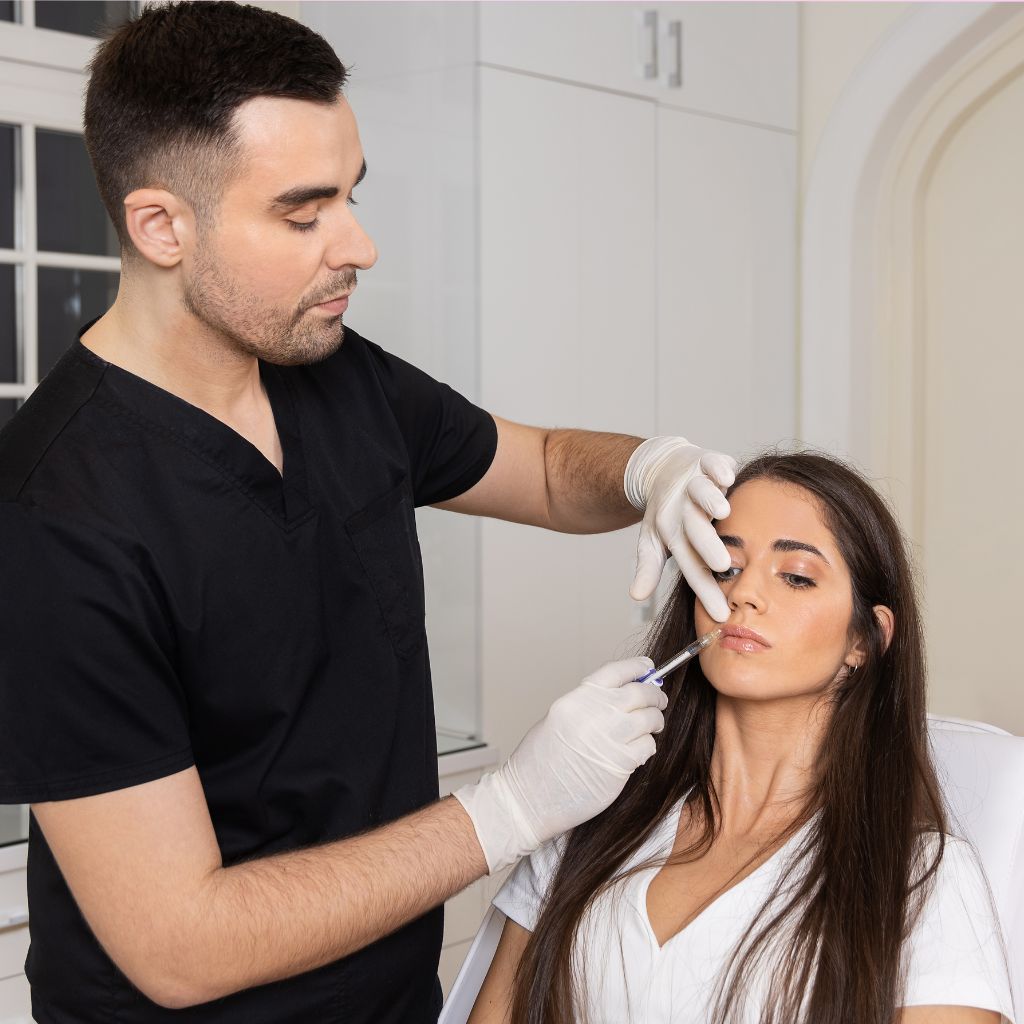
No special preparation is required. After cleansing the skin, polynucleotides are injected into precisely defined areas using fine needles. The procedure takes about 20 minutes and is performed in a controlled medical setting.
Is polynucleotide treatment painful?
The treatment causes only minimal discomfort. A local anaesthetic cream is applied if necessary to make the procedure more comfortable.
Recovery
Mild redness, swelling or small marks may appear at the injection sites and settle within one to several days. Most patients return to their everyday activities immediately.
When can I put on make-up?
It is recommended not to apply make-up for the first 12 to 24 hours, until the puncture sites have closed.
How many treatments are needed?
A series of three to four treatments spaced two to four weeks apart is most commonly recommended. The number of sessions depends on the skin condition and treatment goals.
When will the results be visible?
The first signs of improvement can be noticed after a few weeks, while the full effect is assessed after about three months, once the regeneration process is complete. The results are maintained with periodic treatments as advised by a doctor.
Are the results cumulative?
The effect is built up through a series of treatments, so after the third or fourth treatment the skin is usually in a better condition than after the first. The full effect is assessed around three months from the start, and is then maintained with periodic treatments.
Effects of polynucleotides
Polynucleotides have a regenerative effect – they stimulate tissue repair, strengthen the skin barrier, improve hydration and capillary stability, as well as reducing inflammation. The skin becomes more resilient, more elastic and has a more even texture.
Do they help with acne scars?
They can improve the quality of the skin around scars, most commonly in combination with microneedling. For deep scars, other methods are also needed, which we cover on our page about acne scar treatment.
Contraindications
Polynucleotides are generally well tolerated. However, there are situations in which the treatment is not recommended: individuals under the age of 18, pregnancy and the breastfeeding period, the presence of an active infection or inflammation at the application site, certain autoimmune disorders, as well as hypersensitivity to any of the components of the preparation (especially in individuals with an allergy to fish or salmon).
Adverse reactions are generally mild and transient. Most commonly, mild redness, minor swelling or a small bruise may occur at the injection site, which resolve spontaneously within a short period.
Book a polynucleotide treatment in Belgrade
Imedic poliklinika is located at Kneza Miloša 23, 2nd floor, Belgrade. Opening hours: Monday–Sunday, 9:00–21:00.
Appointments can be booked by phone: 064 237 0707. If you contact us from abroad, we are also available via Viber and WhatsApp on the same number.
Related topics

Author: Dr Ivica Jeremić
PhD in Medical Sciences (Molecular Medicine and Immunology), rheumatology subspecialist, dermatology resident.
Expert sources
- Lampridou i saradnici, 2025 — sistematski pregled polinukleotida u estetskoj medicini
- Pregled terminologije PN i PDRN, 2025 — sastav, molekulske osobine i razlike
- Cavallini i saradnici, 2021 — konsenzus o primeni PN-HPT u estetskoj medicini (J Cosmet Dermatol)
- Kim, 2025 — poređenje polinukleotida i PDRN u dermatologiji (Pharmaceutics)
- Lim i saradnici, 2024 — PN-HPT za regeneraciju i podmlađivanje kože (Clin Cosmet Investig Dermatol)
- Amado i saradnici, 2026 — PN-HPT kod tamnih podočnjaka (Clin Cosmet Investig Dermatol)