Scar subcision in Belgrade
Subcision is a procedure that releases fibrous bands pulling depressed scars towards the deeper layers of the skin. It is most commonly considered for selected acne scars, following an assessment of their type and attachment to the underlying tissue. At the Imedic Polyclinic in Belgrade, the treatment plan is determined by consultation — subcision is used either independently or as part of a combined approach, alongside a discussion of the expected improvement, recovery, and possible need for additional treatments.
Subcision of scars – a summary
| What is being treated | Tethered scars tied to deeper tissue, most commonly rolling acne scars |
|---|---|
| Method | Subcision of scar tethering using a special needle or cannula |
| Anaesthesia | Local |
| Supplementary procedures | According to the doctor's assessment, a filler or collagen stimulator, and more broadly, a CO2 laser |
| Evaluation of results | At the check-ups, after the swelling and bruising have subsided |
| Number of treatments | Individually, according to the skin's condition and response |
| Season | Subcision year-round; CO2 laser from October to March |
What is subcision?
Subcision is a minimally invasive procedure acting beneath the skin's surface. With certain depressed scars, the skin is anchored to deeper layers by fibrous bands, and it is this connection that maintains the depression. Using a special needle or cannula, the doctor releases these bands, thereby relieving the base of the scar.
With the release, a healing process is also triggered in the treated region, during which new connective tissue is formed. The aim is to reduce the visibility of the scar and improve skin texture, rather than completely flattening the surface.
Subcision is rarely used as a standalone procedure. How it fits into a broader plan is explained on the page acne scar treatment. How the initial assessment and treatment planning are carried out is described in the text Initial acne scar assessment, and why are the methods combined in the text Combining acne scar treatments.
This page describes acne scar subcision. We also perform subcision for cellulite, and that procedure is described on the page subcision of cellulite.
Which scars is subcision considered for?
Subcision is most commonly considered for rolling scars and other depressions associated with deeper tissue. They are recognised by being most noticeable under side lighting and during facial movements. For certain boxcar scars, subcision may be part of a broader plan when the base of the scar is tethered to the underlying tissue.
His deep ice-pick scars, flat pigmentation changes and raised scars require a different assessment and different procedures. Multiple types of scars often exist on the same face, so a single procedure does not resolve all the changes.
Subcision is also considered for depressed scars following injuries or surgeries, when the scar appears bound down to the underlying tissue and does not move freely with the surrounding skin.
What does subcision look like?
After examination and following agreement on the plan, the doctor marks the regions to be treated and applies local anaesthesia. Using an appropriate instrument, they then release the fibrous bands beneath the selected scars.
During the procedure, pressure may be felt, but not pain. The extent of the treatment depends on the number, position, and characteristics of the scars, so the duration varies too.
Upon completion, you receive aftercare instructions and a follow-up appointment, at which the result is assessed and further steps are agreed upon.
Subcision in practice
Are a filler or collagen stimulator necessary alongside subcision?
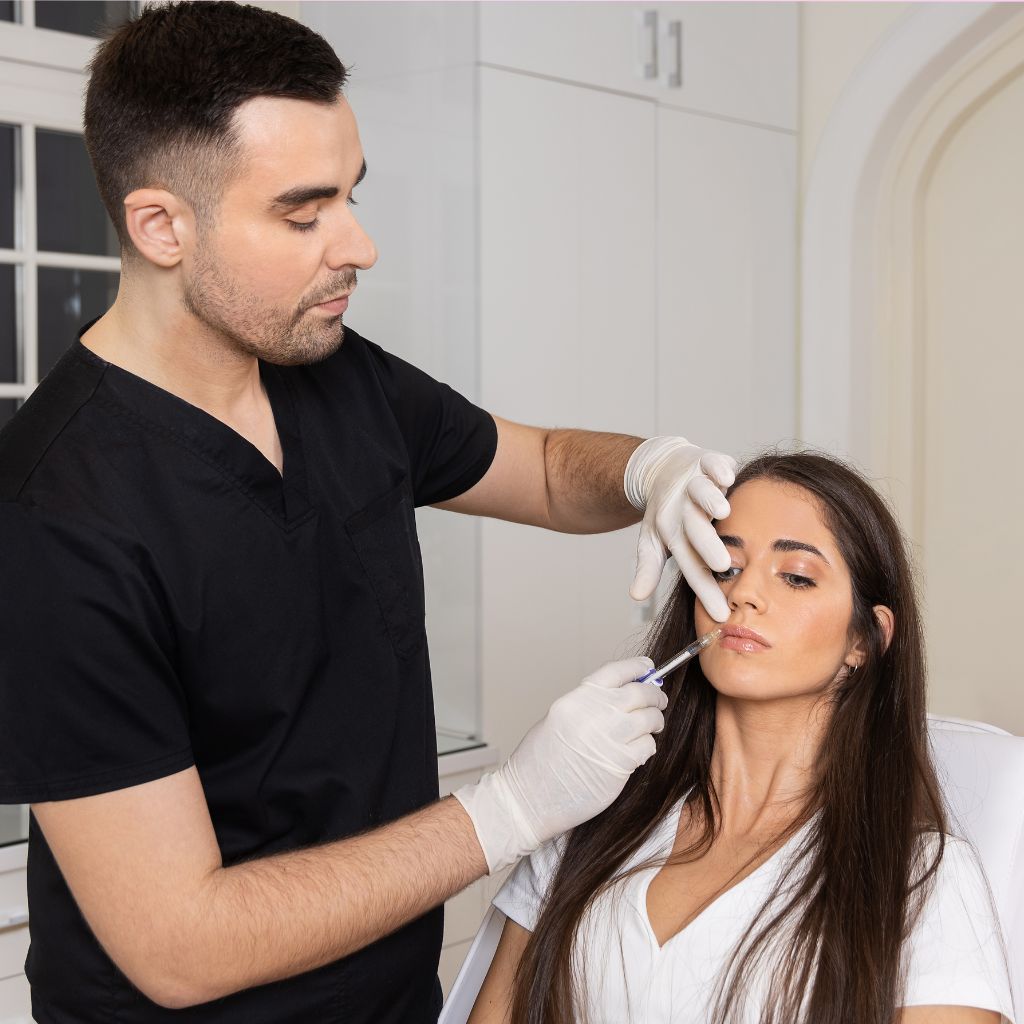
They are not compulsory in every case. In selected patients, the doctor may suggest an additional procedure to correct volume or improve skin quality — hyaluronic filler or collagen stimulator like Juvelook.
The decision depends on the findings, previous treatments and the expected outcome. Before the procedure, the doctor explains which product is used, why it is recommended and what additional risks and costs it involves.
Subcision and CO2 laser
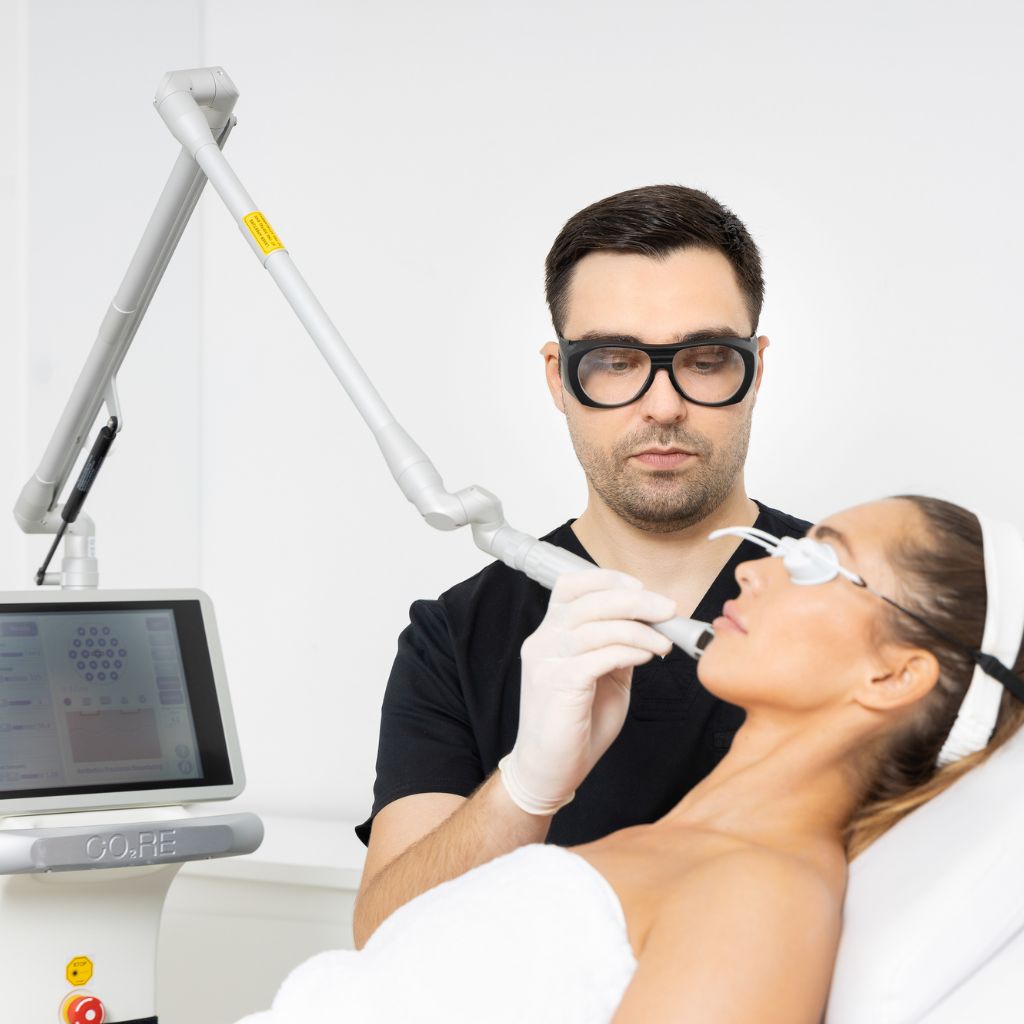
Subcision and fractional CO2 laser can have different roles in the same treatment plan. Subcision targets the tethering of selected indentations to the underlying tissue, while the laser contributes to dermal remodelling and the improvement of skin texture.
The sequence, spacing and number of treatments are determined individually. Combining them is not implied for every person and every type of scar.
Example of a treatment plan at Imedic
This is an example of a plan rather than a rule — the final schedule is adjusted to the skin's condition and response:
Subcision – release of deeper, bound scars; it is performed all year round, as it does not damage the surface layer of the skin.
CO2 laser - smoothing of texture and shallower scars; it is carried out in the period of lower UV radiation, from October to March.
Collagen stimulator or filler – as assessed by a doctor, with subcision.
The gap between treatments is usually six to eight weeks, to give the skin time to recover and produce new collagen.
Is subcision also performed for cellulite?
Yes. For cellulite, subcision releases the fibrous septa that pull the skin on the thighs and buttocks, but this is a separate procedure, described on the page subcision of cellulite.
Recovery after subcision
Following the procedure, swelling, bruising and sensitivity of the treated region are possible. Their duration depends on the extent of the intervention and individual reaction; bruising most commonly fades over seven to ten days. Instructions regarding aftercare, makeup, physical activities and follow-up are provided after the procedure. The treated region should not be independently massaged or pressed without a doctor's recommendation.
When is the result evaluated and how many treatments are needed?
The appearance immediately after the procedure is not the final result, as swelling may temporarily soften depressions. Improvement is assessed at follow-up appointments, after the initial reaction has subsided, and the tissue remodels even months later. The number of treatments depends on the initial finding and skin response, so it is determined individually. The aim is to reduce the visibility of scars and improve texture; complete flattening of the skin is not a realistic outcome.
Scar subcision price
The price depends on the region, the scope of the procedure, and whether subcision is performed on its own or in combination with other procedures. Current information can be found in price list of laser and radiowave treatments.
Following the assessment, you will receive a proposed plan and an explanation of what the agreed cost covers.
Subcision and CO2 laser: before and after
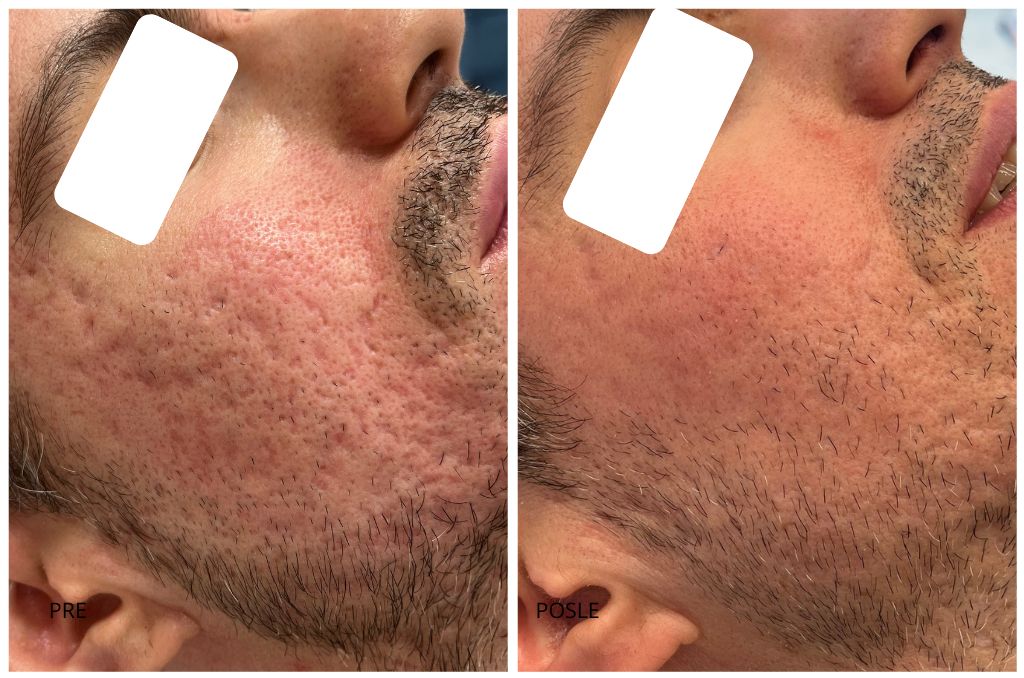
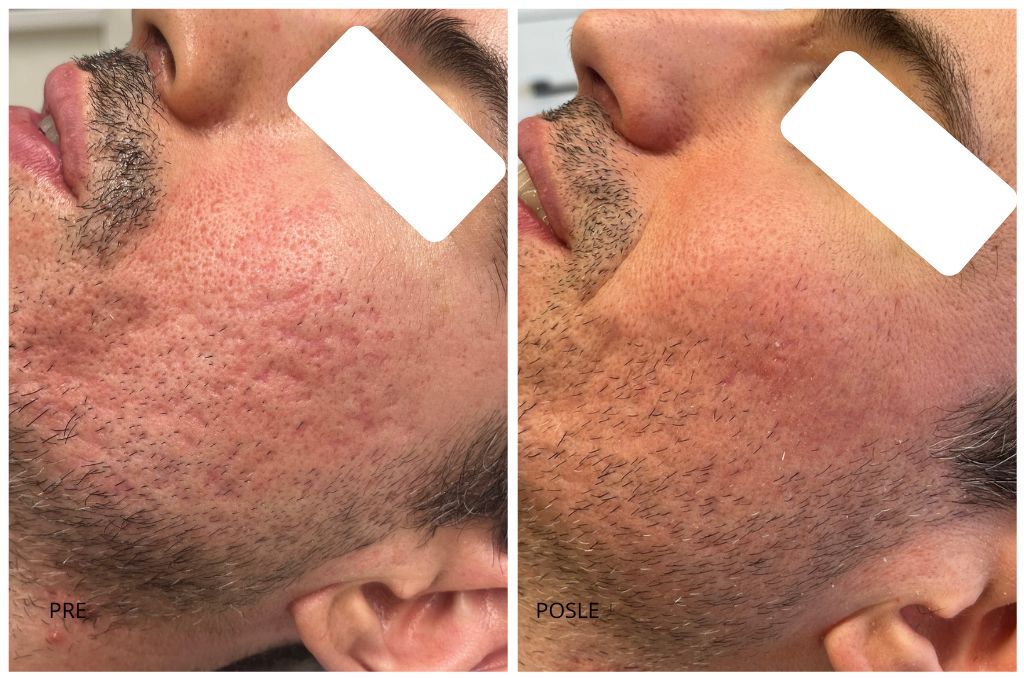
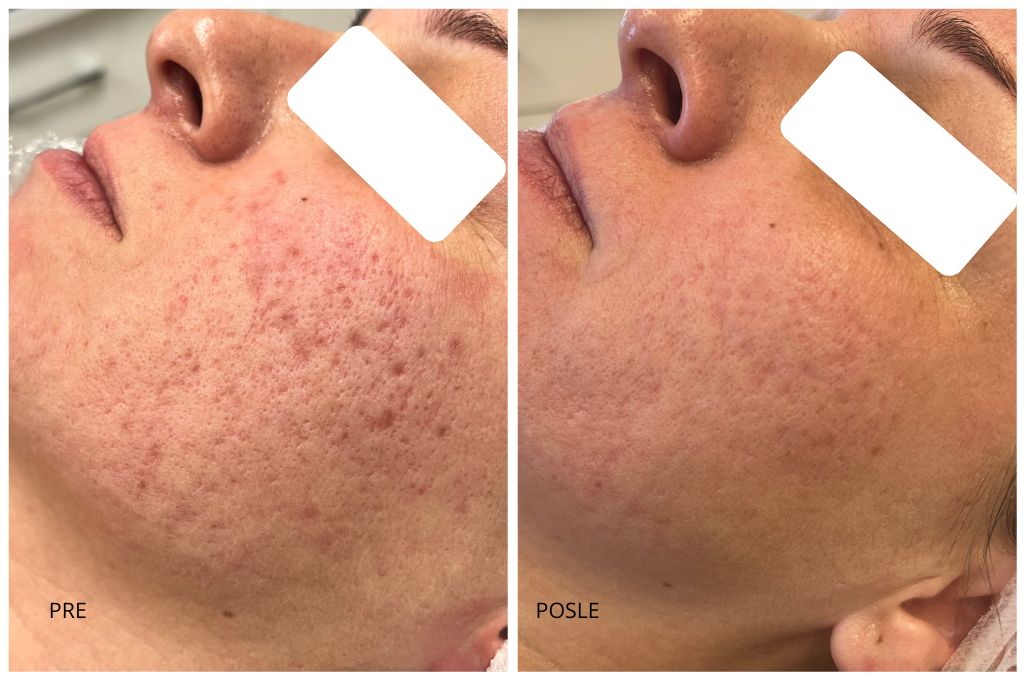
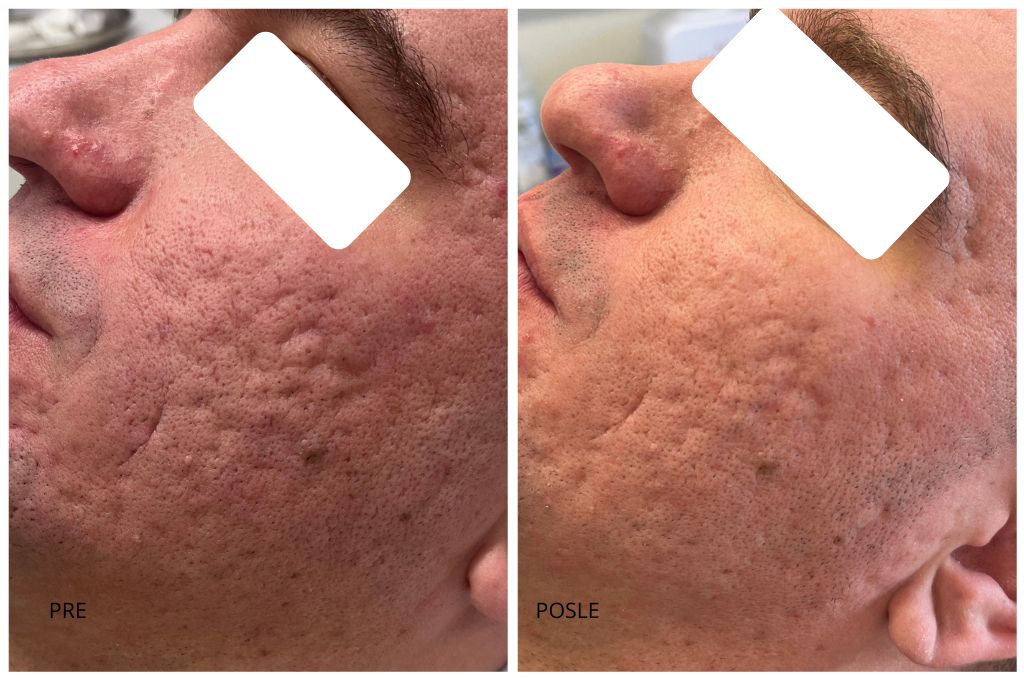
The photographs show subcision with a collagen stimulator performed first, followed by fractional CO2 laser treatments. The result belongs to a specific patient and varies from person to person, depending on the type of scars and the healing process.
Anaesthesia
Local
Evaluation of results
At the check-ups, after the swelling and bruising have subsided
Season
Subcision all year round, CO2 laser from October to March
Preparation and contraindications
Therapy and supplements tell your doctor about all medicines and supplements you are taking, especially blood thinners. The prescribed treatment should not be stopped on your own; any changes must be discussed with your doctor.
Isotretinoin - inform your doctor if you are using or have recently used isotretinoin. The timing and possibility of subcision are determined according to the skin condition, the planned procedure, and the healing assessment.
Proneness to scarring – subcision is not performed on individuals prone to keloid and hypertrophic scars.
Active infections and clotting disorders – the procedure is postponed in cases of active skin infection, and it is not performed in patients with blood clotting disorders.
Cold sore – if you are prone to cold sores, please mention this prior to the procedure for preventive therapy.
Pregnancy and breastfeeding – elective cosmetic procedures are postponed during this period.
Temporal region – in our clinic we do not perform subcision in the temple area, due to the arrangement of blood vessels and nerves in that part of the face.
Our doctors
Who performs subcision?



Have you got a question?
Frequently asked questions about scar subcision
Is subcision painful?
The procedure is carried out under local anaesthesia. During the work, pressure may be felt, but not pain. Once the anaesthesia wears off, the treated area may be tender for a day or two.
How long does recovery take and what is expected?
Swelling, bruising and tenderness in the treated region are expected after the procedure. Bruising usually fades over seven to ten days and can be covered with medical makeup once the doctor permits it. The severity of bruising is not a measure of the treatment's success — it depends on the region, the extent of the procedure and one's predisposition to bruising.
When will I see the result?
Part of the change is visible immediately, but swelling in the first days can temporarily soften the depressions, so this appearance is not final. Improvement is assessed at follow-ups, after the initial reaction subsides, and the tissue continues to remodel over the coming months.
Can the indentations come back?
It is possible, because the tissues can re-bond during the healing process. In selected patients, the doctor may suggest a filler or a collagen stimulator alongside subcision, but no product guarantees that the depression will not reappear. The follow-up appointment is used to assess the result and discuss further steps.
How many treatments are needed?
It depends on the depth and number of scars and the skin's response. The plan is made after an examination and, if necessary, modified at follow-up appointments. For some patients, subcision is part of a broader plan that also includes a CO2 laser.
Can subcision replace laser?
No, it is a matter of procedures with different roles. Subcision targets the tethering of the indentation to deeper tissue, whilst laser treatment contributes to the remodelling and smoothing of skin texture. What is required in each specific case is assessed through an examination.
How to prepare for the treatment?
Inform the doctor of all medications and supplements you are taking, particularly blood thinners, as well as any tendency towards facial cold sores or prominent scarring. The prescribed treatment should not be stopped independently.
Can subcision be done in the summer?
That is possible, because it is performed beneath the skin's surface and does not damage the outer layer. The CO2 laser, when it is part of the plan, is done during the period of lower UV radiation, from October to March.
Book an appointment for scar subcision in Belgrade
The Imedic Polyclinic is located at Kneza Miloša 23 street, 2nd floor, Belgrade. Opening hours: Monday–Sunday, 9:00–21:00.
Appointments are made by phone: 064 237 0707. If you contact us from abroad, we are also available via Viber and WhatsApp on the same number.

Author: Dr Ivica Jeremić
Doctor of Medical Sciences (Molecular Medicine and Immunology), subspecialist in rheumatology, dermatology resident.
Updated:
Expert sources
PubMed: Subcision in acne scarring – A review of clinical trials
PubMed: Subcision for Atrophic Acne Scarring – A Comprehensive Review
Professional dermatological supervision and reliable information
The text on this page was written in accordance with the clinical practice of the Imedic Polyclinic and verified by doctors. Professional sources are listed above. Subcision is planned after an examination, depending on the type and appearance of the scars. The aim is to reduce the visibility of the scars and improve skin texture, rather than to flatten them completely. An in-person medical examination is required for assessment and treatment planning.