Laser stretch mark removal
Laser treatment can visibly reduce the appearance of stretch marks. The laser stimulates the renewal of damaged tissue, the skin regenerates, and stretch marks become lighter, narrower and less noticeable. Read on to find out how stretch marks are assessed and which treatment is chosen for which type.
Laser stretch mark removal – at a glance
| What it treats | New and older stretch marks |
|---|---|
| Treatments | Ablative laser, Morpheus8 and Yellow laser, individually or in combination |
| Anaesthesia | Anaesthetic cream |
| Recovery | After an ablative laser, typically 5 to 7 days, depending on the treatment and body region, with redness, swelling and peeling; after Morpheus8 shorter, with mild redness for a few days |
| Treatment plan | The combination and spacing are determined individually |
What are stretch marks and why do they occur?
Stretch marks are very common and most people have at least one on their body. They are a type of scar that forms when the skin is suddenly stretched and its elasticity decreases. They very often appear as early as the teenage years, at 13 or 14 years of age, due to a growth spurt or weight gain, when the skin is less elastic and begins to “tear” and expand. At that point, they appear on the hips, thighs and buttocks. The second most common instance when they occur is during pregnancy, and then they appear predominantly on the tummy, but also on the hips, buttocks and thighs. Therefore, on all those parts of the body that have suddenly expanded. Frequently, liberally applying richer creams to the tummy can be helpful, as the skin will retain some elasticity. However, even that does not help many women, so after pregnancy and childbirth, stretch marks remain as a reminder on the skin. Apart from on the thighs, buttocks, tummy and hips, they also appear on the upper arms, breasts, legs, everywhere the skin is prone to stretching. They can appear at any stage of life, in both women and men.
How to remove stretch marks
Types of stretch marks
Depending on how long they have already been on the skin, they can be:
- Pink, red to purple: these are so-called new (early) stretch marks that have appeared recently. They may be accompanied by itching and stinging, as the skin suddenly tears, tightens, and expands;
- White stretch marks are those that have been present on the skin for a long time. They become level with the skin's surface and end up a few shades lighter than the surrounding skin. They are easy to spot, and if they are long, then the problem is even greater.
As well as varying in colour, they can also vary in width and depth, depending on the skin type and condition, as well as the degree of damage itself.
Why and how do stretch marks form?
In those areas where the skin is less elastic, there is a greater likelihood that stretch marks will appear at some point. Collagen is the main structural protein of the skin and, together with elastin, gives it firmness, resilience and elasticity. Due to various external factors, genetics and hormonal changes, the skin in certain areas becomes less resilient and stretches, and permanent scars – stretch marks – form.
Some of the most common causes of their formation are:
- sudden weight gain (during pregnancy, puberty, and in people who actively engage in bodybuilding);
- sudden weight loss;
- hormonal changes;
- certain medical conditions;
- genetic predispositions;
- poor skin elasticity and resilience.
If you have ever wondered how they form and what exactly happens on and beneath the skin, we will explain it simply. Stretch marks are a permanent type of scar formed in the dermis, the middle layer of the skin located between the epidermis (the surface layer) and the subcutaneous tissue. The dermis consists of dense irregular connective tissue and so-called loose connective tissue made of collagen and elastin, arranged in bundles. It is precisely this layer of the skin that protects the body from stress and strain, and helps the skin maintain its elasticity.
If, due to various factors, sudden stretching of the dermis occurs, the elastic fibres in this layer break. Such damage manifests on the skin's surface as permanent scars – stretch marks. In these damaged areas, there is no elastin and the skin in those places is no longer able to regenerate independently. Therefore, it needs help and it is important to treat stretch marks as early as possible – ideally as soon as you notice them. Then it will be much easier and quicker to eliminate them, while they are still fresh and have not caused more permanent damage to the skin.
Laser stretch mark removal
If we were to look for the best way to efficiently, painlessly and simply eliminate stretch marks and restore the skin, it would certainly be the laser method. Stretch marks, as a type of atrophic scar, require an approach that will regenerate the skin in its deeper layers and enable it to produce collagen, elastin and everything else necessary for a healthy, well-cared-for appearance. Various other methods mostly work on the surface, requiring much more time for the skin to renew and the stretch marks to disappear. Likewise, various creams and preparations recommended for eliminating stretch marks will never be able to completely remove them.
The gold standard in stretch mark removal is laser treatment. Let us note that it is crucial for these to be modern, medical-grade lasers, and for the procedures to be performed by a doctor with experience in this field. Lasers work by gradually removing the surface layer of the skin, while the heat of the laser penetrates the middle layer, renewing existing collagen and stimulating the production of new collagen. This is precisely why lasers are the most powerful stimulators of collagen. The skin gradually regenerates across all structures, becomes more elastic, and the damaged area is filled with new, youthful skin. In this way, stretch marks, as well as other types of scars, slowly fade and disappear.
CO2 laser stretch mark removal
CO2 is an ablative laser and we perform the treatments from October to March, when UV radiation is at its lowest. This laser removes the surface layer of damaged skin and strongly encourages regeneration through collagen stimulation.
First, ablation takes place, and then thermal energy triggers collagen remodelling and the production of new elastin. The laser is directed straight at each stretch mark, while the surrounding tissue remains untouched. Natural repair mechanisms are activated, and the damaged skin is gradually replaced with new, firmer and more elastic skin.
The treatment is performed using an anesthetic cream. Recovery usually takes 5 to 7 days, depending on the treatment and the area of the body, and involves redness, swelling and peeling. Usually 5–6 treatments are required, depending on the depth and age of the stretch marks.
Morpheus8 for stretch marks and excess skin
Morpheus8 is fractional radiofrequency microneedling. Unlike ablative lasers, it does not remove the surface layer of the skin, but acts in the deeper layers of the dermis and subcutaneous tissue.
Microneedles penetrate the skin in a controlled manner, while radiofrequency energy heats the tissue and triggers strong collagen stimulation and tightening. That is precisely why Morpheus8 plays a special role when, alongside stretch marks, there is also excess skin or a loss of tone. Lasers act exclusively on skin quality, whereas Morpheus8 can also contribute to the tightening and partial lifting of tissue through deep remodelling.
Recovery is shorter than with the CO2 laser — there is mild redness and pinpoint marks for a few days. Usually 3–4 treatments are needed.
When we have pronounced stretch marks and sagging skin at the same time (for example after pregnancy or significant weight loss), the combination of Morpheus8 and an ablative laser yields the best results: the laser improves the surface and texture, while Morpheus8 works on depth and tone.
Yellow laser for new, red stretch marks
In the case of new, red or purple stretch marks, the approach is different. At that stage, the vascular component dominates — the tiny blood vessels that give them their red colour. The
Yellow laser (wavelength around 577 nm) targets haemoglobin in those blood vessels. It reduces redness, lessens the inflammatory component and helps stretch marks transition to the pale phase more quickly. At the same time, it mildly stimulates collagen.
With fresh stretch marks, we often use the Yellow laser first to remove the redness, and then, if necessary, we include Morpheus8 or a fractional laser to improve the texture.
How do we choose the treatment?
- If the stretch marks are white and atrophic, the priority is a CO2 laser, possibly Morpheus8.
- If the stretch marks are red and new, the Yellow laser is the first choice.
- If there is both excess skin and a loss of skin tone, Morpheus8 is a key part of the treatment.
- In complex cases, we combine technologies, but at proper intervals and with an individual plan.
Contraindications
Laser stretch mark removal treatments are not intended for pregnant or breastfeeding women, in cases of malignant diseases, or for patients undergoing isotretinoin therapy. They also cannot be performed on individuals with skin infections, such as herpes or inflamed acne.
Frequently asked questions about stretch marks
Do creams and oils get rid of stretch marks?
Creams and oils keep the skin hydrated and can relieve itching in fresh stretch marks, but they do not remove stretch marks that have already formed, as the damage is in the dermis, the deeper layer of the skin. Existing stretch marks are reduced with laser treatments.
Can stretch marks disappear completely?
Stretch marks are a type of scar, so they cannot be completely erased. After a series of treatments, they become shallower, narrower and closer to the colour of the surrounding skin, which makes them significantly less noticeable.
How many treatments are needed?
With a CO2 laser, 5 to 6 treatments are usually required, depending on the depth and age of the stretch marks. The number of treatments and the interval between them are determined during the consultation.
When is the best time for laser stretch mark removal?
CO2 laser treatments are carried out from October to March, when UV radiation is at its weakest. Treatments are not performed on tanned skin.
Are fresh or old stretch marks easier to treat?
Fresh, red stretch marks respond better to treatment, for which the first choice is the Yellow laser. White, older stretch marks require deeper work with a CO2 laser, but they too can be visibly mitigated.
Which parts of the body are stretch marks removed from?
Most commonly on the stomach, thighs, hips, buttocks, breasts and upper arms. The plan is made according to the region, the size of the stretch marks and the condition of the skin.
When can I start treatment after pregnancy?
Treatments are not performed during pregnancy. The start time after childbirth is agreed with a doctor during an examination, taking into account the assessment of the skin condition and the breastfeeding period.
Stretch mark removal cost
The price of laser stretch mark removal depends on the size of the area being treated, the type of laser used and any potential combination with other procedures. You can view approximate prices in our Price list. For an accurate assessment and price information, you can send photographs of the area via Viber or WhatsApp on 064 237 0707, after which you will receive an individual assessment and treatment recommendation.
Book laser stretch mark removal in Belgrade
Imedic poliklinika is located at Kneza Miloša 23, 2nd floor, Belgrade. Opening hours: Monday–Sunday, 9:00–21:00.
Appointments can be booked by phone: 064 237 0707. If you contact us from abroad, we are also available via Viber and WhatsApp on the same number.
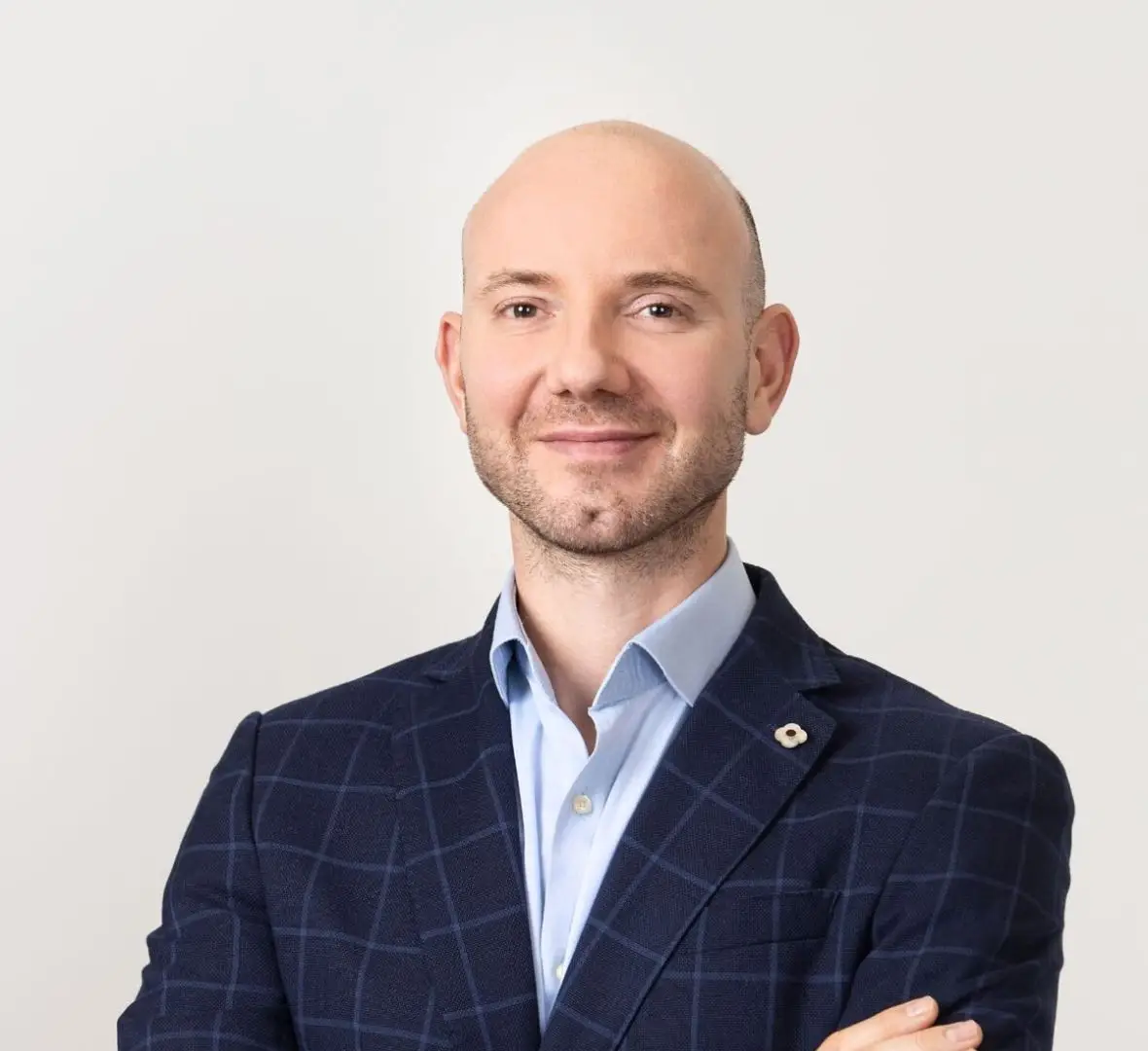
Author: Dr Ivica Jeremić
PhD in Medical Sciences (Molecular Medicine and Immunology), rheumatology subspecialist, dermatology resident.
Updated:






