
Rosacea on the face – symptoms, examination and treatment
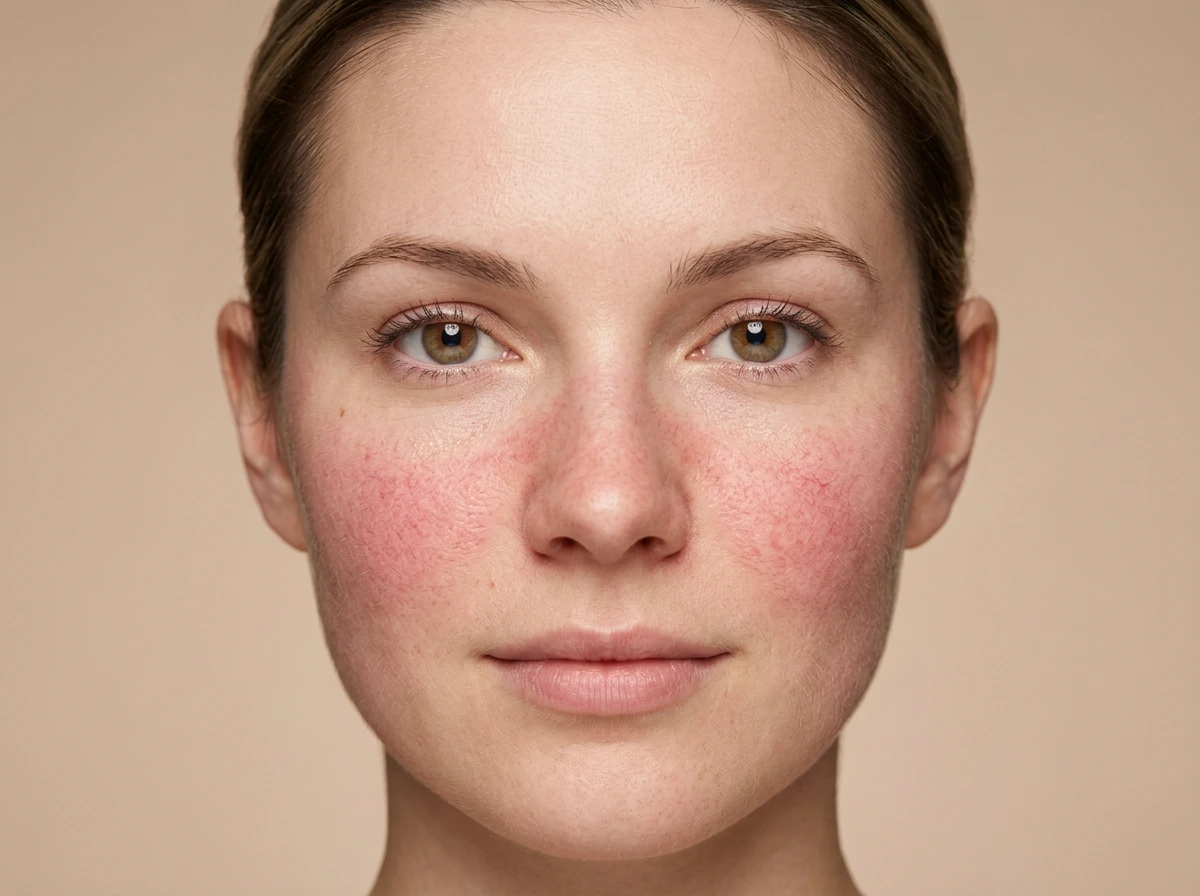
Rosacea is a chronic inflammatory skin condition that is most commonly recognised by redness on the cheeks and nose. The redness may come and go or be constant. Tiny capillaries and red bumps can be visible, and the skin can sting even when you apply a cream that you previously tolerated well.
If the redness recurs, persists between flare-ups or if inflammatory lesions appear, book an appointment. The dermatologist will examine the skin and ask what worsens the symptoms. Depending on whether inflammation, redness or visible capillaries predominate, they will suggest a skincare routine and treatment.
What is rosacea and what does it look like?
Rosacea is a chronic inflammatory skin condition, which most commonly affects the central part of the face – the cheeks, nose, chin and forehead. The course varies from person to person: in many people, calmer periods and flare-ups alternate, and in some, the redness becomes more permanent over time.
Redness and flushing – the face flushes easily and quickly, accompanied by a feeling of warmth, and in some people the redness persists even between episodes.
Visible capillaries – thin, dilated blood vessels, most commonly on the cheeks and nose.
Inflammatory lesions – red bumps (papules) and pus-filled lesions (pustules) on a red base.
Skin sensitivity – stinging, burning, dryness, and a reaction to cosmetics that were previously well-tolerated.
Skin thickening – rarer, most commonly on the nose, in long-standing rosacea.
Previously, rosacea was divided into four subtypes – erythematotelangiectatic, papulopustular, phymatous and ocular. Today, individual signs present on the skin are more commonly described, as signs of multiple forms can occur in the same person. Rosacea can also affect the eyes and eyelids, and a dermatologist's examination is required to make a diagnosis.
Rosacea – in brief
| Price of a dermatological consultation | 5.000 RSD |
|---|---|
| Duration of the appointment | Most commonly 20–30 minutes |
| Address | Kneza Miloša 23, Belgrade |
| Symptoms | Facial redness, flushing, visible capillaries, stinging and skin sensitivity, and in some forms red bumps and pus-filled blemishes |
| Triggers | Sun, heat, sudden temperature changes, stress, alcohol, hot drinks, spicy food |
| Examination | Discussion of symptoms and triggers, skin examination and assessment of the rosacea subtype |
| Treatment | Treatment tailored to symptoms, sensitive skin care and daily sun protection |
| Laser treatment | Yellow laser and DYE VL light treatment for redness and dilated capillaries |
| Follow-up | Follow-up visits and adjustment of therapy according to the skin's response |
Price of rosacea examination and treatment
The first step is a consultation with a dermatologist. If treatment is needed for redness or visible capillaries, the doctor will suggest the method and the area to be treated.
| Service | Price |
|---|---|
| Dermatological examination | 5.000 RSD |
| Follow-up examination within a month | 3.000 RSD |
| Follow-up examination after more than a month | 4.000 RSD |
| DYE VL light treatment | 8.000 RSD |
| Yellow laser – images | 17.500 RSD |
| Yellow laser – whole face | 20.000 RSD |
The items in the table are individual prices, not the price for the entire treatment. For the Yellow laser, the price depends on the region. The DYE VL price list does not specify a region. At your consultation, you will be given a proposal for the next steps and a rough estimate of the costs.
Have a look price list for dermatological examinations and laser treatment price list.
Causes and triggers of rosacea
Causes. The exact cause of rosacea is not known. It is believed to arise from a combination of hereditary predisposition, increased reactivity of the facial blood vessels, changes in the skin's immune response and a weakened protective barrier. It is more common in fair-skinned individuals and in families where rosacea already runs. Demodex mites, microscopic mitesthat are naturally present on the skin, are often more numerous in people with rosacea and can contribute to inflammation.
Triggers do not cause rosacea, but in people who have it they can worsen symptoms. The most common are the sun, heat and sudden temperature changes, wind and cold, stress, physical exertion, alcohol, hot drinks and spicy food, as well as aggressive cosmetics. Triggers are not the same for everyone, so it is useful to monitor what causes flare-ups in each individual and discuss this with a doctor.
What does a dermatologist appointment involve?
The first step is a dermatological examination, which assesses the cause of the redness and selects an appropriate treatment plan. The dermatologist discusses how long the symptoms have lasted, when they worsen, which products and cosmetics you use, and what treatment you have used before. It is also important to mention any eye symptoms, such as dryness, stinging, or a gritty sensation.
Then the skin of the face is examined, with the naked eye and a dermatoscope, and redness, capillaries, inflammatory lesions and skin sensitivity are assessed. The diagnosis is most often made on the basis of the clinical picture, and in the case of an atypical finding, the doctor may recommend additional diagnostics, such as a skin biopsy. At the end of the examination, you receive a treatment plan, care advice and a follow-up appointment.
What to bring to the appointment? Bring your previous test results if you have them and a list of medicines, creams and other preparations you use. Mention also supplements, chronic illnesses, pregnancy or breastfeeding, recent facial procedures and previous allergies or pronounced skin reactions. If the redness subsides before the appointment, a photograph taken while it was visible can help to show what it looked like.
How is rosacea treated?
Treatment is adapted to the dominant symptoms. Rosacea cannot be permanently cured, but with appropriate therapy and care, it can be kept under long-term control.
- Topical therapy – in the case of inflammatory lesions and redness, a dermatologist may recommend preparations that soothe inflammation and reduce redness.
- Oral therapy – introduced in cases of more pronounced inflammatory lesions, eye discomfort, or when topical therapy is not sufficient, for a duration determined by the doctor.
- Skincare and sun protection – gentle cleansing, hydration and daily sun protection are part of every treatment plan.
- Laser treatment For persistent redness and visible capillaries, the Yellow laser and DYE VL light treatment are used, acting directly on dilated blood vessels. When indicated by the findings, laser or light treatment can relieve redness and make capillaries less visible.
If medications and device treatment are combined, the dermatologist determines the sequence according to the findings and the skin's reaction. Therapy must not be started or changed independently. Corticosteroid creams are not used on the face without a doctor's recommendation, as they can worsen rosacea.
Our dermatologists
Who manages the treatment of rosacea at Imedic?

Laser treatment for rosacea
How does laser treatment for rosacea work?
Laser and light treatments work on dilated blood vessels: the energy is absorbed by haemoglobin, the blood vessel closes, and the body gradually breaks it down. Therefore, they are most useful for persistent redness and visible capillaries, whereas inflammatory lesions also require therapy. The treatments do not alter the predisposition to rosacea, so the redness may intensify again over time, and the result is maintained by skincare, avoiding triggers and, if necessary, repeated treatments. The number of sessions and the interval between treatments are determined by the dermatologist according to the chosen method, the area and how the skin reacts. When visible blood vessels are a prominent part of the problem, the doctor may also consider thread vein removal.
Yellow laser
Yellow laser use yellow light with a wavelength of 577 nm, which is well absorbed by haemoglobin in blood vessels. It targets diffuse redness and tiny capillaries, while sparing the surrounding tissue. After the treatment, transient reactions are possible – redness, mild swelling or a sensation of warmth – which usually subside within a few hours to a few days.
For rosacea and pronounced redness, iMedic recommends up to three treatments for this method. The dermatologist assesses whether a follow-up visit is needed. Read What does the Yellow laser treatment look like and when is it postponed.
DYE VL light treatment
DYE VL It is not a classic laser, but a light-based treatment relying on AFT technology, with a narrow spectrum of light tailored to blood vessels. It is used for redness and dilated capillaries associated with rosacea, and treatments are most often carried out in a series. After the treatment, the skin may be transiently redder or mildly swollen.
The treatment plan depends on the region and skin changes. Before booking, tell your doctor if you are pregnant, breastfeeding, or taking medication that increases the skin's sensitivity to light. Read more about that in the section on preparation and limitations for the DYE VL treatment.
Aftercare
After the treatment, the skin is cooled and nourished with mild, soothing products. For a few days, heat, saunas, steam rooms, intense exercise and aggressive cosmetics should be avoided. Sun protection is mandatory, and the doctor will provide aftercare instructions according to the type of treatment.
If your symptoms worsen or you experience an unexpected reaction, please contact the doctor who performed the treatment. To arrange a follow-up appointment, we are available polyclinic contact details.
Daily skincare for rosacea
Skin with rosacea responds best to simple and gentle care. The face is washed with lukewarm water and a gentle cleanser, without rubbing, harsh scrubs or brushes. A moisturiser helps to strengthen the skin's protective barrier, and broad-spectrum sun protection, suited to sensitive skin, is used during the day. Products containing alcohol, menthol, strong fragrances and abrasive particles are best avoided, and it is useful to test a new product on a small patch of skin first.
In the video, Dr Ivica Jeremić explains which skincare products soothe skin with rosacea and how laser treatments work on redness and capillaries.
Follow-up visits and maintaining results
You arrange the follow-up appointment with the dermatologist during your consultation, based on the chosen treatment. At follow-ups, we assess redness, the number of inflammatory lesions, any stinging sensation, and how well the treatment is tolerated. Based on the skin's response, we adjust the treatment and skincare routine. Once the condition calms down, we arrange maintenance of the results and a procedure should the symptoms flare up again.
Because rosacea is a chronic condition, flare-ups are possible even after successful treatment – due to the sun, stress, changes of season or hormonal changes. In that case, it is best to see a dermatologist early, so that the treatment can be adjusted in time.
If you do not notice an improvement by the scheduled follow-up appointment, or if the care and treatment cause you any discomfort, tell your dermatologist. At the follow-up, it is assessed whether the plan needs to be adjusted.
Rosacea and eye problems
Rosacea can also affect the eyes and eyelids. Symptoms include dryness, burning and redness of the eyes, a gritty sensation, swollen and red eyelid margins, and sometimes recurrent styes. These symptoms should be mentioned to the dermatologist, who may also recommend an ophthalmological examination. Eye pain, marked sensitivity to light or changes in vision require prompt evaluation by an ophthalmologist.
Have a question?
Frequently asked questions about rosacea
Can rosacea be cured?
Rosacea is a chronic condition and cannot be permanently cured, but with therapy, skincare and the avoidance of triggers, symptoms can be significantly reduced and kept under control for a long time.
What does rosacea look like on the face and where does it most commonly appear?
Rosacea most commonly occurs on the central part of the face: the cheeks, nose, chin and forehead. It begins with redness that appears easily and fades slowly, and over time the redness can become permanent, accompanied by visible dilated capillaries. In some patients, reddish bumps and small pustular lesions also occur, along with a stinging, burning or tight sensation in the skin.
In some people, the skin of the nose gradually thickens, which is more commonly seen in men. Rosacea can also affect the eyes, resulting in redness, dryness or a gritty feeling in the eyes. Which symptoms predominate determines the treatment plan, which is why a consultation with a dermatologist is the first step.
Are rosacea blemishes the same as spots or acne?
No. With rosacea, red bumps and pus-filled lesions can appear that resemble spots, but they develop differently from acne – without blackheads and clogged pores, against a background of redness and dilated capillaries, accompanied by stinging and skin sensitivity. This is why they are treated differently, and products intended for acne can further irritate skin with rosacea. The difference is assessed by a dermatologist during an examination.
Is rosacea contagious?
No. Rosacea is not transmitted by touch, towels or cosmetics.
How soon can results of the therapy be seen?
With inflammatory lesions, the first improvement is usually seen after a few weeks of regular therapy, while the redness subsides more slowly. With laser and light treatments, redness and capillaries decrease gradually over a series of treatments.
Are laser treatments necessary for everyone?
No. For many patients, therapy and appropriate care are sufficient. Laser and light treatments are considered when persistent redness and visible capillaries are a prominent part of the problem.
Does rosacea get worse in summer?
For many people, yes, as the sun and heat are frequent triggers. Sun protection, avoiding overheating and gentle skincare help keep the skin calmer in summer. Laser treatments are most commonly planned outside periods of strong sun, according to a doctor's assessment.
Can makeup be used during treatment?
Yes, provided it is gentle, fragrance-free and does not irritate the skin. Green-tinted concealers can cover redness. Makeup is removed gently in the evening, without rubbing.
Does diet affect rosacea?
In some people, symptoms are made worse by alcohol, hot drinks and spicy food. There is no one-size-fits-all diet, so it is helpful to track your own triggers.
What if the redness returns after the treatment?
Since rosacea is chronic, the redness may increase again over time. At that point, the dermatologist evaluates whether an adjustment to the therapy or a maintenance treatment is necessary.
Book rosacea treatment in Belgrade
Imedic poliklinika is located at Kneza Miloša 23, 2nd floor, Belgrade. Opening hours: Monday–Sunday, 9:00–21:00.
Appointments can be booked by phone: 064 237 0707. If you contact us from abroad, we are also available via Viber and WhatsApp on the same number.

Author: Dr Ivica Jeremić
PhD in Medical Sciences (Molecular Medicine and Immunology), rheumatology subspecialist, dermatology resident.
Updated:
Expert sources
- Schaller M, Almeida LMC, Bewley A, et al. Recommendations for rosacea diagnosis, classification and management: update from the global ROSacea COnsensus 2019 panel. British Journal of Dermatology, 2020. PMID: 31392722.
- American Academy of Dermatology Rosacea: Diagnosis and treatment.
- Rosacea. StatPearls, NCBI Bookshelf.
Professional dermatological supervision and reliable information
Author and expert review: Dr Ivica Jeremić. Date of expert review: 3 November 2026. The text has been prepared in accordance with the clinical practice of the iMedic polyclinic and the cited expert sources. The treatment of rosacea is managed by a dermatologist. The choice of therapy, care, and procedures is made on an individual basis, based on the examination and symptoms. A personal examination by a dermatologist is necessary for diagnosis and a treatment plan.


