How check-ups are planned when you have many moles, why previous scans are useful, and what to prepare for a dermatologist appointment.
If you have a lot of moles on your body, you might be familiar with the moment in front of the mirror when you pause and think, „Has this one always been this dark?” When you have many, it is not easy to remember every detail.
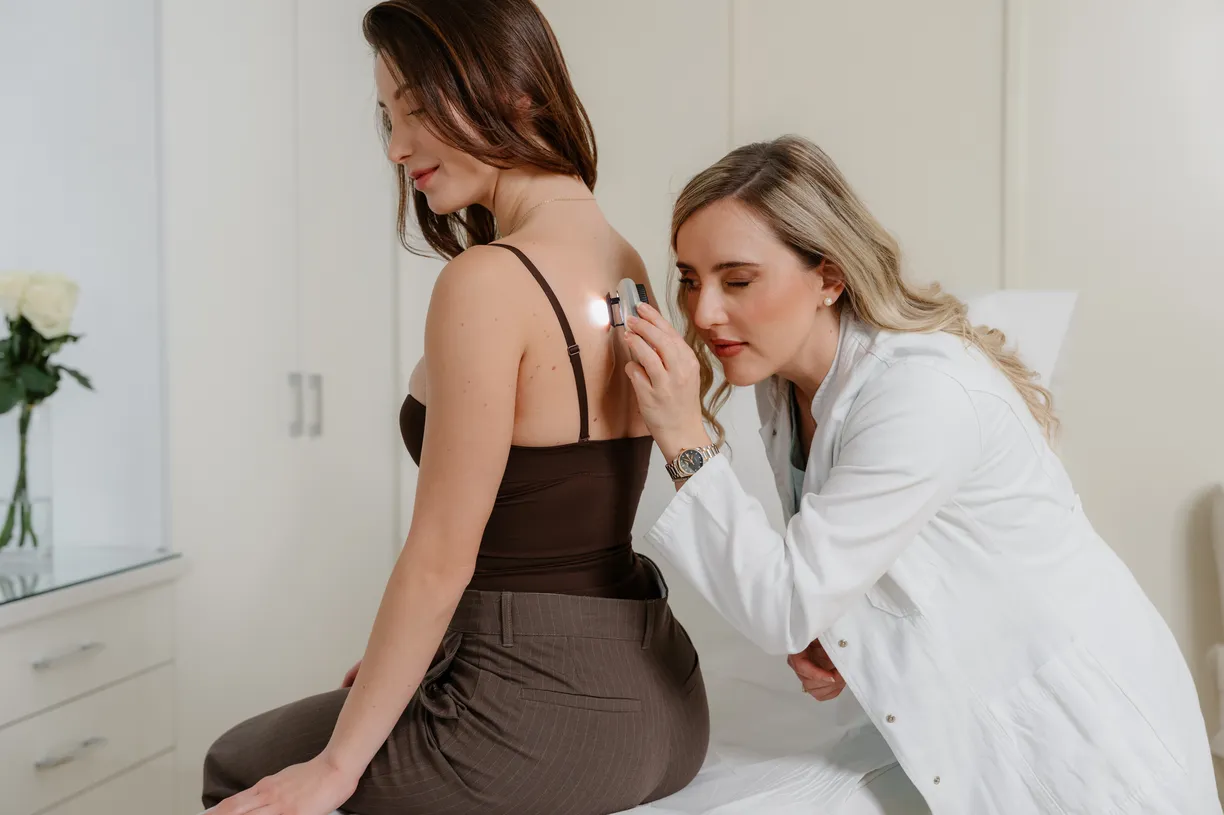
A monitoring plan helps here. The dermatologist examines the skin, assesses which moles need to be documented and agrees the next check-up with you. When there are earlier scans, the doctor can compare the findings and check what you were unsure about. [1, 2]
Why does the same number of moles not mean the same monitoring plan?
Two people may have a similar number of moles and receive different recommendations. A dermatologist takes into account their appearance, previous findings and whether you or any of your closest relatives have had melanoma, a malignant skin tumour. A higher number of moles is associated with an increased risk of melanoma, but it does not mean that any of them are malignant. [1, 3]
Before the examination, tell the doctor why you have come: whether you want to start regular check-ups, have previous results, or are worried about a specific mole. Feel free to also point out an area where you are just not sure whether it has changed. It is enough to explain what caught your attention. [7, 8]
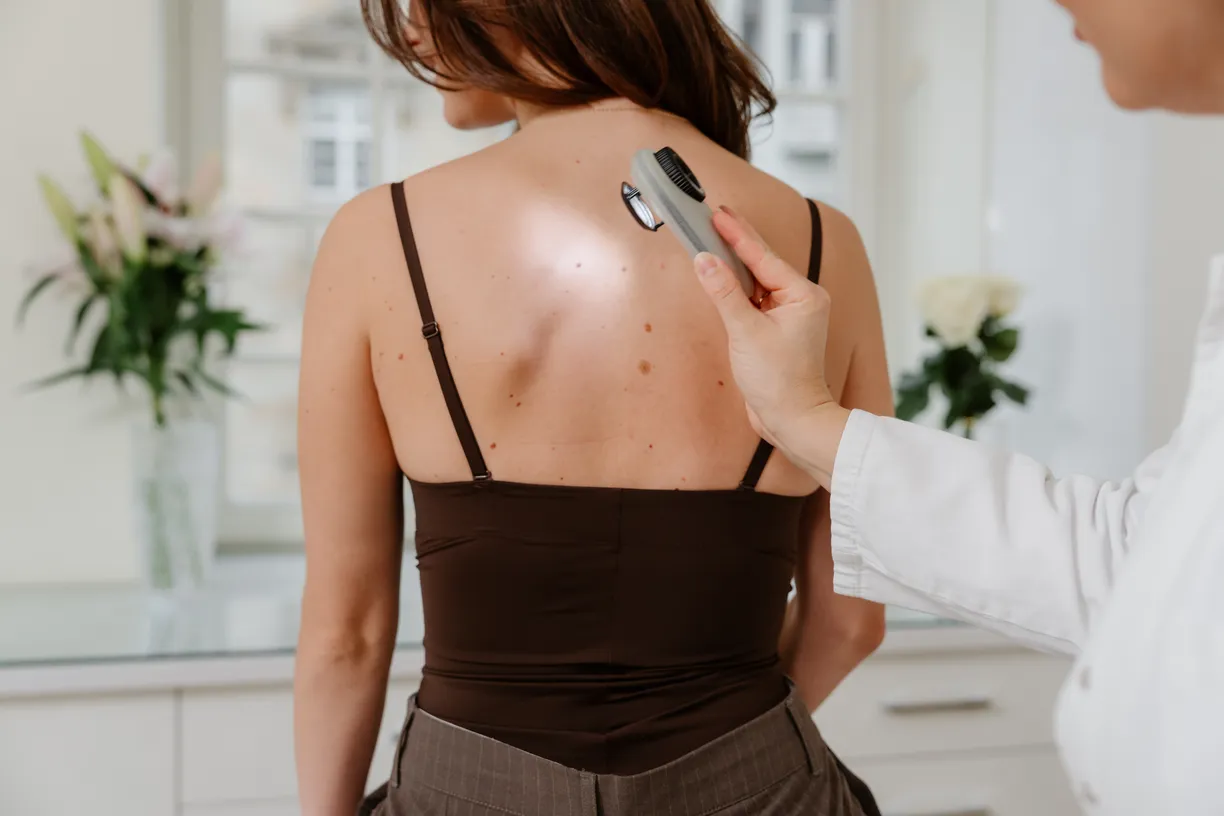
While examining the skin, a dermatologist uses a dermatoscope — a small device with lighting and magnification. With its help, they see details of moles that are harder to spot with the naked eye. The dermatoscope examination itself is painless and does not involve tissue removal. [6, 12]
What can the previous recording clarify?
Let's say you noticed a darker detail inside a mole on your shoulder and you are not sure if it was there before. If there is a previous dermoscopic image, a dermatologist can compare the appearance of the same lesion across two examinations. Sometimes, the most useful piece of information is precisely seeing that the detail already existed and that there is no significant difference. [4]
During digital dermoscopy, The clinician documents selected changes where subsequent comparison may assist evaluation. [2, 4] At Imedic we use Canfield equipment. We store all dermoscopic images taken so that the dermatologist can compare the previous and current appearance of the mole at the next check-up.
Such a comparison complements the skin examination. If the doctor considers that a tissue analysis is necessary to clarify the finding, they will recommend the appropriate procedure instead of further photographic monitoring. Tissue analysis means that a pathologist examines the removed sample under a microscope. [2, 10]
Are only the photographed moles checked during the follow-up?
Comparing old and new images is just one part of the examination. The dermatologist will also look for other changes on the skin, so make sure to show them a spot that hasn't been photographed before. [4, 6]
At the same time, it does not look at each mole in isolation, but pays attention to what is usual for your skin. A mole that stands out conspicuously from the others is sometimes described as an „ugly duckling”. It may be markedly darker or of a different appearance than the surrounding moles. That term indicates a reason for a more careful assessment, and does not in itself mean that the lesion is malignant. [11]
This is how the doctor connects two useful pieces of data: what the mole looks like compared to the others and what it looked like at the previous examination. [4, 11]
When is the next check-up?
You will arrange your next appointment according to your medical report. The dermatologist takes into account the estimated risk and whether they want to monitor a specific lesion or plan long-term skin checks. Therefore, the schedule given to one of your family members or friends may not necessarily suit you. [1, 2, 5]
Before leaving, clarify two things:
- When are you coming back?
- What is the purpose of that examination?
An earlier check of one mole does not necessarily mean that all future examinations will be at the same interval. [5] If the recommendation remains unclear to you, ask your dermatologist to explain what they want to check at your next appointment. [7]
What should you monitor between check-ups?
It is useful to get to know your skin and know what is normal for it. For your back and other hard-to-reach places, you can use a mirror or ask someone close to help you look at them. You can also ask a dermatologist to show you what to look out for at home. [9]
Your task is to notice and describe what seems different to you. Leave the assessment to the doctor. [8, 9] For three common situations, the following steps are:
| Situation between appointments | What to do |
|---|---|
| You didn't notice anything new | Come for your check-up according to the agreed plan. |
| You have noticed a change, itching or bleeding | Contact your dermatologist before the scheduled appointment and describe what you have noticed. [1, 9] |
| You have missed your scheduled check-up | Get in touch to schedule a new appointment and state whether earlier monitoring of a specific lesion was previously recommended. |
Read more about the procedure when a previously known mole changes in the text The mole has changed: when to book an appointment?.
What to bring and record before the check-up?
For the next check-up, please prepare three things:
- Previous findings and scans which the doctor has not yet seen. Among the findings, the result of a tissue analysis is also useful if you have had a mole removed previously. [7]
- Short note: where you noticed something, when, and what has changed since then. [8]
- Questions that you want to ask. Also write down anything that remained unclear to you after the previous examination. [7]
Please attend the appointment without makeup and nail polish so that the doctor can examine your skin and nails. [7]
Have a question?
Answers to frequently asked questions
Why not remove all moles, so I can have peace of mind?
It is understandable that this seems to you like the simplest solution. However, removing all moles does not eliminate the risk of melanoma: melanoma can also develop on skin where there was previously no mole. Therefore, the decision to remove one is made for a specific lesion, and not simply based on the total number of moles. [10]
If you wish to start monitoring or resume previous check-ups, book a mole check at Imedic.
Expert sources
- American Academy of Dermatology. Moles: Tips for managing.
- Russo T. et al. Indications for Digital Monitoring of Patients With Multiple Nevi: Recommendations from the International Dermoscopy Society. Dermatology Practical & Conceptual, 2022.
- American Academy of Dermatology. Moles: Who gets them and types.
- Briatico G. and associates. Indications for and Contraindications to Digital Monitoring of Patients With Melanocytic Lesions. Dermatology Practical & Conceptual, 2024.
- Moscarella E. et al. Both short-term and long-term dermoscopy monitoring is useful in detecting melanoma in patients with multiple atypical naevi. Journal of the European Academy of Dermatology and Venereology, 2017.
- Cancer Research UK. Examining your mole or skin change (dermoscopy).
- American Academy of Dermatology. How to choose a dermatologist.
- Cancer Research UK. Seeing your GP for symptoms of melanoma skin cancer.
- American Academy of Dermatology. Find skin cancer: How to perform a skin self-exam.
- National Cancer Institute. Common Moles, Dysplastic Naevi, and Risk of Melanoma.
- Garbe et al. European consensus-based interdisciplinary guideline for melanoma. Part 1: Diagnostics — Update 2024. European Journal of Cancer, 2025.
- DermNet. Dermoscopy. Updated 2023.
IMEDIC NOVOSTI
Be among the first to know about discounts and special offers
Sign up and receive notifications about current promotions, new treatments and useful advice from our doctors.
DISCOUNTS · NEW OFFERS · DOCTOR'S ADVICE
Sign-in is currently unavailable. Please try again in a few moments.
One more step: check your email and click on the confirmation link.
Want to see our new texts on Google more often?
Add imedic.rs as a preferred source in Google Search. When we publish a new text on skincare, aesthetic medicine or dermatology, Google will show it to you more frequently among the top stories. Setup takes a few seconds and can be changed at any time.

Imedic
The Imedic team writes educational articles on dermatology, aesthetic medicine and skincare – clear, reliable information for patients.
Updated: