PRP facial treatment
PRP facial treatment – in brief
| What it treats | Quality, firmness and texture of the skin of the face, neck and décolletage |
|---|---|
| Method | Plasma from the patient's own blood |
| Anaesthesia | Local anaesthetic cream, as required |
| Duration of treatment | 30 to 40 minutes |
| Number of treatments | Usually a series of three treatments spaced about a month apart, with maintenance once or twice a year |
| Result | Gradually, over the coming weeks |
| Recovery | Return to activities immediately; possible redness and minor bruising in people with sensitive skin |
What is a PRP facial treatment?
PRP treatment is a regenerative medical procedure that uses platelet-rich plasma obtained from the patient's own blood. This plasma contains a high concentration of growth factors – biologically active molecules that play a key role in the processes of tissue repair and healing. Following centrifugal separation, the concentrated plasma is micro-injected into the skin of the face, neck or décolletage. When the platelets are activated within the tissue, they release growth factors that stimulate collagen synthesis, improve microcirculation and encourage cellular regeneration. The effect of PRP treatment is not based on adding volume or introducing foreign materials, but on activating the body's natural biological mechanisms. The result is a gradual improvement in skin quality – better firmness, a more even texture and a healthier appearance, in accordance with the skin's individual regenerative potential.
PRP therapy
Who is PRP facial treatment for?
PRP facial treatment is intended for people who are noticing the first signs of loss of skin firmness, elasticity and freshness, as well as those who want to stimulate natural regeneration without adding volume or foreign substances. It is particularly recommended for tired, dehydrated and thin skin, as well as for fine lines and early signs of ageing.
The treatment can be a good choice for patients who want a gradual and biologically based improvement in the quality of the skin of the face, neck and décolletage. It is also used for individuals with atrophic acne scars, most commonly in combination with other regenerative procedures, in accordance with the doctor's assessment.
The decision to carry out PRP treatment is made individually, following an examination and an assessment of the general state of health, so that the therapeutic goal is realistic and medically justified.
What does PRP treatment involve?
Before carrying out the PRP treatment, the doctor performs a detailed assessment of the skin condition and determines the number of treatments, as well as the intervals between them, in accordance with the therapeutic goal and the regenerative potential of the skin.
Following the examination, a small amount of blood is taken, similar to a routine blood test. The blood is collected in special tubes intended for the isolation of platelet-rich plasma, and is then processed in a centrifuge to isolate the concentrated fraction with a high concentration of growth factors.
Before application, the skin is prepared and, if necessary, a topical anaesthetic cream is applied for greater patient comfort. The resulting plasma is then introduced into the skin using fine needles, via a technique similar to mesotherapy.
Upon application, platelets release growth factors that activate cellular regeneration mechanisms, stimulate the synthesis of collagen and elastin, and initiate tissue repair processes. The procedure can similarly be applied to the skin of the neck and décolletage, in accordance with the assessment of indications.
How long each step takes
- Examination and blood draw, about 10 minutes: a small amount of blood is taken, as for a routine blood test.
- Plasma separation, about 10 minutes: the tube goes into the centrifuge. Meanwhile, anaesthetic cream is applied to the skin.
- Application, 15 to 20 minutes: plasma is introduced into the skin of the face, and by agreement also the neck or décolletage, using fine needles.
- Total: 30 to 40 minutes.
Which conditions does PRP facial treatment address?
PRP facial treatment is applied for conditions associated with the reduced regenerative capacity of the skin. The most common indications include fine lines and early signs of ageing, loss of firmness, uneven texture and a tired appearance of the skin.
The therapy is particularly useful for thin and dehydrated skin that requires collagen stimulation and improved elasticity. It is also used for atrophic acne scars, where PRP can contribute to improving tissue quality, especially when combined with other regenerative methods.
It is important to emphasise that PRP treatment does not provide an immediate change, but rather works through the gradual activation of natural renewal processes, in accordance with the biological potential of the skin.
Which areas can be treated with PRP?
- Face: quality, firmness and texture of the skin.
- Neck and décolletage: thin skin with fine wrinkles.
- Hands: dry and thin skin.
- Under the eyes: fine lines and thin skin. PRP does not remove dark circles caused by pigment or hollows. Read more on our page about removal of dark circles under the eyes.
- Acne scars: most commonly in combination with microneedling (Dermapen or SkinPen). Read more on our page about acne scars.
How many treatments are needed?
The number of PRP treatments is determined individually, depending on the initial condition of the skin and the goal of the therapy. In practice, a series of three treatments at intervals of approximately four weeks is most commonly recommended in order to achieve a stable stimulation of regenerative processes.
Following the completion of the initial series, maintenance therapy is carried out at intervals deemed optimal by the physician, most commonly once or twice a year, in accordance with the condition of the skin and the expected results.
When will the results be visible?
- First few days: redness and any bruising subside, and the skin may appear fresher.
- After a month: before the second treatment, the skin is usually more even and smoother.
- About three months after the series: the overall effect on texture, complexion and fine lines is assessed.
The change is gradual and moderate. A review of studies found the strongest evidence for improved skin texture.
Limitations of PRP treatment – when other methods are needed
It is important to emphasise that PRP treatment does not affect skin issues associated with pronounced volume loss, deep static wrinkles, hyperpigmentation or dark circles of vascular or genetic origin. This therapy does not replace hyaluronic acid fillers, laser procedures or other specific aesthetic treatments that are intended to address the aforementioned conditions.
Preparation and aftercare
Before treatment:
- One week before: Tell your doctor which medicines and supplements you are taking, especially those that affect blood clotting, painkillers and anti-inflammatory drugs. Do not stop taking any medication without consulting your doctor.
- Two to three days before: Do not drink alcohol and do not exfoliate.
- On the day of the treatment: Have breakfast and drink enough water, as a blood sample will be taken. Come without makeup if you can.
After treatment:
- The first few hours: Do not wash your face.
- The first 12 to 24 hours: no makeup.
- First 2 days: no saunas, swimming pools, intense exercise or alcohol.
- The first 5 to 7 days: no scrubs, acid-based products or retinoids; use sun protection.
We recommend planning your injectable treatment at least two weeks before an important event. If a series of treatments is required, the plan should start earlier to allow enough time for the full effect to develop.
PRP, polynucleotides or skin boosters?
| PRP facial treatment | Polynucleotides | Skin boosters | |
|---|---|---|---|
| What is injected | plasma from your blood | purified DNA fragments | hyaluronic acid, with or without additives |
| How it works | growth factors stimulate skin renewal | stimulate skin cells to regenerate and produce collagen | bind water and hydrate the skin |
| Most commonly for | skin texture, tired skin, acne scars | thin, exhausted skin and the eye area | dry and dehydrated skin |
| Initial plan | 3 treatments, spaced about a month apart | 3 to 4 treatments, 2 to 4 weeks apart | depends on the product |
| Blood draw | Yes | No | No |
PRP treatment cost
The price of a PRP treatment depends on the area being treated, the number of sessions required and the individual treatment plan. For regenerative procedures, it is important that the number of treatments and the interval between them are defined after an examination, in accordance with the condition of the skin and the therapeutic goal. Detailed information on prices is available in our Price list, where all current treatments and therapy options are displayed. The final recommendation and plan are made by a doctor following a professional assessment.
Have a question?
Answers to frequently asked questions
How long does a PRP treatment take?
The entire treatment lasts between 30 and 40 minutes, after which you return to your everyday activities.
Does PRP have an effect at every age?
PRP is not tied to a specific age. Its effect depends on the biological condition of the skin, not just age.
In younger people (20–30 years old), PRP is most commonly used preventatively, to preserve skin quality and for early acne scars. At this age, the regenerative potential is high, so the response to therapy is usually good.
Between the ages of 30 and 50, PRP is most commonly used for firmness, elasticity and fine lines.
In people over 55–60, the effect still exists, but the regenerative capacity is naturally lower. PRP can then improve skin quality, but it does not replace procedures for pronounced excess skin or deep wrinkles, so it is more often used as a complement to other treatments.
An examination and individual assessment are mandatory before deciding on therapy. PRP is also used for hair loss, which we cover in more detail on our page about PRP hair treatment.
What can PRP improve in facial skin?
PRP is used to improve skin texture and the freshness of the complexion. Changes develop gradually; an initial series of three treatments is usually planned, depending on the skin condition.
Side effects
PRP is prepared from your blood, so allergic reactions are very rare. The most common are redness, swelling and minor bruises at the injection sites, which subside within 24 to 72 hours, and in some people up to a week. Serious complications are rare. That is why the treatment is performed by a doctor, under sterile conditions.
Contraindications
Book a PRP facial treatment in Belgrade
Imedic poliklinika is located at Kneza Miloša 23, 2nd floor, Belgrade. Opening hours: Monday–Sunday, 9:00–21:00.
Appointments can be booked by phone: 064 237 0707. If you contact us from abroad, we are also available via Viber and WhatsApp on the same number.
Related topics
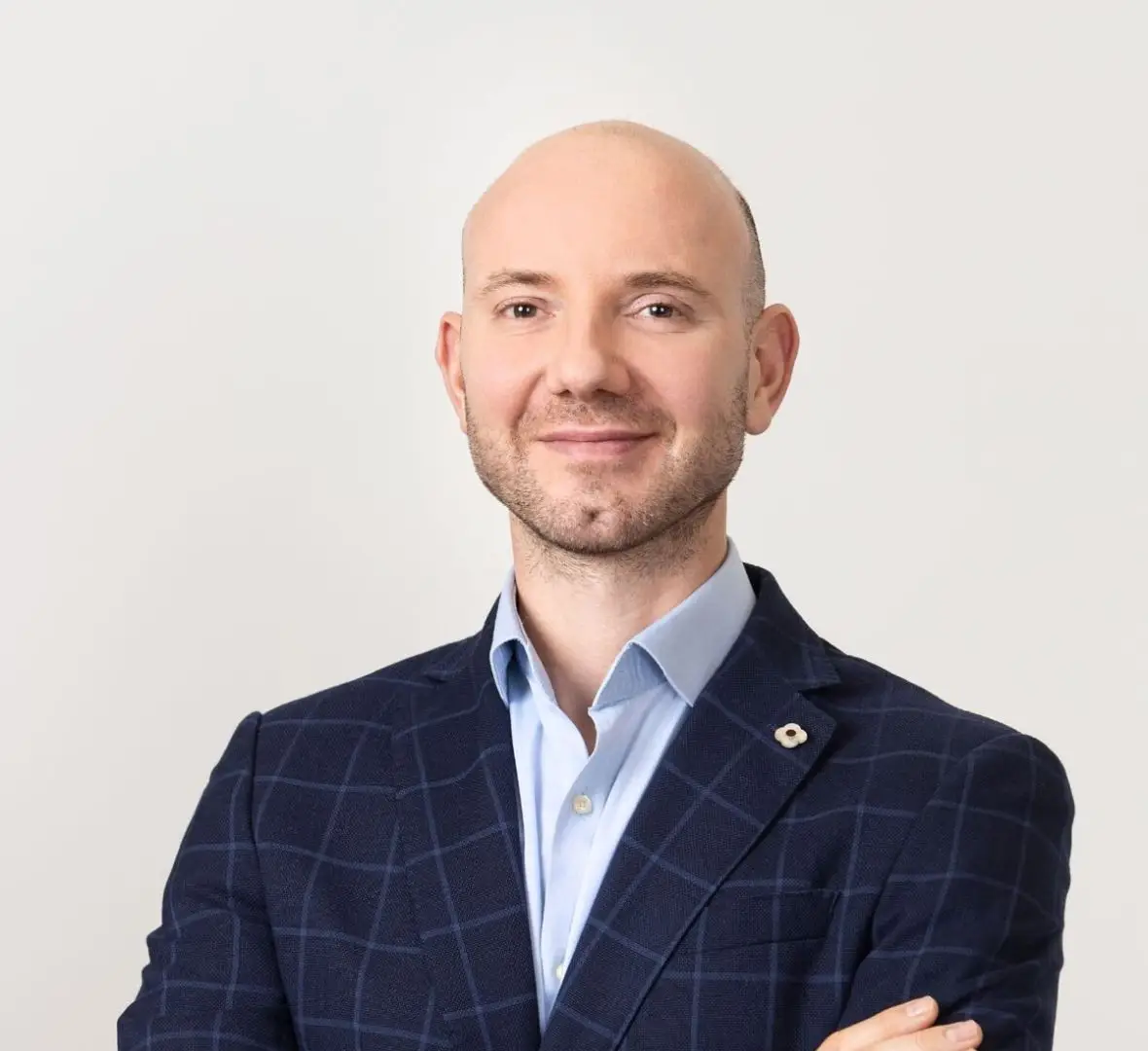
Author: Dr Ivica Jeremić
PhD in Medical Sciences (Molecular Medicine and Immunology), rheumatology subspecialist, dermatology resident.
Updated:
Expert sources
- Cruciani i saradnici, 2024 — pregled sistematskih pregleda PRP-a za podmlađivanje lica
- Maisel-Campbell i saradnici, 2020 — sistematski pregled bezbednosti i efikasnosti PRP-a za kožu
- Hersant i saradnici, 2021 — PRP i hijaluronska kiselina u podmlađivanju lica
- Asif i saradnici, 2016 — PRP uz mikronidling kod ožiljaka od akni
- Lim i saradnici, 2024 — polinukleotidi u regeneraciji kože






