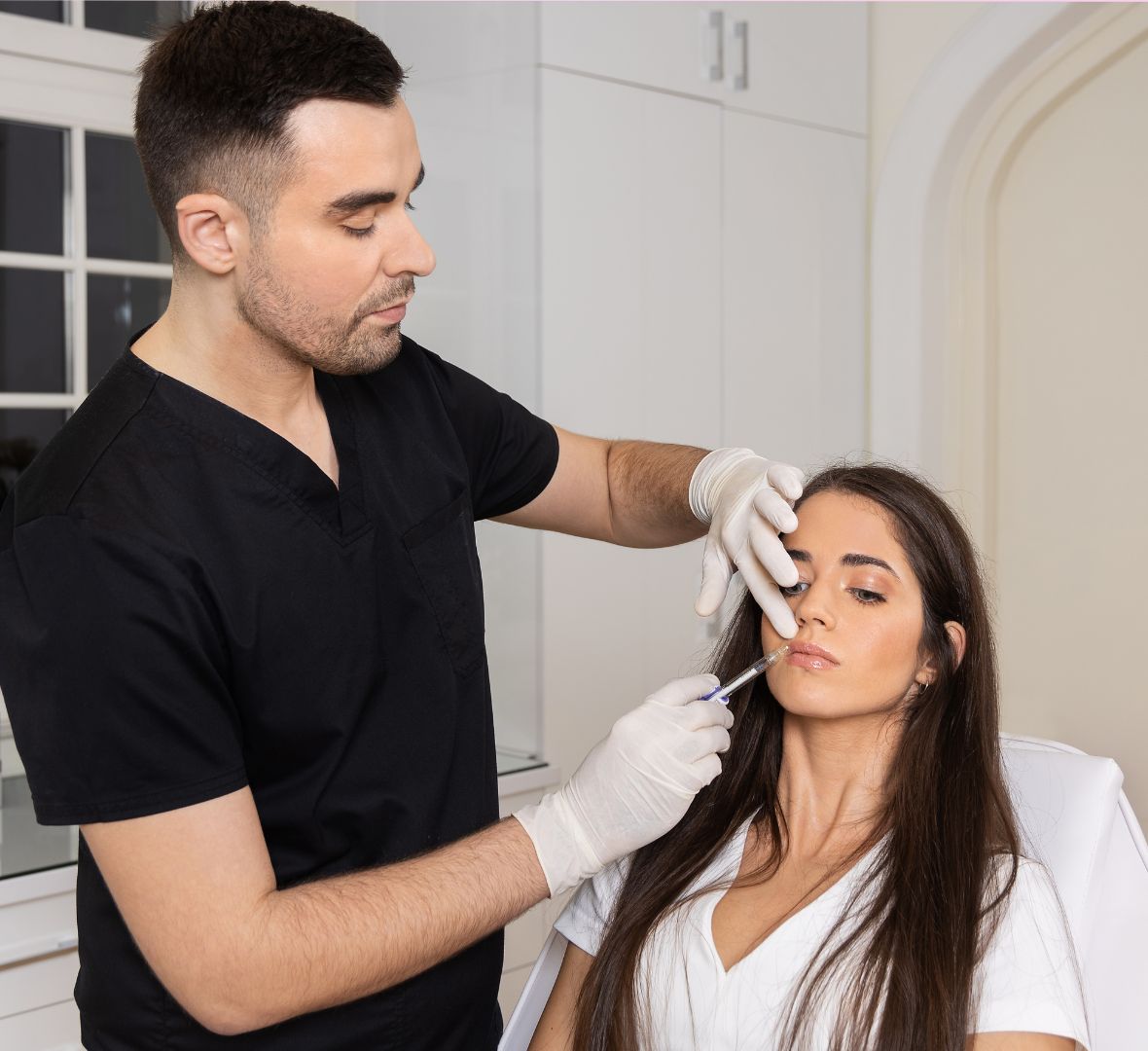
Our patient, a woman in her late fifties, came to us with a very clear desire – to find a solution that will not provide just a passing effect, but a result that will last and will not return with time. Behind her are years of self-care, stable habits and an attitude towards her body that is not based on short-term changes. Regularly …
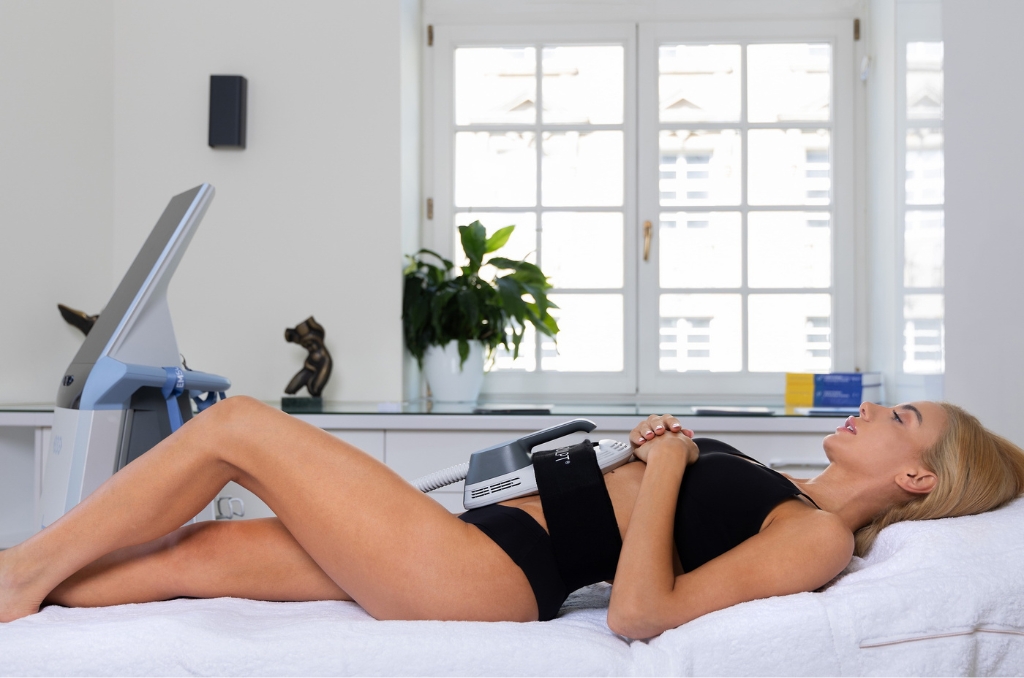
Our female patient, a woman in her late fifties, came to us with a very clear desire – to find a solution that would not give just a temporary effect, but a lasting result that would not fade over time.
Behind her are years of self-care, stable habits and a relationship with her body that is not based on short-term changes. Regular exercise and a balanced diet had been part of her daily life. Yet over the past year, she had noticed that her stomach no longer responded the way she was used to.
Despite the effort, discipline seemed to bring no change in that area. Her waistline was becoming less defined, her stomach softer, and her sense of control over her own body slightly shaken.
Moreover, she also mentioned suspected insulin resistance – a factor that often specifically influences the retention of stubborn fat around the stomach, even when lifestyle habits are stable.
What she was looking for was not a quick fix, nor a temporary solution. She wanted an approach that would help the body gradually return to balance – and ensure the result she achieved was sustainable, natural and long-term.
Why is the stomach the hardest area to change?
As the body goes through different phases, the way it responds to everyday habits also changes. What used to be enough—movement, a balanced diet, and consistency—may over time stop producing the same results, particularly around the stomach area.
During that period, there is a slowdown in metabolism, as well as changes in the hormonal balance that affect the distribution of fatty tissue. The stomach then becomes an area where fat deposits are more easily retained, but harder to break down.
In our patient, this pattern was clearly evident. Although there were no major changes in body weight, the structure of the stomach changed gradually – it was losing its firmness, and the waistline was becoming less defined.
An additional factor was the scar tissue, which can affect the quality of the skin and subcutaneous tissue. Such changes are often not visible at first glance, but contribute to the area looking “stuck”, lacking elasticity and natural firmness.
Precisely for this reason, the stomach becomes the slowest area to respond – not because the body isn't “functioning”, but because it requires a different, more precise approach.
The impact of hormonal balance and metabolism
Hormonal balance has a much greater impact on body shape than it seems at first glance. Around the time of the menopause, the body naturally undergoes changes that affect how energy is used and stored.
One of the most common consequences is precisely the redistribution of fatty tissue – from areas where it previously dominated towards the central part of the body, especially the stomach. At the same time, the metabolism slows down, so the body expends energy more slowly and retains it more quickly.
In our patient's case, suspected insulin resistance also played a role. In such conditions, the body finds it harder to regulate blood sugar levels, which can lead to increased fat deposition, particularly around the stomach. This is why, even with discipline and a healthy lifestyle, results may fail to appear.
An important distinction: subcutaneous and visceral fat. Subcutaneous fat is located just beneath the skin and can be pinched; it responds to devices like the Alma PrimeX. Visceral fat is found deeper, around the internal organs, and is linked with metabolic risk. Devices do not affect it: it is reduced by dietary changes, physical activity and, when necessary, medical treatment led by a doctor. The same applies to insulin resistance and hormonal changes – aesthetic treatments do not treat them, so any suspicion of them should be checked by a general practitioner, endocrinologist or gynaecologist.
Case study – when discipline is no longer enough
Our patient, a 57-year-old woman, came to us after a period during which she tried to reduce fatty deposits in her abdominal area through exercise and dietary changes. Although she was persistent and ready for change, she saw no results in precisely that area.
She was slightly overweight, but not to the extent that would require drastic interventions. What bothered her the most was the feeling that the fat deposits were lingering despite her efforts, as well as the fact that her stomach was not keeping pace with the changes happening to the rest of her body.
She had already started making dietary changes, with a desire to further support her body through metabolic regulation as well, especially given the suspected insulin resistance. However, it was clear that simply correcting her habits would not be enough to achieve targeted change in this region.
Upon examination, we determined that it was a combination of factors – localised fatty deposits, reduced skin firmness, the presence of cellulite, as well as the influence of scar tissue following a caesarean section, which had further affected the structure of the stomach.
It is precisely that combination that explains why the stomach did not respond to conventional methods – and why it was necessary to introduce an approach that works in a targeted, layered manner and in accordance with the body's current state.

Result after 2 Alma PrimeX and Emsculpt treatments
Scar tissue and its role in the appearance of the stomach
Scar tissue is often not viewed as a factor that affects body shape, but in practice it can play a significant role – particularly in the abdominal area. Following a caesarean section, changes occur in the tissue structure that are not always visible on the surface, but which affect the way the skin and subcutaneous tissue behave.
In that area, the scar can create mild tightness and reduced tissue mobility, which affects circulation and lymphatic drainage. This can contribute to fluid and fat deposits being retained more easily above the scar area, giving the stomach an appearance that is out of proportion with the rest of the body.
In our patient, this effect was subtle, but present. The lower stomach appeared softer and less defined, despite there being no marked excess fat in other areas.
Also, the quality of the skin in that area was slightly compromised – with reduced elasticity and the presence of cellulite, which further affects the visual appearance.
Because of this, it was important to approach this area carefully and with purpose – not only through the reduction of fatty deposits, but also by improving tissue quality, so that the result would be uniform and natural.
Personalised approach – how do we choose treatments?
Every body carries its own dynamics, especially during a period when changes become more subtle, yet more persistent. That is why we never base our choice of treatment solely on what is visible, but on a combination of factors behind the appearance itself – lifestyle, tissue quality, hormonal status and the goal the patient wishes to achieve.
In this case, it was clear that the approach had to be layered. It wasn't just about reducing fat deposits, but also about improving tone, skin quality and activating muscles that no longer react as they used to.
We also paid special attention to the fact that the patient had already introduced changes to her diet and daily habits. That was an important foundation – but also a signal that the body was looking for an additional, more precisely targeted stimulus in order to react.
The goal was not a sudden change, but a gradual shaping – in a way that would support the body rather than overload it. That is precisely why we opted for a combination of treatments that acts simultaneously on multiple levels: the breakdown of fatty deposits, the improvement of skin structure, and the activation of muscles in the deeper layers.
Why did we combine Alma PrimeX and Emsculpt?
In this case, it was clear that a single approach would not be enough. The stomach required not only the reduction of fatty deposits, but also better tissue structure, greater firmness and the activation of muscles that no longer provided natural support as before.
That is why we opted for a combination of Alma PrimeX and EMSCULPT treatments – because together they work in multiple directions, but in a way that is coordinated and gradual.
Alma PrimeX targets the superficial and middle layers of tissue – it works to break down fat deposits, while at the same time improving skin quality and its firmness. In this case, this was particularly important due to the presence of cellulite and slightly reduced firmness in the stomach area.
On the other hand, EMSCULPT works from within – through powerful, controlled muscle contractions that activate the deep muscle layers. This effect is particularly significant in women whose stomach loses firmness not only due to fatty deposits, but also because of weaker muscular support.
By combining these two treatments, we achieve a balance – externally we influence tissue quality and the reduction of excess fat, while internally we promote structure and tone. It is precisely this combination that ensures the result is not only visual, but also functional.
In this case, that was the key – not to change the body abruptly, but to encourage it to work in its own favour again.

Result after 2 Alma PrimeX and Emsculpt treatments
How it works on fat deposits and skin quality
When treating this area, it was important to achieve two effects simultaneously – reduce the fat deposits present, but also improve the quality of the skin which had lost some of its firmness and elasticity.
The Alma PrimeX treatment offers precisely this kind of approach. Its mechanism is based on the controlled heating of tissue, which stimulates the breakdown of fat cells while also activating the skin's regeneration process. This effect is particularly significant in areas where the stomach appears not only fuller but also softer, with a slight loss of firmness.
For our patient, this part of the treatment had additional significance due to the presence of cellulite and altered skin structure in the lower stomach. After just the first few treatments, it was observed that the skin became firmer, more even, and visually tighter.
It is important to emphasise that this approach does not produce sudden changes, but rather encourages the body to gradually alter its tissue structure. Precisely for this reason, the result looks natural – without the feeling that something has been “done”, but rather as if the body has simply returned to a better balance.
Combined with the other part of the therapy, this effect becomes even more pronounced – because the change does not happen only on the surface, but through layers that together give the final appearance of the stomach.
Muscle activation without physical strain
In the process of abdominal shaping, muscles play an equally important role as fatty tissue. When their tone weakens, even a small amount of fat deposits can appear more pronounced, because the internal support that provides firmness and definition is lacking.
In this case, it was important to activate the muscles in a way that does not require additional physical exertion, yet provides a clear and deep effect. This is precisely the role of the EMSCULPT treatment.
Controlled electromagnetic pulses trigger intense muscle contractions that reach even the layers that are difficult to activate during exercise. These contractions are not exhausting, but are powerful enough to trigger the process of strengthening and redefining the muscle structure.
In our patient's case, this effect was particularly significant. The stomach required not only a reduction in volume, but also the restoration of a sense of firmness from within. After just the first few treatments, she noticed a different sensation in that part of the body – as if the muscles were reactivating and providing support that she had not felt before.
What makes this method particularly suitable is the fact that it fits into the daily routine without extra effort, yet delivers an effect that is hard to achieve through exercise alone.
Combined with a treatment that acts on fatty tissue and skin, this step completes the picture – because abdominal shaping does not come just from the outside, but starts from within.
First changes after just two treatments
Although a gradual development of results is expected with treatments of this kind, in this case the initial changes were visible sooner than the patient expected.
Even after just two treatments, she noticed that her stomach looked different – not through a sudden change in size, but through a sense of firmness and compactness that wasn't there before. The area that had seemed “stuck” began to take on a clearer structure.
Visually, the stomach looked more even. The waistline had become slightly more defined, and the lower belly felt less soft to the touch. The changes were not dramatic, but they were clear enough for her to notice them herself—which in processes like this is often the most important step.
She especially noticed the difference in skin quality. The surface appeared smoother, with less visible cellulite, which further contributed to the overall impression of firmness.
This case describes a single patient: alongside the treatments, she continued with her dietary changes and regular exercise, so the transformation cannot be attributed solely to the devices, nor is the same result promised to others. The photographs have been published with her consent. What she highlighted as the most significant factor was the feeling that her body was responding again. After a period in which changes were not visible despite her efforts, this shift – although subtle – brought new motivation and the reassurance that she was on the right track.
Reduction of cellulite and firmer skin
Alongside changes in volume and structure, there was also a visible improvement in skin quality. The surface of the stomach became smoother, with less pronounced cellulite, particularly in the lower part where it was previously more noticeable.
The skin appeared firmer and more even, which further accentuated the shaping effect. It wasn't just about a reduction in fatty deposits, but a change in texture itself – the skin began to follow the body's new form.
This effect is important because it is often the quality of the skin that makes the difference between a temporary and a long-term visible change. When skin firmness improves, the result looks more stable and natural.
For our patient, this contributed to the overall impression of lightness – not only through appearance, but also in how she felt in her own body – more confident and relaxed.
How Can You Reduce Belly Fat During Menopause?
During the menopause, the body calls for a different approach – no longer through increased effort, but through well-targeted methods that keep pace with its changes. Modern technologies can help with subcutaneous fat deposits and skin quality, but they do not replace diet, exercise, or a medical assessment of one's metabolic state.
When it comes to fat deposits in the stomach area, the key is not just reducing them, but understanding why they linger there. Hormonal changes, a slowed metabolism and reduced muscle activity mean fat tends to accumulate in this area, even for women who take care of themselves.
Modern treatments approach this problem in a layered manner.
One part works on the breakdown of fatty deposits and the improvement of skin quality, achieving a more uniform and tightened appearance. The second part goes a step further – it activates the muscles and restores tone that has weakened over time. When these two approaches are combined, they act on the skin, subcutaneous fat and muscles – but only in the treated area.
It is important to emphasise that this approach does not change the natural form of the body, but rather enhances it. The changes come about gradually, without sudden transitions, but with a clear effect that is retained.
For women who recognise themselves in this process, modern methods can represent an important step – not as a replacement for healthy habits, but as a precise and effective addition to them.

Updated: