Sometimes the skin asks for more than one treatment: the complexion is uneven, pores are visible, the first wrinkles have appeared, and there are also marks from old acne. The 4D laser treatment combines three lasers in a single protocol, so each of them deals with its own part of the job. In this text we explain how it works, who it is suitable for and when is the right time …
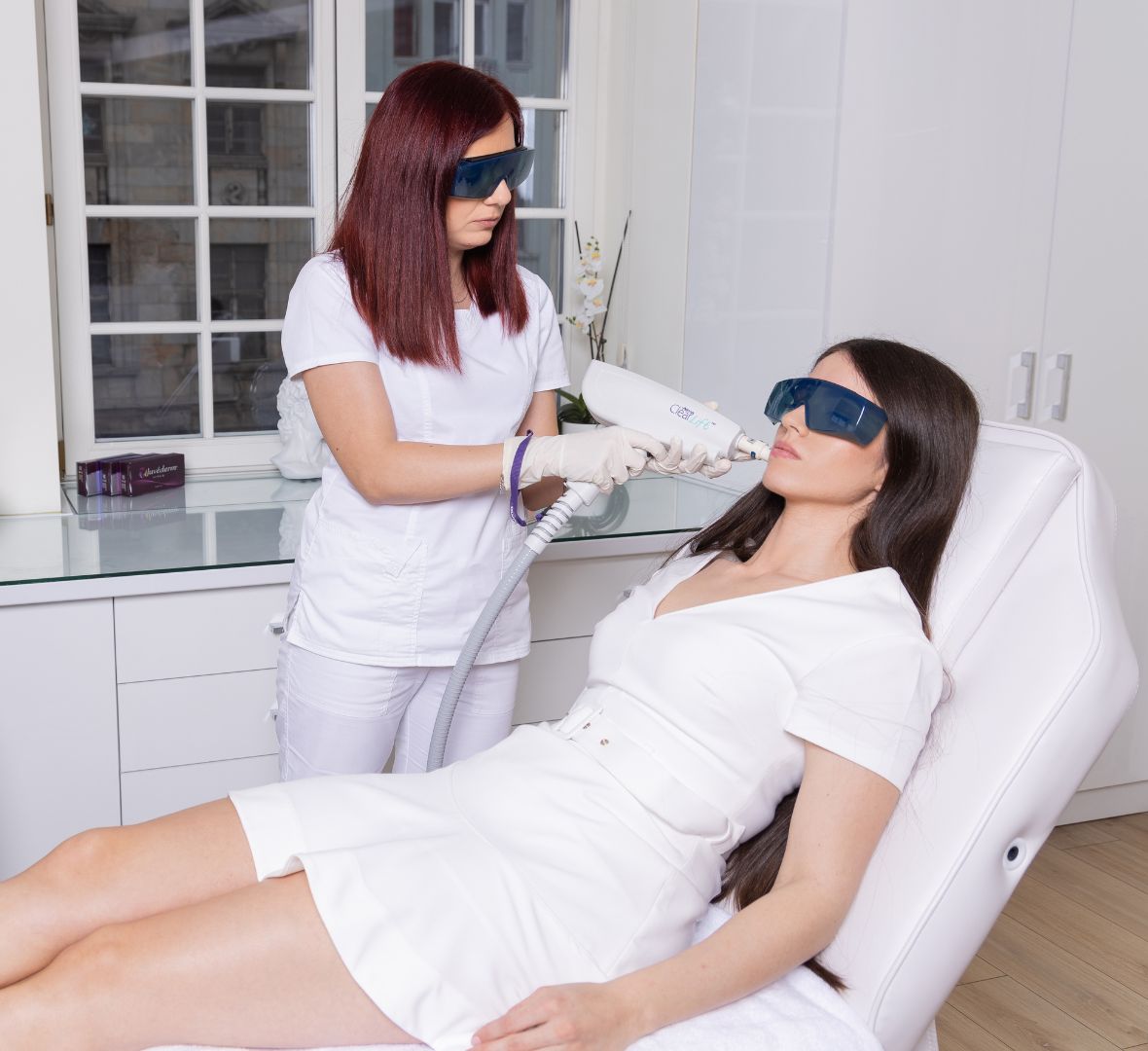
Sometimes the skin asks for more than one treatment: the complexion is uneven, pores are visible, the first wrinkles have appeared, and there are also marks from old acne. The 4D laser treatment combines three lasers in a single protocol, so each of them deals with its own part of the job. In this article we explain how it works, who it is suitable for and when is the right time to have it.
What is the 4D laser treatment?
The 4D treatment combines two non-ablative lasers, ClearLift and ClearSkin, and one ablative, Erbium (iPixel Er:YAG). All three are part of the Alma Harmony XL Pro platform. Non-ablative lasers work deep within the skin without damaging the surface, while Erbium gently removes the surface layer and stimulates the growth of new skin. Together, they rejuvenate the skin at multiple levels in a single treatment. Read more about how lasers are chosen in the article about laser rejuvenation.
Who is the 4D treatment suitable for?
The 4D treatment is a good choice when you want to rejuvenate facial skin and address multiple issues at once:
- fine lines and wrinkles on the face, neck and décolletage;
- enlarged pores and uneven skin tone;
- sun spots and hyperpigmentation;
- shallow acne scars;
- skin that has lost its firmness and radiance.
How the three lasers work
ClearLift
A Q-switched Nd:YAG laser that works deep within the skin without damaging the surface. It stimulates collagen production, making the skin firmer, while fine lines, blemishes and pores become less visible. More on our page about ClearLift laser.
ClearSkin
A non-ablative Er:Glass laser with cooling and vacuum. It calms inflammation, reduces sebum production and cleanses pores, making it useful for acne-prone skin and shallow scars. More on our page about ClearSkin laser.
Erbium
An ablative laser that gently removes the surface layer of the skin. It softens finer wrinkles, uneven texture and pigmentation, and encourages the growth of new, smoother skin. It can also be used on the sensitive eye area. More on our page about Erbium laser.
When is the 4D treatment performed?
Because of the Erbium laser, the 4D treatment is carried out from October to the end of March. Afterwards, the skin is more sensitive to the sun for a few weeks, so it is not performed in summer. The combination of ClearLift and ClearSkin lasers can be performed all year round, with daily sunscreen (SPF).
What the treatment and recovery look like
Before the treatment, an anaesthetic cream is applied, and the doctor adjusts the parameters to suit your skin. During the treatment, you will feel warmth and slight stinging. After the treatment, the skin is red and peels, and recovery takes 5 to 7 days. The peeling skin must not be picked, and SPF 50 sunscreen is compulsory. The number of treatments is determined by the doctor after an examination, depending on whether the goal is prevention or deeper skin renewal.
What are the results?
Following a series of treatments, the skin is smoother and firmer, the complexion more even, pores smaller, and fine lines and blemishes less visible.


Updated: