Lanluma raises a completely new question: Can we make the skin behave ten years younger? Read an overview of other products and the differences between them on the Collagen Stimulators page. The choice of treatment is determined after an examination and skin assessment. Loss of volume in the mid-face or sagging skin on the body are not just aesthetic problems – it is a sign that...
Lanluma raises a completely new question: Can we make skin behave ten years younger?
For an overview of other products and how they differ, see our page about Collagen stimulators. The choice of treatment is determined after an examination and skin assessment.
Loss of volume in the central part of the face or sagging skin on the body are not just aesthetic issues – they are a sign that our body's biological "scaffolding" has given way. Behind every weakened facial contour, every sagging upper arm or lost firmness of the thighs lies the same cause: the gradual thinning of the collagen network that has kept the tissue compact and organised for decades.
This network – the extracellular matrix – is not a static structure. It is constantly being renewed through the activity of fibroblasts, cells that synthesise collagen and elastin. With age, this activity declines. The fibres thin out, the tissue loses its support, and the skin begins to sag – not because of gravity, but because it has lost its internal architecture.
Lanluma does not mask these changes. It uses poly-L-lactic acid as a signal that triggers the body's own collagen production where the skin's supporting structure has given way – gradually restoring the density and firmness the tissue had in its youth.
Mechanism of action: Biostimulation at work
Poly-L-lactic acid as a biological signal
The active ingredient in Lanluma is poly-L-lactic acid – PLLA for short. This is not a new material. PLLA has been used in medicine for more than three decades – in surgical sutures, orthopaedic implants and suture materials. The body tolerates it extremely well and breaks it down safely, without any immunological response. That is precisely what makes it so reliable – it is not a foreign body, but a material with which medicine already has a long and well-documented history.
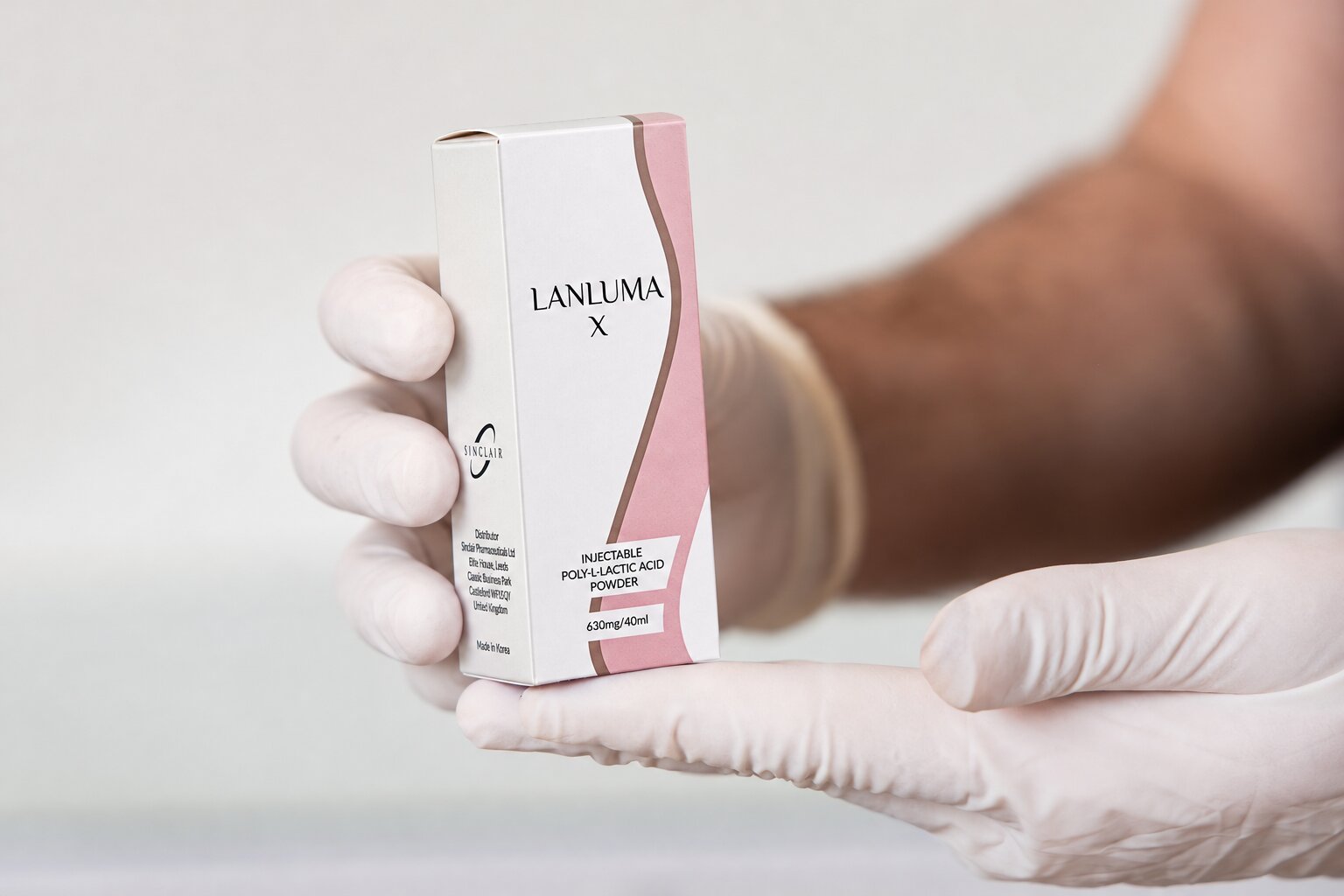
In aesthetic applications, Lanluma comes as a sterile powder that is carefully mixed with sterile water prior to treatment. The way the preparation is made directly determines how the PLLA particles will be distributed beneath the skin, and this in turn affects both the evenness of the results and the safety of the treatment itself. This is precisely why the preparation is always performed by a physician, following a strictly defined protocol.
How do microparticles activate the body's own collagen?
Following injection, the PLLA microparticles are distributed within the subdermal layer of the skin and trigger a controlled biological response. The body recognises them as a signal for regeneration. Tissue macrophages begin to break down the particles, and this process activates fibroblasts which build a new collagen network around them.
What forms is type I collagen – the same type that provides the skin's natural support in youth. The microparticles function as a temporary scaffold: they hold the space while new fibres are built, and then completely break down into lactic acid, carbon dioxide and water – leaving nothing foreign in the tissue.
This process – the so-called neocollagenesis – takes place gradually, over the course of months. The result is skin that becomes denser, firmer and more elastic not due to the presence of the product, but because of its own, newly built collagen which remains even after Lanluma has completely degraded.
Lanluma for the face: structural renewal, not volume correction
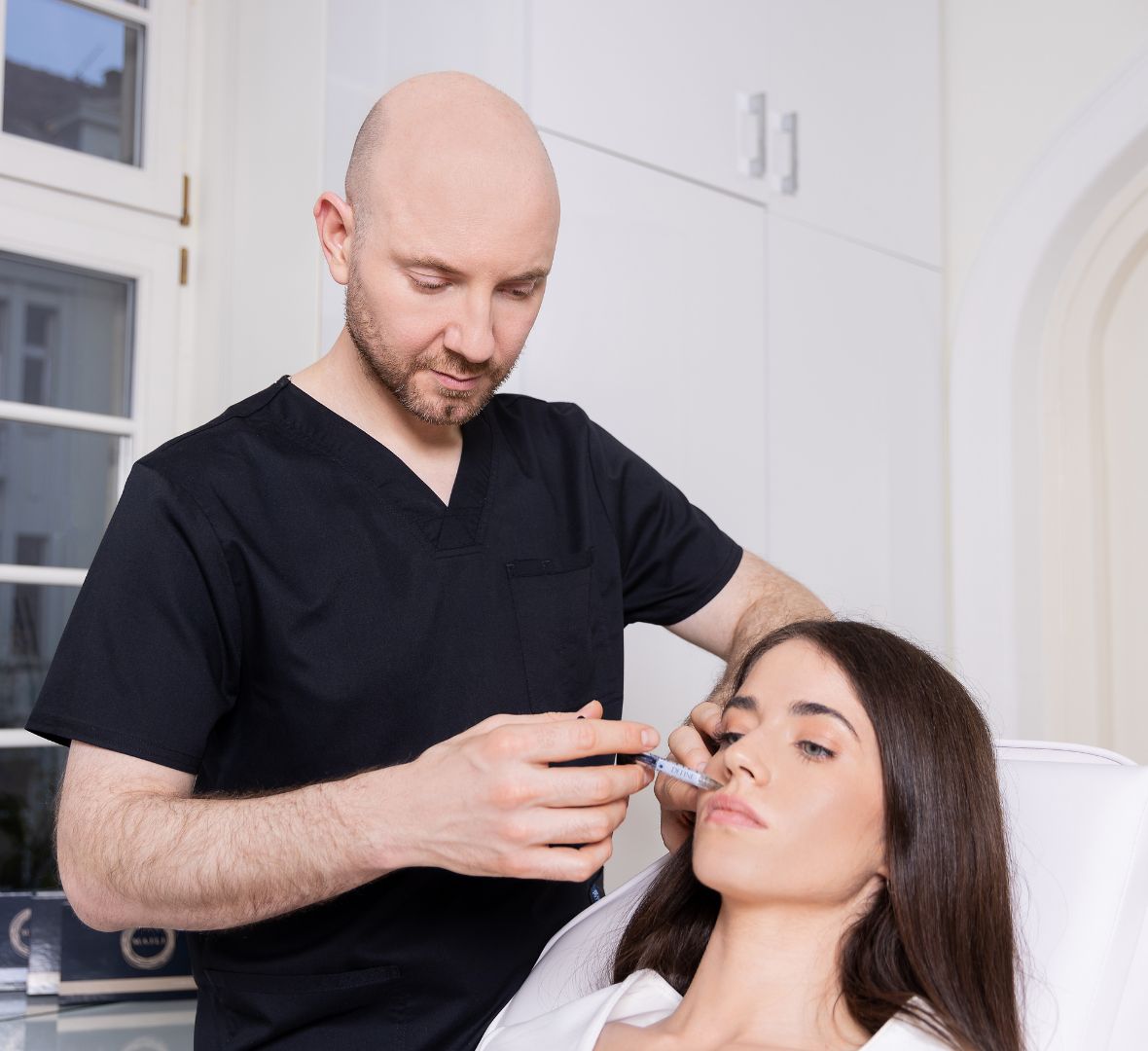
When discussing the application of Lanluma to the face, it is important to clarify one key distinction immediately: Lanluma does not add volume – it restores density. A hyaluronic acid filler fills space with a gel and immediately changes contours. Lanluma does something different – it strengthens the very substance of the skin, making it more compact and structurally stable, without altering facial features.
Middle third of the face
The cheeks are one of the first areas to react to the loss of collagen – the skin loses its density, becomes thinner and begins to sag, accentuating the nasolabial folds. Lanluma does not add volume here – instead, it restores firmness and support to the tissue, holding the cheeks in place. The skin becomes denser and the contour more defined, without any bloated or overly full effect.
Lower third of the face and jawline
The loss of collagen support in the lower third of the face is one of the first visible signs of ageing – the jawline becomes less defined, and tissue begins to stretch towards the neck. In this area, Lanluma improves tissue firmness and contributes to a more natural, rested appearance of the lower facial contour.
Neck and décolletage
The neck and décolletage are often neglected areas in aesthetic treatments, yet the skin here ages just as quickly as on the face – except that it is naturally thinner and more sensitive. Lanluma is applied here in a protocol tailored to thinner skin, aiming to strengthen the entire "collagen framework" of the neck and décolletage. The result is a more even texture, reduced visibility of fine lines and firmer skin that responds better to everyday movements.
Lanluma for the body: A unique advantage in aesthetic medicine
What truly sets Lanluma apart from all other collagen stimulators is its ability to treat large body areas – areas that have long been a challenge for non-invasive aesthetic medicine. The Lanluma X formulation, available in larger vials, is specifically designed for these exact applications.
Hands and upper arms
The upper arms are one of the areas that react most visibly to the loss of muscle tone and collagen – the skin becomes lax and thin and loses compactness. Lanluma acts here as a biostimulator that strengthens the structure of the skin itself, improves its tone, and reduces the visibility of sagging. Hands, which are often a telltale sign of age, regain the density and plump appearance of the skin that previously made them look youthful.
Thighs and stomach
Skin laxity on the inner thighs and stomach following weight loss, pregnancy or natural ageing is one of the most challenging aesthetic problems. Lanluma has proven to be an effective solution for improving skin tone, texture and firmness in these areas, through collagen stimulation across a wider surface area that is not achievable with conventional fillers.
Non-Surgical BBL: Buttock reshaping without surgery
Non-surgical BBL (Brazilian Butt Lift) is one of the fastest-growing procedures in aesthetic medicine, and Lanluma X is a product specifically designed for this application. Unlike surgical BBL, which uses autologous fat, or hyaluronic acid fillers which provide temporary volume, Lanluma works here through two mechanisms simultaneously:
First, immediately after application, the volume of the product itself provides initial fullness and improves contours. Then, over the following months, the PLLA microparticles stimulate the body's own collagen production, which remains long after the product has broken down.
The result is a naturally rounded, lifted and firmer gluteal region – without surgery, general anaesthesia or a long recovery time. The procedure is particularly suitable for patients who want improved contour and projection, as well as for those with visible cellulite or unevenness in this area. Lanluma X, thanks to its larger formulation volume, allows for the treatment of the entire gluteal region in one or two sessions, making it a practical choice for this specific indication.
When is the right time for Lanluma treatment?
Lanluma is not exclusively reserved for mature skin. Quite the contrary – biostimulation yields optimal results when the skin still has the capacity for regeneration, but the first signs of a loss in supporting structure are already visible.
Signs your skin is sending you:
- The skin of the face has lost its former density and firmness, even without visible wrinkles
- Relaxation skin of the upper arms, of the thigh or abdomen that does not respond to exercise
- The neck and décolletage show fine wrinkling and loss of tone
- The jawline is becoming less defined
- Cellulite or skin irregularities on the body that do not respond to local treatments
- The skin of the hands is becoming thinner and more translucent
Lanluma is ideal for:
- People who want a natural, gradual and long-lasting result
- Those looking for skin quality improvement, rather than a change in facial or body features
- Patients who want to treat both the face and body simultaneously within a single protocol
- Those who have noticed the first signs of collagen loss and want to react preventatively
- Patients seeking a non-invasive alternative to surgical procedures
What to expect: From consultation to results
Consultation and planning
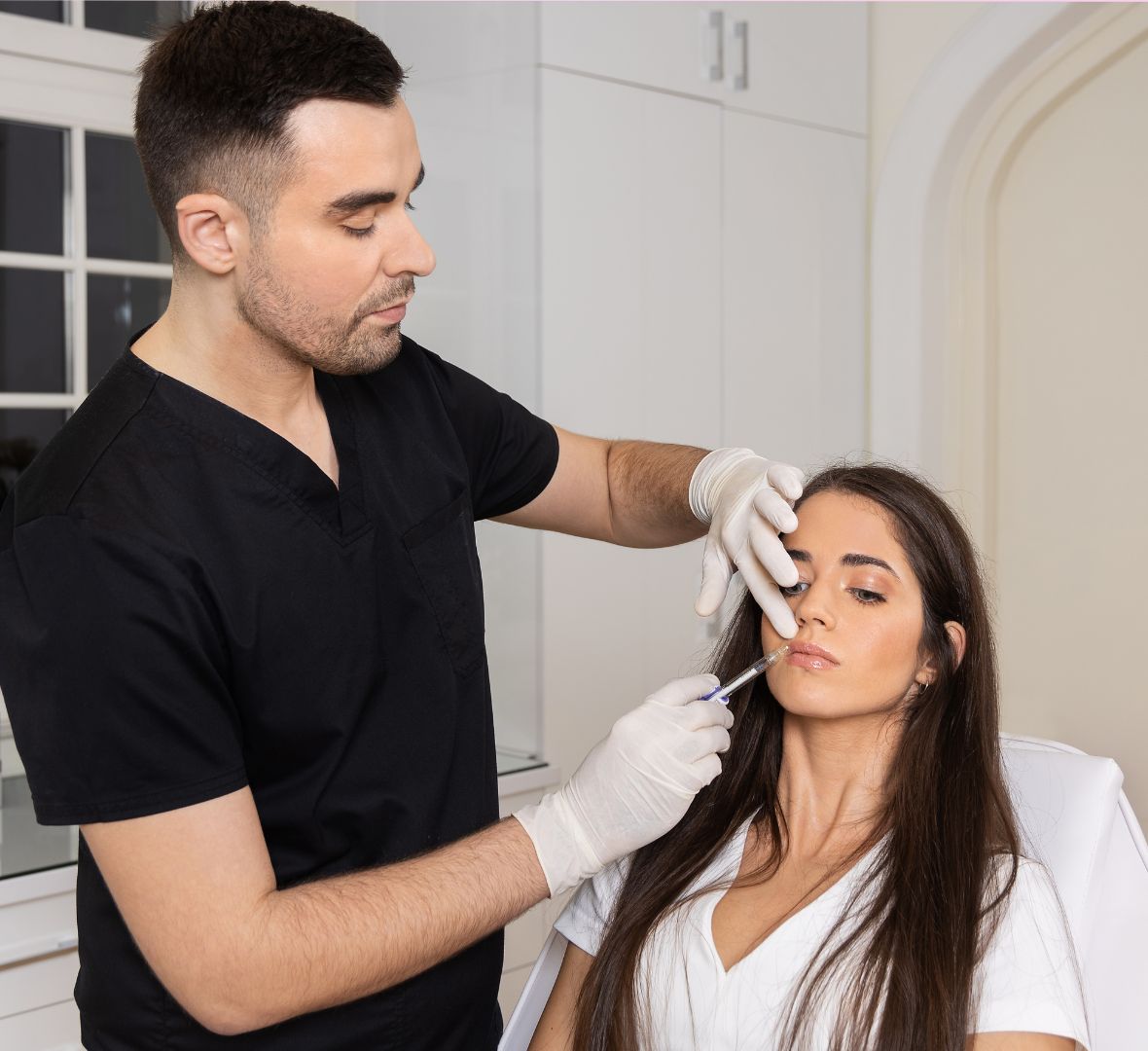
Every treatment at Imedic poliklinika starts with a detailed consultation. The doctor assesses the skin condition and individual goals, and determines the optimal protocol—the number of sessions, areas to be treated and formulation (Lanluma V for the face and smaller areas, Lanluma X for larger body surfaces).
Preparation and application
Lanluma is prepared by mixing PLLA powder with sterile water and left to reconstitute according to a standardised protocol. The treatment is performed using a cannula in the subdermal layer, which minimises discomfort and reduces the risk of bruising. A local anaesthetic is also applied to make the treatment as comfortable as possible. The treatment itself takes between 20 and 60 minutes, depending on the number of areas treated.
Recovery
Recovery is minimal. In the first 24 to 48 hours, mild redness, discreet swelling or tenderness to the touch may occur – which are normal, transient reactions. Avoid intense physical activity and high temperatures (sauna, solarium) for the first 48 hours; regular hydration and SPF protection are also recommended.
Results
The true effects of Lanluma become visible between the third and sixth month after treatment, as the process of neocollagenesis reaches its peak. The skin becomes denser, more compact and more resilient – gradually, without sudden changes. The results last up to two years or more.
Lanluma vs. other treatments: Key differences
We recommend planning your injectable treatment at least two weeks before an important event. If a series of treatments is required, the plan should start earlier to allow enough time for the full effect to develop.

Updated: